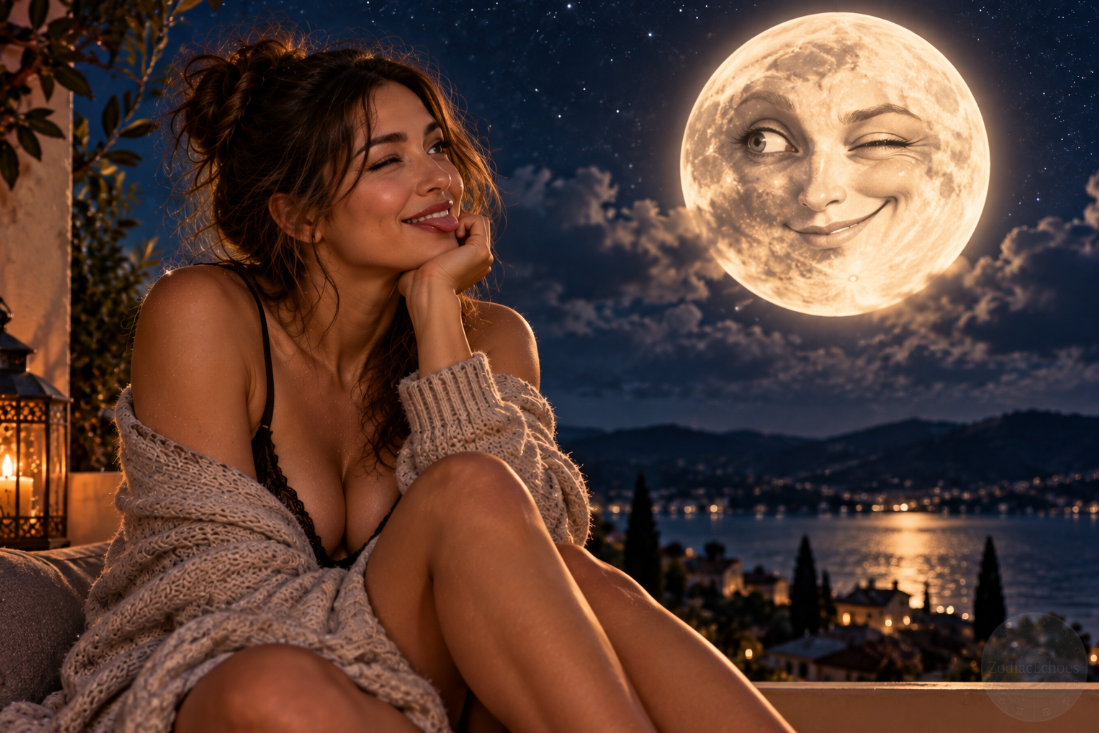
- Same Face: The Moon always shows Earth approximately the same side.
- It Does Rotate: The Moon rotates once during each orbit around Earth.
- Tidal Locking: Its rotation and orbital periods became synchronized.
- Far Side: The so-called “dark side” receives sunlight too.
- Hidden Surface: Libration allows us to see about 59% of the Moon over time.
Look at the Moon tonight and you’re seeing essentially the same lunar landscape that humans have watched for thousands of years. Whether it’s a thin crescent or a brilliant Full Moon, the familiar face remains pointed toward Earth. But that doesn’t mean the Moon isn’t rotating.
The Moon Rotates at Just the Right Speed
The Moon takes approximately the same amount of time to rotate once on its axis as it takes to complete one orbit around Earth—about 27.3 days. This synchronization is called tidal locking.
Imagine walking around a table while constantly keeping your face toward its center. By the time you’ve completed one circuit, you’ve also turned around once. The Moon does something similar as it travels around Earth. That’s why the same hemisphere continually faces us.
Is There Really a Dark Side of the Moon?
The famous phrase is misleading. The hemisphere facing away from Earth isn’t permanently dark. It receives sunlight during the lunar cycle just like the side visible to us. That’s why astronomers generally call it the far side of the Moon instead.
Humans didn’t see this mysterious landscape until 1959, when the Soviet spacecraft Luna 3 photographed the far side for the first time. Until then, almost half of our closest celestial neighbor had never been directly seen by human eyes.
We Actually See More Than Half
There’s one final twist. The Moon appears to wobble slightly from our perspective because of its orbit and orientation. This effect, called libration, lets us peek around its edges at different times. As a result, observers on Earth can eventually see about 59% of the lunar surface, rather than exactly 50%.
So next time you look up, remember that the Moon isn’t simply hanging motionless above us. It’s rotating and orbiting in an extraordinary synchronization that keeps its familiar face turned toward Earth.
Cosmic Highlights
FAQ
Does the Moon rotate?
Yes. The Moon rotates once on its axis during approximately the same time it takes to orbit Earth.
Why can’t we normally see the far side of the Moon?
Because the Moon is tidally locked with Earth, approximately the same hemisphere continually faces our planet.
Is the dark side of the Moon always dark?
No. The far side receives sunlight. “Dark side” is therefore a misleading name.
How much of the Moon can we see from Earth?
Because of libration, we can observe approximately 59% of the Moon’s surface over time.
✨ Explore More from Zodiac Echoes ✨Explore More from ZE
Choose your zodiac sign to explore daily, weekly, monthly, and yearly horoscopes.