-
31% of Democrats believe in astrology, compared with 24% of Republicans and 27% of independents, according to Gallup’s 2025 survey.
-
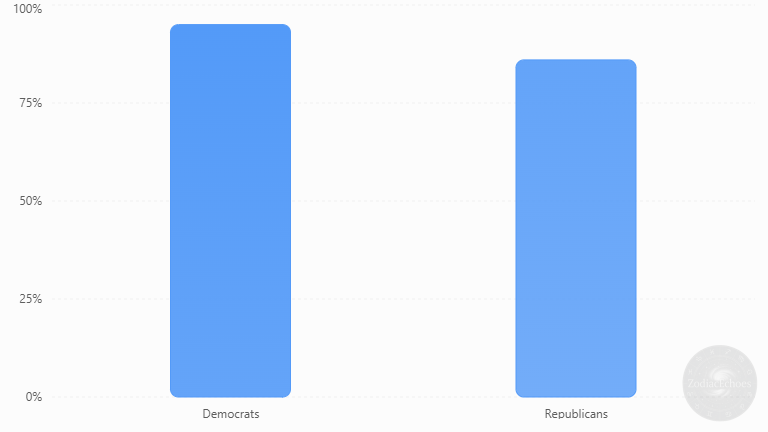
95% of Democrats know their zodiac sign, compared with 86% of Republicans, according to YouGov’s 2022 research.
-
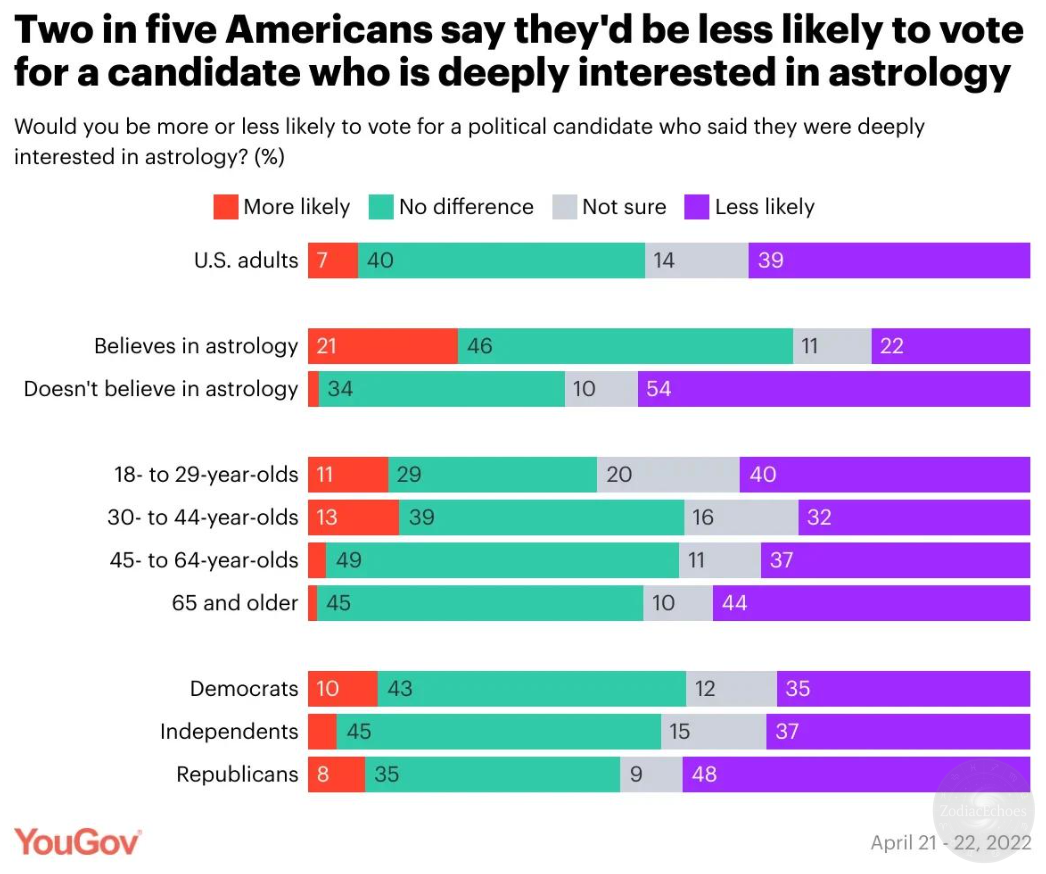
48% of Republicans said a candidate’s strong interest in astrology would make them less likely to vote for that person, compared with 35% of Democrats.
-
Even Americans who believe in astrology are divided over whether politicians should openly embrace it.
-
Nancy Reagan secretly consulted an astrologer who advised on the timing of presidential activities during Ronald Reagan’s administration.
Americans disagree about politics, religion, taxes, immigration, and countless other subjects. But one of the country’s more unexpected political differences involves something far removed from Washington’s usual arguments: astrology.
Democrats are more likely than Republicans to believe in the zodiac, and they are also more likely to know their astrological signs. Yet the relationship between politics and astrology becomes considerably more interesting when voters are asked whether they would trust a politician who openly follows the stars.
National polling reveals some surprising contradictions. Many Republicans believe in astrology, while some astrology believers are uncomfortable with politicians taking it seriously. And one of the most famous astrology controversies in American political history unfolded inside a Republican White House.
Democrats Are More Likely to Believe in Astrology
Gallup’s May 2025 survey found a noticeable difference between America’s major political groups. Among Democrats, 31% said they believed in astrology. The figure fell to 27% among independents and 24% among Republicans.
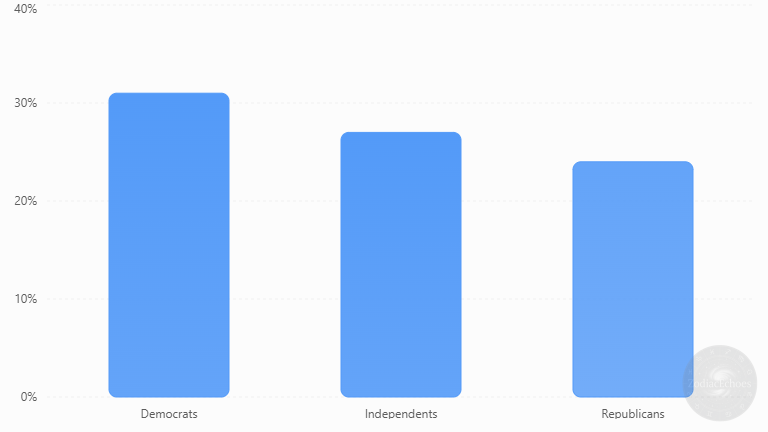
That gives Democrats a seven-percentage-point lead over Republicans. However, the Republican figure is interesting in its own right: roughly one in four Republican respondents expressed belief in astrology.
Astrology is often associated with alternative spirituality, self-discovery, and contemporary lifestyle culture. Yet the findings show that its audience extends across political boundaries. A person can identify with conservative politics while enjoying birth charts, zodiac compatibility, or horoscope predictions.
The survey also challenges the idea that astrology belongs exclusively to one cultural or political community. It remains a familiar belief among Americans with very different political identities.
Almost Every Democrat Knows Their Zodiac Sign
A separate YouGov survey conducted in 2022 found that 95% of Democrats knew their zodiac sign, compared with 86% of Republicans. The difference is particularly revealing because knowing your sign does not require believing in astrology. Someone might dismiss horoscopes completely while still identifying as a Leo, Gemini, or Scorpio.
Zodiac signs have become part of everyday culture through social media, dating conversations, personality quizzes, and entertainment. Knowing your sign can simply mean recognizing a familiar label associated with your birthday.
The nine-percentage-point difference suggests that zodiac awareness was especially widespread among Democratic respondents. Nevertheless, the Republican figure remains high: more than eight in ten knew their signs. For a subject sometimes dismissed as a niche spiritual interest, astrology has achieved remarkable cultural familiarity across America’s political spectrum.
Republicans Are More Skeptical of Astrology in Political Candidates
The differences become more pronounced when astrology enters electoral politics. In YouGov’s 2022 survey, 48% of Republicans said a candidate’s strong interest in astrology would make them less likely to vote for that person. Among Democrats, the figure was 35%.
Meanwhile, 43% of Democrats said such an interest would make no difference to their vote, compared with 35% of Republicans.
This reveals a distinction between enjoying astrology privately and accepting it as part of a politician’s public identity. Reading a horoscope before work is one thing; hearing a presidential candidate discuss astrological influences on important decisions is another.
Some voters might see a politician’s interest in astrology as harmless personal curiosity. Others might wonder whether those beliefs could affect their approach to evidence, judgment, or public responsibility.
The contrast is especially interesting because astrology believers exist in both parties. Personal belief and expectations of political leadership do not necessarily follow the same pattern.
Even Astrology Believers Disagree About Politicians Who Follow the Stars
Perhaps the most surprising result in YouGov’s research comes from Americans who already believe in astrology. Among these respondents, 21% said a candidate’s strong interest in astrology would make them more likely to vote for that person. Almost the same proportion, 22%, said it would make them less likely, while 46% said it would make no difference.
That is a remarkable split within a group that already accepts astrology as a belief. Someone might study their birth chart, read weekly horoscopes, or consider zodiac compatibility when dating while still expecting politicians to make decisions based on professional advice and conventional evidence.
Others might appreciate a candidate who shares their spiritual interests, seeing it as another personal characteristic rather than a political concern. The findings show that astrology believers are far from unanimous about the relationship between personal spirituality and political power.
When Astrology Reached the Republican White House
One of the strangest episodes in American political history involved Nancy Reagan, who consulted astrologer Joan Quigley during Ronald Reagan’s presidency. After the 1981 assassination attempt against her husband, Nancy became concerned about his safety and sought astrological advice about favorable dates for travel and public appearances.
The arrangement became public in 1988, revealing that Quigley’s recommendations had influenced aspects of presidential scheduling. Nancy Reagan maintained that astrology did not determine government policy, but the controversy remains a striking example of how the zodiac once reached the highest levels of a Republican administration.
Why the Political Astrology Divide Is More Complicated Than It Looks
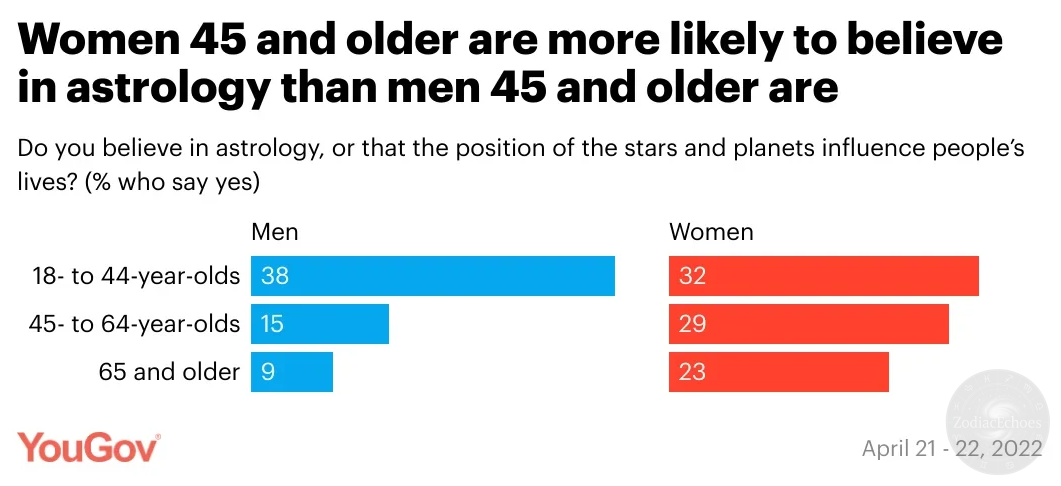
The difference between Democrats and Republicans becomes even more interesting when age and gender enter the picture. YouGov found that 29% of women aged 45–64 believed in astrology, compared with just 15% of men in the same age group. Among Americans aged 65 and older, women were more than twice as likely as men to believe in it.
Younger Americans showed another unexpected pattern. Although adults under 30 were more likely to believe in astrology, they were less likely to know their zodiac sign than older respondents. Just 82% of under-30s knew their sign, compared with 94% of adults aged 45 and older.
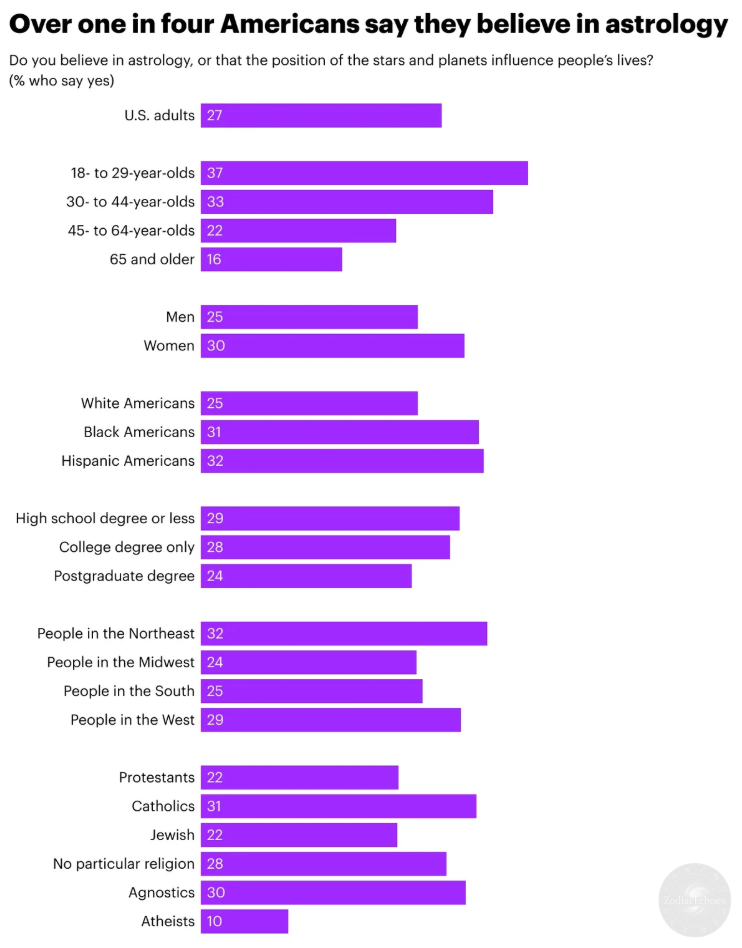
These findings reveal a cultural landscape that cannot be explained by political affiliation alone. Age, gender, and familiarity with zodiac culture all influence how Americans engage with astrology. A political party may contain believers, skeptics, casual horoscope readers, and people who have never taken the subject seriously.
The Most Interesting Contradiction: Believing in Astrology Doesn’t Mean Trusting It in Politics
Across all respondents in YouGov’s 2022 survey, 40% said a candidate’s deep belief in astrology would make no difference to their vote. Another 34% said it would make them less likely to support that candidate, while only 7% said it would make them more likely.
That creates an unusual situation. Astrology is familiar enough that 90% of Americans surveyed knew their zodiac sign, yet relatively few considered a politician’s enthusiasm for the subject a positive electoral characteristic.
The distinction becomes especially vivid when compared with the Reagan administration. A Republican White House once faced controversy over astrological scheduling, while modern Republican respondents were more likely than Democrats to express reservations about astrology-minded candidates.
America’s political relationship with astrology is therefore not simply a battle between believers and skeptics. It is a mixture of private interests, cultural familiarity, spiritual convictions, and expectations about political leadership.
Conclusion
Democrats are more likely than Republicans to believe in astrology, and they are also more likely to know their zodiac signs. Yet the surveys reveal something more interesting than a straightforward political divide.
Republicans include a substantial minority of astrology believers, Democrats are not uniformly enthusiastic about astrology, and even people who follow the zodiac disagree about whether politicians should do the same.
From everyday horoscope habits to the extraordinary story of Nancy Reagan’s White House astrologer, the relationship between American politics and astrology is full of contradictions. The most revealing difference may not be who believes in the stars, but how Americans feel when those beliefs enter the world of political power.
FAQ
Are Democrats more likely to believe in astrology than Republicans?
Yes. Gallup’s May 2025 survey found that 31% of Democrats believed in astrology, compared with 24% of Republicans and 27% of independents.
Do Republicans believe in astrology?
Some do. Approximately one-quarter of Republican respondents in Gallup’s 2025 survey said they believed in astrology.
Which political party knows its zodiac signs better?
YouGov’s 2022 survey found that 95% of Democrats knew their zodiac signs, compared with 86% of Republicans.
Did Nancy Reagan really consult an astrologer?
Yes. Nancy Reagan consulted Joan Quigley, whose astrological advice influenced aspects of President Ronald Reagan’s schedule. The arrangement became public in 1988.
Are Americans comfortable with politicians believing in astrology?
Opinions vary. YouGov found that 40% said a candidate’s strong belief in astrology would make no difference to their vote, while 34% said it would make them less likely to support that candidate.
Can your zodiac sign reveal whether you are a Republican or Democrat?
There is no established evidence that someone’s zodiac sign reliably determines their political affiliation.
Sources
- Gallup – Values and Beliefs, May 2025
- YouGov – What Is Your Astrological Sign?
- YouGov – One in Four Americans Say They Believe in Astrology
- TIME — Good Heavens! An Astrologer Dictating the President’s Schedule?
✨ Explore More from Zodiac Echoes ✨Explore More from ZE
Choose your zodiac sign to explore daily, weekly, monthly, and yearly horoscopes.