-
The Midnight Warning: Ancient superstitions treated the hours after midnight as a dangerous time when ordinary actions could attract misfortune.
-
Sweeping Away Fortune: Cleaning floors or carrying rubbish outside at night was believed to drive prosperity out of the home.
-
The Mirror Mystery: Looking into a mirror after midnight supposedly risked revealing something beyond the living world.
-
Uninvited Visitors: Whistling, answering strange voices, and opening doors to unexplained knocks were associated with unwanted supernatural attention.
-
The Empty Chair: Even an unoccupied seat could carry an unsettling meaning in traditional beliefs about spirits and the dead.
Midnight has always carried a strange reputation. It marks the end of one day and the beginning of another, but in traditional folklore, the stroke of twelve represented something far more mysterious: a moment when the boundary between the living and the dead became dangerously thin.
Long before electric lighting transformed our nights, darkness could turn an ordinary home into an unsettling place. A creaking floorboard, an unexpected knock, or a reflection in a dark window might be interpreted as a warning. People developed countless superstitions about what should never be done after midnight, believing that certain actions could invite bad luck, disturb wandering spirits, or threaten the protection of their household.
Some of these warnings concerned surprisingly ordinary activities. Sweeping the floor, whistling indoors, leaving an empty chair, or calling someone’s name into the darkness could all carry supernatural consequences. Here are seven things traditional superstitions warned people never to do after midnight, and the disturbing beliefs behind them.
1. Never Sweep the Floor After Midnight
In many household superstitions, sweeping was more than a cleaning activity. It symbolized the removal of unwanted influences from the home, and performing it at the wrong time could have unexpected consequences.
Sweeping after dark was believed to drive away good fortune, financial prosperity, and domestic happiness along with the dust. The warning became particularly serious when someone swept rubbish directly across the threshold.
In traditional symbolism, the threshold represented the boundary between the protected household and the unpredictable outside world. Carrying dirt across that boundary at night could symbolically remove something valuable that belonged inside.
Similar beliefs appear in several cultural traditions. In parts of South and Southeast Asia, nighttime sweeping has been associated with losing wealth or driving away blessings. In some households, the rule extended to taking rubbish outside after sunset.
The underlying idea was simple: once darkness arrived, whatever protected the family’s prosperity should remain safely inside until morning.
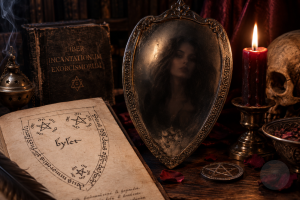
2. Never Stare Into a Mirror After Midnight
Few household objects have inspired as many supernatural stories as mirrors. Across different traditions, mirrors have been regarded as mysterious surfaces capable of reflecting more than physical appearances. Some beliefs connected them with the soul, the spirit world, or hidden realities that ordinary human vision could not perceive.
Staring into a mirror after midnight was considered particularly dangerous because the reflection might reveal something that should remain unseen. A person might supposedly glimpse an unfamiliar figure standing behind them, notice their reflection behaving strangely, or attract the attention of an unseen presence.
These fears eventually became part of popular mirror legends and supernatural games, including rituals in which someone repeatedly speaks a name while facing a mirror in a darkened room.
Mirrors also played an important role in mourning customs. In certain Jewish traditions and European folk practices, mirrors were covered following a death. The explanations differed, but some folkloric interpretations associated uncovered mirrors with the possibility of trapping or disturbing a departed soul.
The unsettling reputation of mirrors also has a perceptual dimension. In dim lighting, prolonged observation of a face can produce unusual visual distortions, making familiar features appear unfamiliar or strangely altered.
3. Never Whistle Inside Your Home at Night
Whistling might seem harmless, but in traditional folklore it could be interpreted as an invitation to trouble. In several Eastern European household superstitions, whistling indoors was associated with poverty. A familiar warning suggested that whistling inside the house could cause money to disappear from the household.
Other traditions attached a more sinister meaning to the sound. Whistling after dark was sometimes believed to attract wandering spirits or mysterious beings that responded to human calls. The sound itself became suspicious because it could travel through darkness without revealing its source.
In Japanese folklore, nighttime whistling has also been associated with warnings about attracting snakes, thieves, or supernatural dangers, depending on the region and version of the belief.
The practical origins of some warnings are easier to imagine. In closely packed communities, unexplained whistling during sleeping hours could disturb neighbors or be mistaken for a signal between strangers. Nevertheless, the supernatural version proved much more memorable: never whistle into the darkness unless you are prepared for something to answer.
4. Never Open the Door to an Unexplained Knock
Imagine sitting alone at home shortly after midnight when someone knocks on the front door. You approach, listen, and wait. There is no voice, no visible visitor, and no obvious explanation. Traditional ghost stories frequently treated this situation as a warning.
An unexplained knock after midnight could be interpreted as a supernatural visitor seeking permission to enter the home. In some tales, opening the door was dangerous because it symbolically removed the protective barrier between the household and whatever waited outside.
Repeated knocking carried an especially ominous reputation. In certain death-omen traditions, mysterious knocks were associated with impending misfortune or news of a death. Stories involving three unexplained knocks became particularly well known in later ghost folklore.
The symbolism of the door is important. Just like the threshold in sweeping superstitions, it represented a dividing line between safety and uncertainty. Keeping the door closed meant maintaining control over who or what entered the home.
5. Never Leave an Empty Chair Waiting in the Darkness
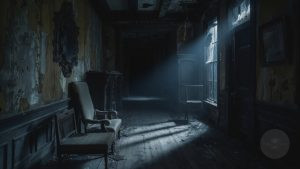
An empty chair might seem like the least threatening object in a room. Yet in traditional beliefs surrounding the dead, an unoccupied seat could become a powerful symbol. A chair positioned beside a table, near a fireplace, or in the middle of a darkened room might be interpreted as an invitation for an unseen guest to sit down.
The association becomes clearer when considering ancestral traditions. In several European cultures, families historically reserved places or prepared food for deceased relatives during particular commemorative occasions. The empty seat represented remembrance, hospitality, and the continuing symbolic presence of ancestors.
However, there was an important distinction between a carefully observed ritual and an unexplained empty place left waiting during the night. In ghost stories, the latter could suggest that someone invisible had already been invited.
Rocking chairs developed their own unsettling reputation. A chair moving without an apparent occupant became a familiar image in supernatural storytelling, particularly when accompanied by creaking floors or unexplained noises. The fear was not simply that the chair was empty. It was the possibility that the seat might not remain empty for long.
6. Never Call Someone’s Name Into the Darkness
Hearing a familiar voice outside at night can be reassuring, especially when it seems to belong to someone you know. But traditional folklore sometimes warned that the familiar voice might not belong to its apparent owner.
Stories from different cultures describe supernatural beings capable of imitating human speech, calling travelers by name, or producing sounds intended to lure people away from safety. Answering an unexplained voice or calling someone’s name into the darkness could supposedly reveal your presence to something waiting outside.
The warning was particularly associated with isolated roads, forests, fields, and places far from inhabited settlements. In some supernatural narratives, the danger came from responding. In others, it came from following the sound or attempting to discover who was calling.
These stories also reflected genuine anxieties about nighttime travel. Without artificial lighting, identifying the source of a distant sound was difficult, and a familiar-looking landscape could become disorienting. The resulting superstition was memorable: if someone calls your name from the darkness and you cannot see who it is, do not assume the voice belongs to a person.
7. Never Begin a Journey at Midnight
Traveling after midnight once involved considerably greater uncertainty than it does today. Roads were poorly illuminated, landmarks could disappear into darkness, and unfamiliar sounds were difficult to identify. These practical dangers became intertwined with stories about supernatural travelers and dangerous encounters.
In European folklore, certain spirits were believed to appear along lonely roads, crossroads, and forest paths after dark. Will-o’-the-wisps, mysterious lights associated with marshes and wetlands, were sometimes described as deceptive supernatural forces that could lure travelers away from safe routes.
Other legends warned of ghostly processions, wandering souls, or strange figures appearing at crossroads during the deepest hours of the night. Midnight was particularly significant because it represented a transitional moment, when the familiar order of the world seemed temporarily suspended.
The safest course, according to these beliefs, was to wait until dawn. With sunrise, the threatening landscape returned to something recognizable. Roads became visible, ordinary sounds regained their explanations, and the supernatural dangers of the night supposedly retreated.
Why Was Midnight Considered the Most Dangerous Hour?
The reputation of midnight developed from several overlapping traditions. In popular European supernatural folklore, midnight became associated with ghosts, witchcraft, mysterious apparitions, and encounters with the dead. The exact timing varied between traditions, but the darkest hours of the night were frequently treated as periods of unusual spiritual activity.
The expression witching hour eventually became closely associated with this atmosphere, although historical uses of the term did not always refer to precisely midnight. The significance of twelve o’clock also comes from its position as a boundary. Midnight separates two calendar days, making it a natural symbol of transition between one state and another.
That symbolism helps explain why so many apparently unrelated warnings concern crossing boundaries: opening doors, sweeping across thresholds, leaving the safety of home, or attempting to communicate with unseen visitors.
Each action involves moving something from one side of a boundary to another. In the logic of traditional superstition, such transitions were especially dangerous when the ordinary protections of daylight had disappeared.
Conclusion
The old warnings about midnight transformed ordinary household activities into rituals of protection. A broom could remove prosperity, a mirror might reveal an unwanted visitor, and an unexplained knock could become a warning from another world.
Although the details differed between cultures, the underlying theme remained remarkably consistent: after darkness fell, the safest home was one whose boundaries remained undisturbed. These superstitions survived because they gave familiar objects and everyday sounds a mysterious second meaning, turning even the quietest night into a story waiting to unfold.
Cosmic Highlights

FAQ
Why Is Midnight Associated With Ghosts and Spirits?
Midnight represents the transition between two days and has long been associated with supernatural activity in popular folklore. Stories frequently describe it as a time when spirits wander, mysterious encounters occur, and the boundary between the living and dead becomes less secure.
Is Sweeping After Midnight Considered Bad Luck?
In several traditional household superstitions, sweeping at night was believed to remove prosperity, happiness, or blessings from the home. Sweeping rubbish across the threshold was considered particularly unlucky because the threshold symbolized the boundary protecting the household.
Why Were Mirrors Covered After Someone Died?
Covering mirrors formed part of mourning customs in certain communities. Religious and cultural explanations varied, while some folkloric beliefs suggested that mirrors could disturb, capture, or confuse the spirit of the deceased.
What Does Hearing Three Knocks at Night Mean in Folklore?
In some death-omen and ghost traditions, three unexplained knocks were interpreted as a warning of misfortune or an approaching death. The association became a recurring feature of supernatural stories, although its interpretation differed across communities.
Why Was Whistling at Night Considered Dangerous?
Some traditions associated indoor whistling with losing money, while others warned that whistling after dark could attract spirits, thieves, or other unwanted visitors. The specific meaning depended on the cultural setting.
What Is the Witching Hour?
The witching hour is a traditional expression for a period of the night associated with supernatural activity, ghosts, and witchcraft. It is commonly identified with midnight or the hours shortly afterward, although historical folklore does not establish one universal time.