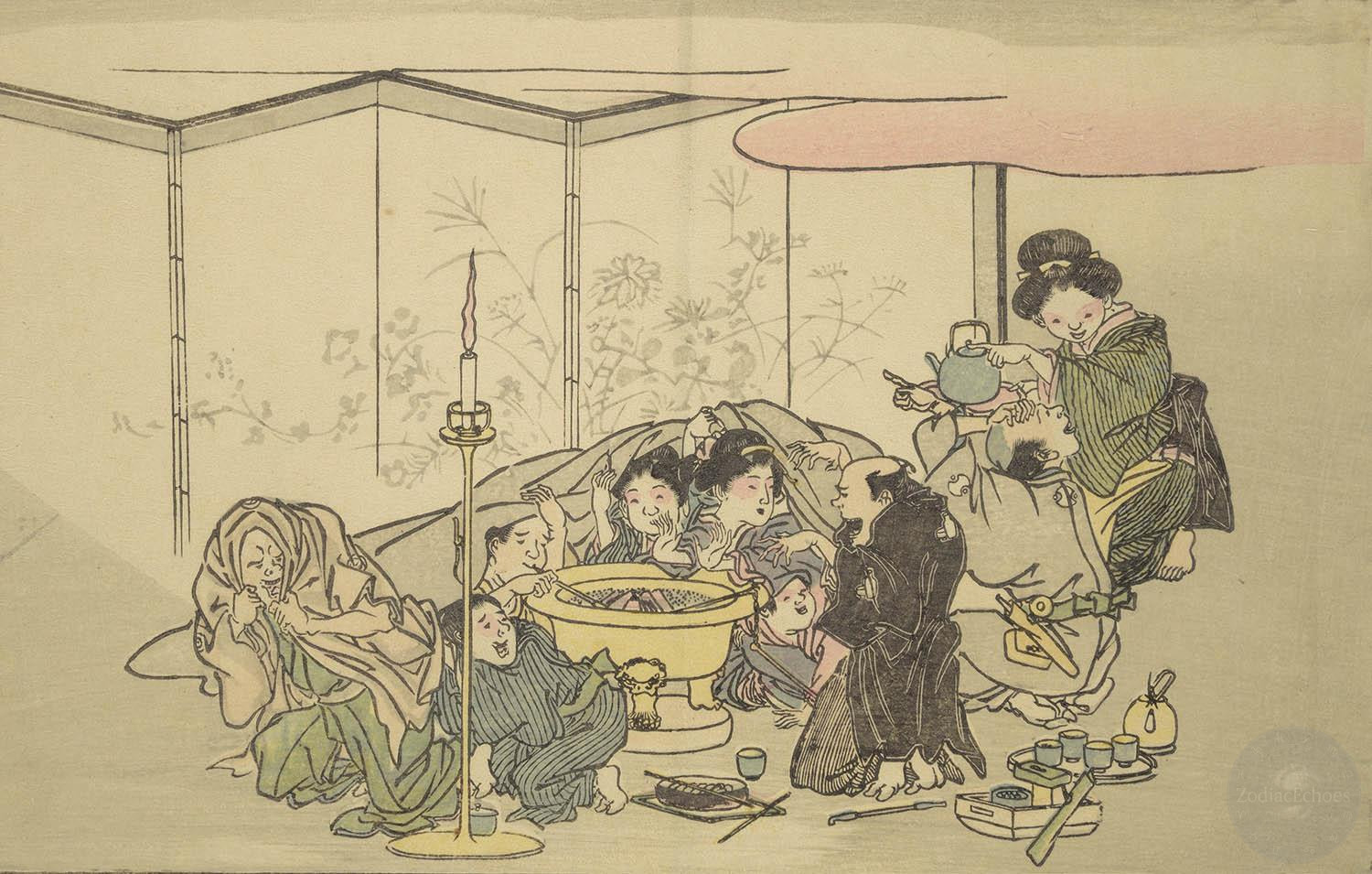
- Hyakumonogatari Kaidankai was a Japanese supernatural storytelling tradition involving up to one hundred frightening tales.
- After each story, another light was extinguished, gradually plunging the gathering into darkness.
- The final story was believed to invite a supernatural manifestation, making the completion of the ritual particularly terrifying.
- The tradition flourished during Japan’s Edo period and influenced the country’s ghost-story literature and horror culture.
Imagine sitting in a dark Japanese house surrounded by people telling terrifying stories. In another room, one hundred small flames are burning. After every ghost story, another light is extinguished. The darkness grows deeper, the atmosphere becomes increasingly oppressive, and everyone knows what is supposed to happen when the final flame disappears.
According to Japanese supernatural tradition, completing the hundredth story could cause something from the spirit world to appear.
This frightening custom was known as Hyakumonogatari Kaidankai, meaning a gathering of one hundred supernatural tales. Unlike many modern internet rituals, it has a documented history extending back centuries.
How the One Hundred Ghost Stories Ritual Worked
The traditional gathering involved participants taking turns telling kaidan, Japanese stories about ghosts, strange apparitions, curses, and unexplained supernatural encounters.
Descriptions of the procedure varied. In a widely known version, one hundred candles were prepared in a separate room. After each story, a participant entered the room and extinguished one flame before returning to the group.
Another historical description involved an andon, a traditional Japanese lamp, containing numerous burning wicks. One wick was removed after every tale, gradually reducing the available light.
With each extinguished flame, the participants moved closer to complete darkness. The suspense came not only from the stories themselves but also from the knowledge that the final moment was approaching.
What Was Supposed to Happen After the Hundredth Story?
The most disturbing part of Hyakumonogatari was the belief that telling enough supernatural stories could attract an actual supernatural presence. According to the legend, when the final light went out, something mysterious or terrifying might manifest. The gathering was therefore more than an ordinary evening of entertainment. Its conclusion was imagined as a moment when the boundary between storytelling and reality could disappear.
Some accounts describe participants deliberately avoiding the final story, leaving one light burning rather than risking whatever might follow. There is no verified historical evidence that a supernatural being ever appeared because of the ritual. Nevertheless, the possibility of an encounter was an essential part of its frightening appeal.
From Samurai Courage Tests to Edo-Period Entertainment
The precise origins of Hyakumonogatari remain uncertain. One historical theory connects the tradition with tests of courage among Japanese warriors during the medieval period. By the Edo period (1603–1868), supernatural storytelling had become a popular form of entertainment. Collections of kaidan circulated widely, and gatherings devoted to frightening tales attracted considerable interest.
A particularly important early account appears in writings associated with Asai Ryōi, whose seventeenth-century work describes a lamp with one hundred wicks and the expectation that something mysterious would occur as the lights disappeared. The popularity of such gatherings also encouraged the publication of ghost-story collections, helping preserve tales that might otherwise have remained part of oral tradition.
The Ghosts That Haunted Japanese Storytelling
Traditional kaidan frequently featured yūrei, the spirits of deceased people, alongside vengeful apparitions, mysterious women, strange transformations, and supernatural beings known as yōkai.
Some stories revolved around betrayal or unresolved suffering. Others described encounters in abandoned buildings, lonely roads, or places associated with death. The stories often reflected fears that were deeply rooted in everyday life: broken promises, injustice, jealousy, revenge, and the possibility that the dead had not truly departed.
As the gathering continued, these themes accumulated. Every new story made the surrounding darkness feel more threatening, until even an ordinary sound outside the room could become frightening.
Why the Ritual Still Fascinates Japan
Hyakumonogatari helped shape Japan’s enduring tradition of supernatural storytelling. Its influence can be recognized in later ghost-story literature, theatrical entertainment, and modern horror culture.
What makes the ritual especially unsettling is its simplicity. There is no elaborate ceremony, no complicated magical language, and no mysterious artifact. Only stories, darkness, and the expectation that something might happen when the last light disappears.
Conclusion
Hyakumonogatari Kaidankai demonstrates how storytelling itself could become a supernatural experience. For centuries, the idea of one hundred ghost stories and a gradually darkening room has captured the imagination of people fascinated by the unknown.
The historical gatherings were real, even if the spirits they were supposed to summon remain creatures of folklore. Perhaps the most frightening element was never the possibility of an apparition, but the silence after the final story, when everyone waited to discover whether the darkness would remain empty.
Cosmic Highlights

FAQ
What is Hyakumonogatari Kaidankai?
Hyakumonogatari Kaidankai is a traditional Japanese gathering in which participants tell up to one hundred supernatural stories while gradually extinguishing lights. According to folklore, completing the final story could attract a supernatural presence.
What happens after the hundredth ghost story?
Japanese folklore suggested that a ghost or another supernatural phenomenon might appear after the final light was extinguished. There is no verified evidence that such manifestations occurred, but the expectation was central to the ritual’s frightening atmosphere.
When did the One Hundred Ghost Stories tradition begin?
The precise origins remain uncertain, although the tradition was well established by the Edo period (1603–1868). Some theories associate its earlier development with tests of courage among Japanese warriors.
Is Hyakumonogatari still practiced today?
Modern versions survive as ghost-story gatherings, cultural activities, and horror-themed entertainment. They generally preserve the storytelling concept rather than functioning as traditional religious ceremonies.