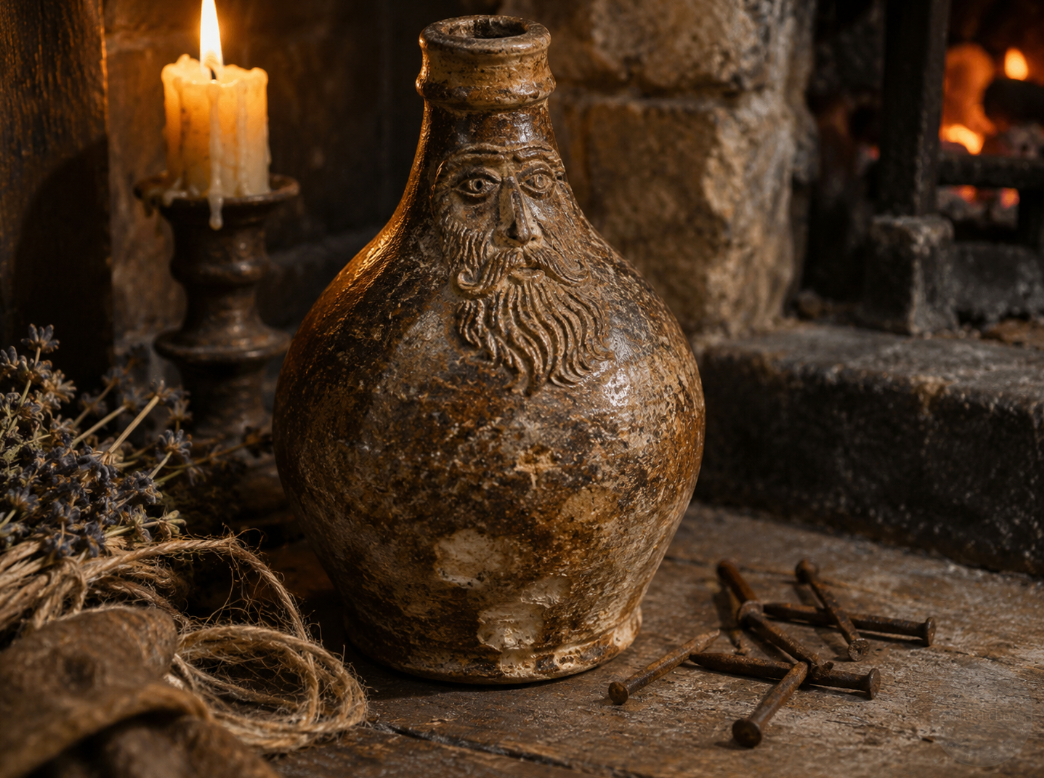
- Witch bottles were protective objects used in England, particularly during the seventeenth century, to counter suspected witchcraft.
- Some contained human urine, bent pins, iron nails, hair, and other personal materials believed to influence harmful magic.
- The bottles were often concealed beneath hearths, floors, and thresholds, where they might remain hidden for centuries.
- Archaeologists have discovered surviving examples, providing physical evidence of historical beliefs about witches and supernatural protection.
Imagine renovating an old English house and discovering a sealed ceramic bottle beneath the fireplace. Inside are rusted iron nails, bent pins, strands of hair, and traces of a strange substance. Nothing about the object suggests that it was accidentally discarded. Someone deliberately concealed it where nobody was supposed to find it.
Centuries ago, that bottle might have been placed there to fight an invisible enemy. Known as witch bottles, these disturbing objects were used to protect people who believed they had been cursed or attacked through witchcraft. Unlike fictional magical artifacts, surviving witch bottles have been recovered by archaeologists from historic English buildings.
What Was Inside a Witch Bottle?
Historical examples vary, but some of the most striking contain combinations of human urine, iron nails, pins, hair, and other personal materials. Many early examples used sturdy stoneware vessels, including imported German Bellarmine jugs, also known as Bartmann jugs, recognizable by their bearded faces.
Researchers have identified unusual contents through archaeological examination and scientific analysis. In certain surviving examples, the presence of urine has been supported by chemical evidence rather than simply assumed from folklore.
The objects were not ordinary household rubbish. Their contents and concealed locations suggest deliberate acts of protective or counter-magical practice.
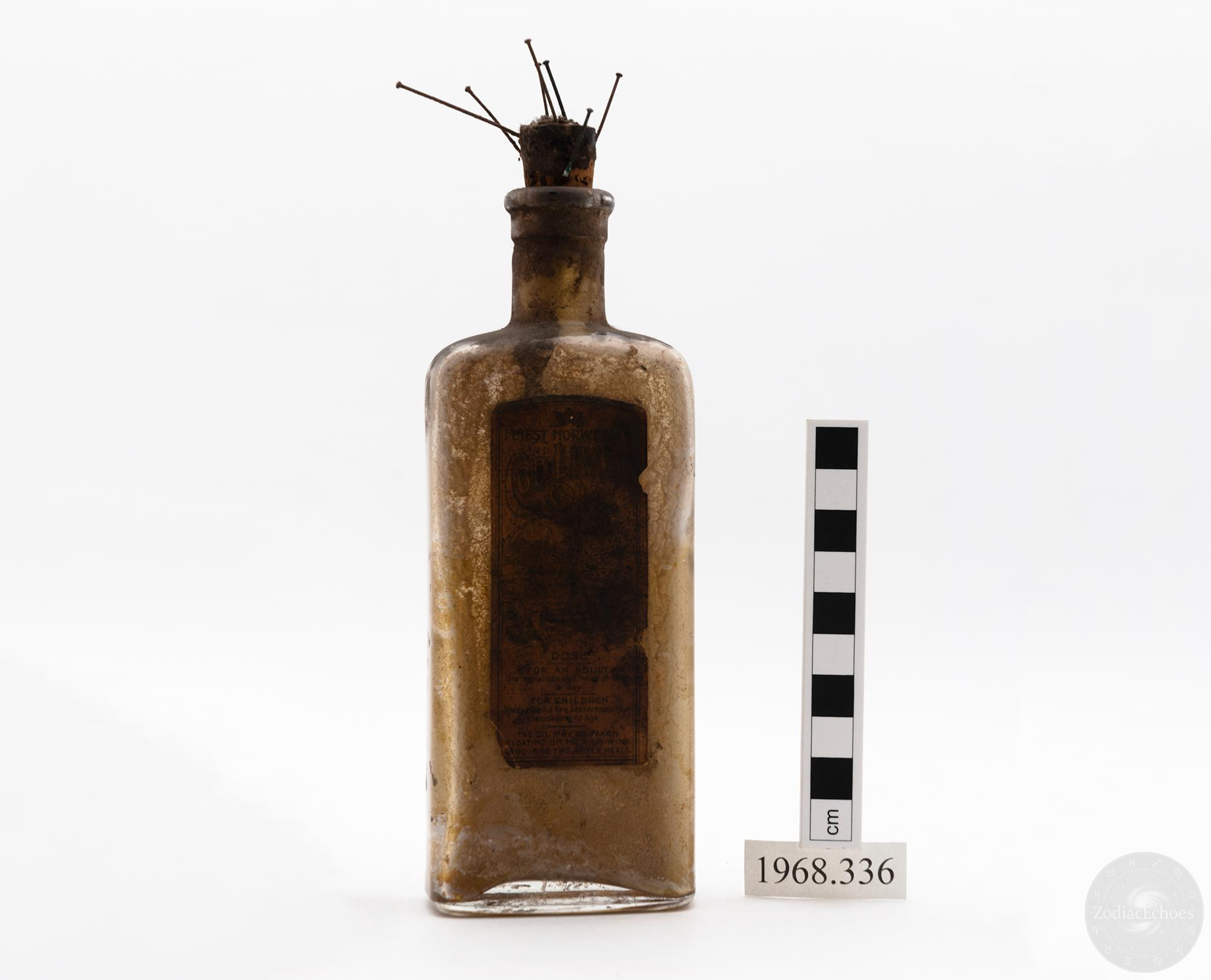
An authentic historical vessel and its corroded contents, including iron pins. The archaeological find is documented in the Portable Antiquities Scheme database.
Why Would Someone Put Urine and Nails in a Bottle?
During the early modern period, unexplained illness, persistent pain, or repeated misfortune could sometimes be blamed on witchcraft. People who believed themselves bewitched sought ways to identify or defeat the supposed source of their suffering.
One form of counter-magic involved placing the afflicted person’s urine inside a vessel together with sharp objects. According to historical explanations, the urine created a symbolic connection to the victim, while pins and nails were intended to torment or repel the suspected witch.
Some traditions involved heating the bottle, supposedly causing pain to the person responsible for the curse. Other examples were buried or concealed rather than heated.
The underlying belief was that magic could be redirected toward its alleged source, breaking the harmful influence over the victim. There is no evidence that these methods actually affected witches, but the bottles reveal how seriously supernatural threats were taken.
Why Were Witch Bottles Buried Beneath Fireplaces?
Many witch bottles have been found beneath hearths, under floors, or near entrances. These were significant locations within the home, often associated with boundaries, protection, and vulnerability.
The fireplace was particularly important because it connected the household interior to the outside world through the chimney. In some folk beliefs, such openings were imagined as possible routes for supernatural intrusion.
Concealing a witch bottle beneath the hearth could therefore serve as a hidden defensive measure against an invisible threat.
Once buried, the object might remain undisturbed for generations. Later occupants could live above it without knowing that someone had once feared witchcraft strongly enough to hide a protective charm beneath their feet.
The Real Witch Bottle Found in Greenwich
One especially important archaeological example was recovered from Greenwich, London, and examined by researchers using modern scientific techniques.
The seventeenth-century stoneware vessel contained bent pins, nails, hair, and evidence of human urine. Its contents provided unusually detailed confirmation of the ingredients described in historical accounts of witch-bottle practices.
Discoveries like this demonstrate that witch bottles were not merely stories repeated by later folklorists. People genuinely assembled and concealed these objects.
The bottles also complicate popular images of early modern witchcraft. Their owners were not necessarily attempting to practice harmful magic themselves. Many believed they were defending their households against it.
What Witch Bottles Reveal About Everyday Fear
Witchcraft accusations are often remembered through trials and executions, but witch bottles reveal a quieter side of the same historical anxieties. Ordinary people sought protection inside their own homes, using whatever materials they believed could counter supernatural danger.
A few nails, a personal bodily substance, and a concealed vessel could represent a family’s desperate attempt to regain control over an unexplained misfortune. Today, these objects survive as archaeological evidence of how fear, illness, religion, and folk magic intersected in everyday life.
Conclusion
The witch bottles of England are among the most unsettling discoveries hidden inside historic houses. Their contents may appear bizarre today, but to the people who buried them, they represented protection against a threat they believed was real.
Somewhere beneath an old fireplace or floorboard, another sealed bottle may still be waiting to be discovered. And when it is finally opened, it may reveal the fears of a household that disappeared centuries ago.
Cosmic Highlights
FAQ
What is a witch bottle?
A witch bottle is a concealed protective object historically used against suspected witchcraft. Some English examples contain urine, nails, pins, hair, and other materials associated with counter-magic.
Why did people put urine in witch bottles?
Urine was believed to create a symbolic connection to a person thought to be suffering from witchcraft. Combined with sharp objects, it was intended to counter or redirect the suspected magical attack.
Where have witch bottles been discovered?
Archaeologists and homeowners have found witch bottles beneath fireplaces, floors, thresholds, and other concealed locations in historic buildings, particularly in England.
Are witch bottles real historical objects?
Yes. Surviving examples have been examined by archaeologists and museums. Their existence is well documented, although the supernatural effects attributed to them belong to historical belief rather than demonstrated fact.