- An ancient Mediterranean belief: The evil eye is traditionally associated with envy, misfortune, and unexplained illness.
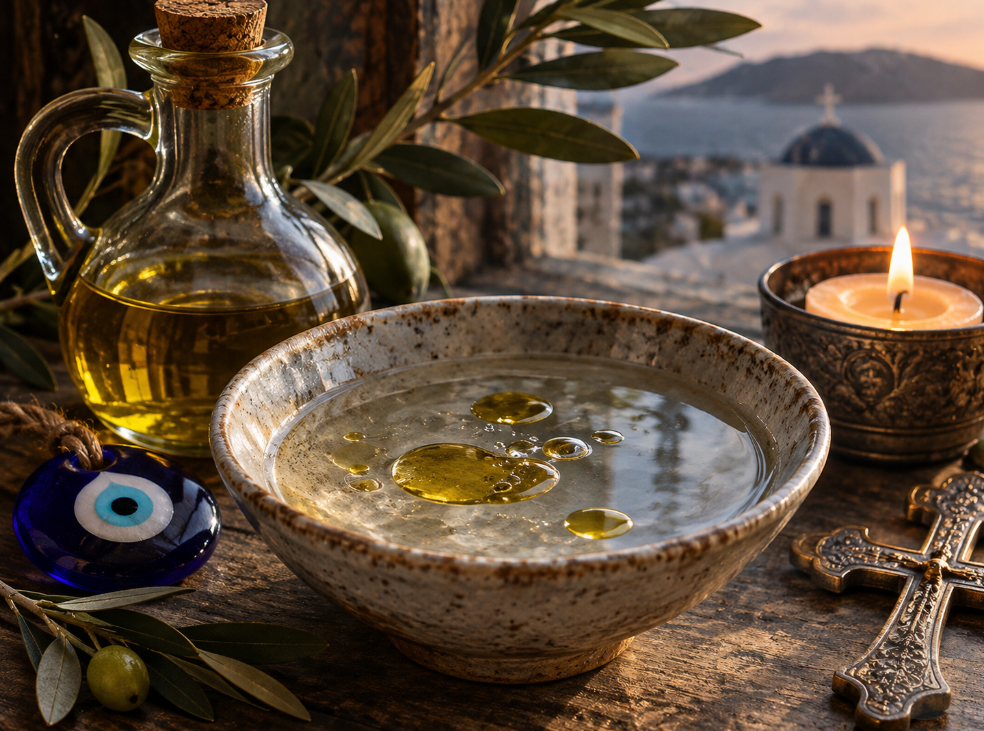
- A mysterious household ritual: Drops of olive oil placed in water are believed to reveal whether someone has been affected.
- Different interpretations: The spreading, separation, or merging of oil droplets can carry different meanings depending on local traditions.
- A surviving custom: Families in Greece and Italy have preserved versions of this ritual across generations.
Imagine sitting at a kitchen table while an elderly woman carefully pours three drops of olive oil into a shallow bowl of water. She watches the surface closely, whispers a prayer, and studies the changing shapes of the oil. According to an old Mediterranean tradition, the movement of those droplets can reveal whether someone has been struck by the evil eye.
This unusual ritual has survived in parts of Greece and Italy, where the belief in harmful glances has been passed down through generations. Known as malocchio in Italian and mati in Greek, the evil eye is traditionally associated with jealousy, envy, sudden illness, and unexpected misfortune.
How Does the Olive Oil Evil Eye Ritual Work?
The ritual usually begins with a bowl or plate filled with water. A person familiar with the tradition, often an older woman, carefully adds several drops of olive oil while observing how they behave on the surface.
In some Italian traditions, three drops of oil are placed into the water. If they remain together, the person is considered unaffected. If they spread apart or form unusual patterns, the movement may be interpreted as evidence of the evil eye.
Other regional traditions interpret the droplets differently. Some associate the appearance of an eye-shaped formation with a harmful influence, while others examine whether the oil disperses or remains concentrated. The ritual is often accompanied by whispered prayers, the sign of the cross, or protective words traditionally learned from an older family member.
Why Was Olive Oil Considered So Powerful?
Olive oil has occupied an important place in Mediterranean life for thousands of years. Beyond its use in cooking, it has been associated with purification, religious ceremonies, healing traditions, and protection.
In ancient Greek and Roman societies, olive trees symbolized prosperity, peace, and divine favor. Later Christian traditions incorporated olive oil into religious practices, including anointing and blessing.
Its symbolic association with purity and protection made olive oil a natural ingredient in folk rituals intended to identify or remove harmful influences. In some Italian communities, olive leaves were also placed inside protective amulets, while blessed branches were burned as part of traditional cleansing practices.
The Secret Prayers Passed Down Through Generations
One particularly mysterious aspect of the olive oil ritual is the secrecy surrounding its words. In certain families, the prayers were traditionally passed from an older relative to a younger one rather than shared openly.
Some versions involve making the sign of the cross over the water, while others include repeated prayers intended to remove the harmful influence. In Greece, the practice is often associated with xematiasma, a traditional ritual intended to relieve someone believed to be suffering from the evil eye.
The person performing it may observe the oil, recite prayers, and symbolically cleanse the affected individual. The precise procedure varies between communities and families.
Why Do People Still Practice This Ritual Today?
The belief in the evil eye remains recognizable throughout the Mediterranean and beyond. Blue eye-shaped charms, protective gestures, and household blessings continue to appear in everyday life.
For some families, the olive oil ritual represents a connection to their ancestors and the protective traditions of earlier generations. Grandparents may teach younger relatives the meaning of the oil droplets, the prayers, and the circumstances in which the ritual was traditionally performed.
Although oil naturally behaves differently on water depending on temperature, surface tension, and other physical conditions, its movements have acquired powerful symbolic meanings within these traditions.
Conclusion
The olive oil evil eye ritual is a fascinating example of how ancient Mediterranean beliefs continue to survive in modern households. A few drops of oil, a bowl of water, and whispered words connect everyday life with centuries of folklore surrounding envy, protection, and unseen influences.
What makes the tradition particularly intriguing is that its meaning has been preserved not through elaborate ceremonies, but through ordinary family practices passed from one generation to the next.
Cosmic Highlights

FAQ
What does it mean when olive oil spreads in water?
In some Mediterranean folk traditions, oil spreading across the surface is interpreted as a sign of the evil eye. However, interpretations differ between regions and families.
Why are three drops of olive oil used?
Three drops appear in several documented versions of the ritual. The number also carries religious symbolism in some Christian-influenced traditions, although not every version follows the same procedure.
What is the evil eye called in Greece and Italy?
In Greece, it is commonly called mati, while the Italian term is malocchio. Both refer to the traditional belief that a harmful or envious gaze can bring misfortune.
Is the olive oil evil eye ritual still practiced?
Yes. Versions of the ritual remain part of family folklore and traditional spiritual practices in Mediterranean communities, particularly in Greece and Italy.