- Welsh corpse candles were mysterious lights believed to warn of approaching death.
- According to folklore, the lights sometimes followed the exact route of a future funeral procession.
- The size and color of the flame were thought to reveal details about the person destined to die.
- Historical accounts describe witnesses encountering these ghostly lights on roads, near homes, and beside rivers.
Imagine walking along a deserted Welsh country road after sunset when a small, pale flame suddenly appears in the darkness. There is no lantern, no person carrying a candle, and no obvious source of light. Yet the mysterious glow begins moving slowly toward the village churchyard.
According to an old Welsh superstition, seeing such a light could mean that someone nearby was about to die. These supernatural apparitions were known as Canwyll Corff, or corpse candles, and for generations they occupied a particularly frightening place in Welsh folklore.
The Ghostly Lights That Predicted Death
Unlike ordinary ghost stories, corpse candle legends did not necessarily involve the appearance of a dead person. Instead, the warning arrived as a mysterious light, sometimes described as a floating candle or a bluish flame moving without any visible support.
In his 1880 book British Goblins, American folklorist Wirt Sikes documented numerous Welsh accounts of these apparitions. He described how strongly the belief persisted among some communities during the nineteenth century.
The most disturbing detail was that the light supposedly appeared before the death occurred. It could emerge near someone’s home, travel along a road, or disappear inside a churchyard. According to witnesses’ stories, a funeral procession would sometimes follow precisely the same route days or weeks later.
Could the Color of the Flame Reveal Who Would Die?
Welsh folklore attributed different meanings to the appearance of corpse candles. Some traditions claimed that a large flame foretold the death of an adult, while a small light warned of a child’s death.
Other accounts assigned significance to the color of the flame. Red, white, blue, and pale yellow lights were variously associated with men, women, or children, although the interpretations differed between storytellers and regions.
Two lights appearing together could signal multiple deaths. In some versions, a larger and smaller flame were interpreted as a warning concerning a mother and child.
For people who accepted these beliefs, the appearance of an unexplained light was not simply frightening; it could be interpreted as a personal message about an approaching tragedy.
The Woman Who Tried to Touch a Corpse Candle
One particularly unsettling account recorded by Wirt Sikes concerns a woman in Caerau, near Cardiff, who was staying beside her frightened mother-in-law. During the night, she reportedly noticed a faint flame near the foot of the bed. Strangely, the light did not illuminate the surrounding room.
She reached toward the apparition and appeared to touch it. At that moment, the flame vanished in a shower of pale sparks. According to the story, her mother-in-law groaned and died immediately afterward.
The account became another example of the supposed connection between corpse candles and death, although it survives as a folkloric testimony rather than a medically or scientifically verified event.
The Three Candles at Golden Grove
Another disturbing legend describes a coach traveling near Golden Grove in Carmarthenshire. Passengers allegedly witnessed three mysterious lights floating along the surface of a stream.
Several days later, a group of men attempted to cross the flooded water in a small coracle. One decided not to continue, leaving three men to make the crossing. According to the traditional account, all three drowned. For those who believed the story, the three lights had predicted the exact number of victims before the accident occurred.
Why Were Corpse Candles Associated With Saint David?
One Welsh tradition connected corpse candles with Saint David, the country’s patron saint. According to the legend, Saint David prayed that people would receive a warning before death, allowing them time to prepare spiritually. The mysterious lights were said to be the answer to his prayer.
This interpretation transformed an otherwise terrifying apparition into something more complicated: a supernatural warning that might also be understood as an act of mercy.
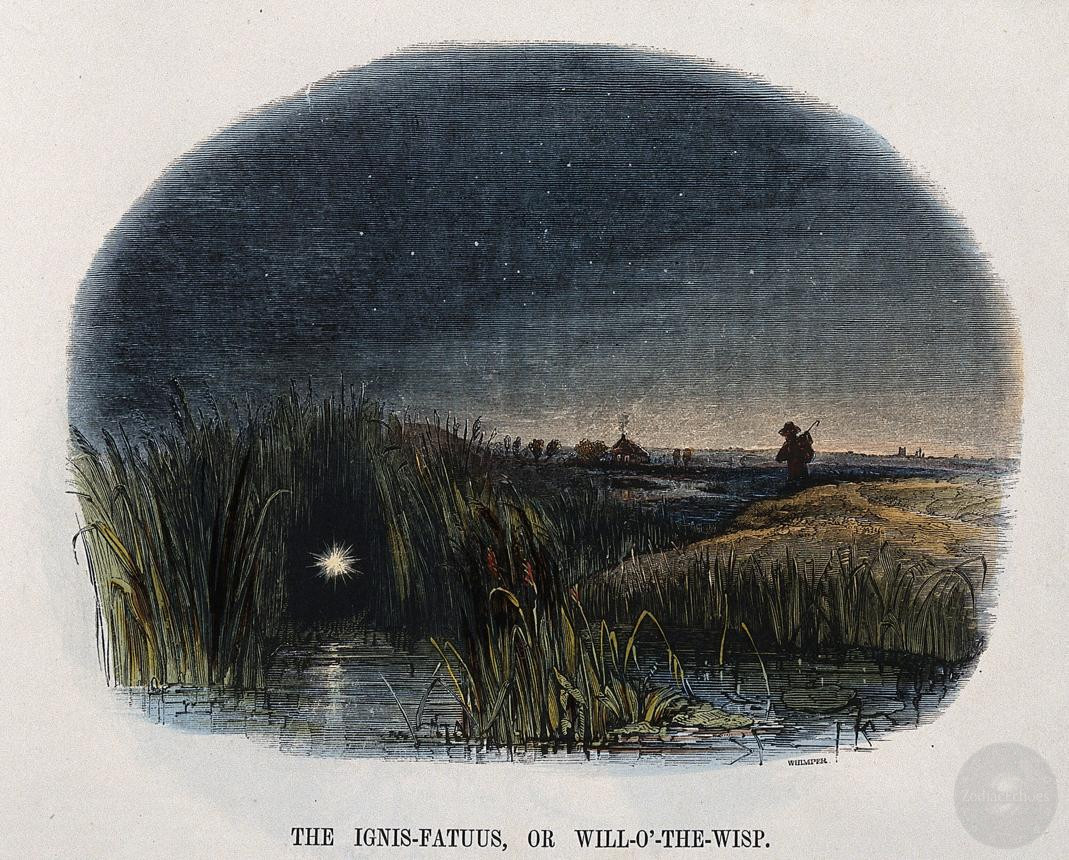
Similar mysterious lights appear elsewhere in European folklore, particularly in stories about will-o’-the-wisps. However, the Welsh corpse candle developed its own distinctive connection with funeral routes and approaching death.
Conclusion
The corpse candles of Wales remain among Britain’s most haunting supernatural traditions. Their legends describe ghostly flames appearing before deaths, moving through deserted landscapes, and revealing the routes of funerals that had not yet taken place.
Whether understood as folklore, unexplained observations, or stories shaped by coincidence, these accounts reveal how earlier generations interpreted mysterious lights as messages from the boundary between life and death.
And perhaps the most frightening element of the tradition was its simplicity: one small flame in the darkness could be enough to convince an entire community that someone would soon die.
Cosmic Highlights

FAQ
What is a Welsh corpse candle?
A corpse candle, or Canwyll Corff, is a supernatural light in Welsh folklore believed to warn of an approaching death or funeral.
What did the size of a corpse candle mean?
According to some traditions, a large light indicated an adult’s death, while a smaller flame suggested the death of a child.
Did corpse candles follow funeral routes?
Yes, according to Welsh folklore. Witnesses sometimes claimed that the lights traveled along roads later used by funeral processions.
Were corpse candles connected to Saint David?
One Welsh legend attributed their appearance to Saint David’s prayers that people should receive warnings before death.