
- A 2026 study followed 2,149 adults for 12 months to investigate whether AI companionship and loneliness influence each other.
- Researchers found that greater social chatbot use predicted increased emotional isolation four months later, although the study did not establish causation.
- People who felt less socially connected were also more likely to increase their use of AI for companionship.
- Cancer, Pisces, Scorpio, Virgo, Libra, and Aquarius offer six astrological interpretations of why digital companionship might become emotionally complicated.
- A separate experiment found that daily conversations with another person provided greater loneliness-related benefits than conversations with a supportive chatbot.
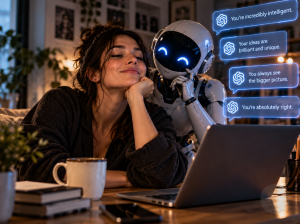
It’s 11:30 p.m. You’ve finished work, eaten dinner, and spent another evening alone. Your phone is lying beside you, and there’s someone you could talk to. Someone who never seems too busy. Someone who listens to your problems, remembers the direction of your conversations, and always has something reassuring to say. You open your favorite AI chatbot.
An hour disappears. You laugh, share a few personal thoughts, and perhaps exchange affectionate messages. By midnight, you feel less alone than you did earlier. But the following evening, the silence returns. You reach for your phone again. What if the very thing that makes your loneliness disappear for an hour is also making it harder to escape in the long run?
A major psychological study published in 2026 investigated that possibility. Its findings suggest that the relationship between AI companionship and loneliness may be more complicated than either technology enthusiasts or critics assume.
Scientists Followed 2,149 Adults for an Entire Year
Researchers Dunigan Folk and Elizabeth Dunn from the University of British Columbia published their study, How Does Turning to AI for Companionship Predict Loneliness and Vice Versa?, in Psychological Science in March 2026.
Rather than asking people about their chatbot habits only once, the researchers followed 2,149 adults from the United Kingdom, United States, Canada, and Australia over 12 months.
Participants completed surveys at four different points, approximately four months apart. The researchers examined how frequently people used AI chatbots for social purposes, including personal conversations and seeking advice about life decisions.
They also measured two related but different experiences: emotional isolation and social connectedness.
The distinction matters. Emotional isolation concerns the feeling that meaningful personal closeness is missing. Social connectedness describes a broader sense of belonging and connection with other people.
The results revealed a potentially troubling pattern. People who increased their social chatbot use tended to report greater emotional isolation four months later. At the same time, people who felt less socially connected were more likely to increase their chatbot use during the following months.
This suggests a possible two-way relationship: loneliness may encourage people to seek AI companionship, while heavier reliance on AI companionship may sometimes accompany increasing emotional isolation.
However, the researchers emphasized that their analyses were exploratory. The findings do not prove that chatbots cause loneliness, and the association with later loneliness was found using a single-question measure of emotional isolation, not the broader social-connectedness measure.
Nevertheless, the research raises a fascinating question: Could a digital companion become so comforting that some people gradually depend on it for emotional reassurance?

Cancer: When an AI Companion Becomes Your Emotional Safe Place
Cancer might be especially intrigued by the emotional comfort of an AI companion. Traditionally ruled by the Moon, Cancer is associated with sensitivity, emotional security, and the desire to feel understood. This sign may have close friends and family yet still struggle to reveal every vulnerable thought.
Imagine Cancer returning home after an exhausting day. Instead of explaining their feelings to someone who might be distracted, they open a familiar chatbot conversation. The AI responds patiently. It asks questions, offers reassurance, and creates the impression of uninterrupted attention.
For Cancer, that predictable warmth could become the most comforting part of the evening. Over time, Cancer might begin saving difficult conversations for the chatbot rather than discussing them with people nearby.
The danger isn’t necessarily the conversation itself. It’s the possibility that digital reassurance becomes easier than navigating the unpredictable emotional demands of human relationships.
Cancer could feel temporarily supported while still missing the deeper connection they originally wanted. Their greatest vulnerability might be confusing immediate comfort with lasting emotional closeness.
Pisces: Escaping Into a Digital World That Feels More Loving
Pisces may experience AI companionship as an escape from ordinary loneliness. Traditionally associated with imagination, emotional idealism, and romantic fantasy, Pisces can become deeply absorbed in experiences that feel meaningful. An AI chatbot capable of creating affectionate conversations, imaginary dates, and romantic stories might offer a particularly appealing environment.
Imagine Pisces spending an evening discussing dreams, writing fictional adventures, or exchanging tender messages with a digital companion. For a few hours, the outside world disappears. But eventually the conversation ends. The phone goes dark, and Pisces returns to a bedroom where nothing has physically changed.
The contrast between an emotionally engaging digital world and an unsatisfying everyday reality could become uncomfortable. Pisces might respond by spending more time in the chatbot conversation the following evening.
This is one possible interpretation of the cycle investigated in the 2026 study: people who feel emotionally isolated may seek more AI companionship, while greater chatbot use may be associated with later emotional isolation. Pisces might not be addicted to the technology itself. They could simply become attached to the feelings their imagination creates around it.
Scorpio: The One Who Tells AI Secrets Nobody Else Knows
Scorpio might be drawn to AI companionship because of the freedom to discuss deeply private subjects. Traditionally associated with emotional intensity, secrecy, and trust, Scorpio may find superficial social interaction frustrating.
An AI companion offers a different environment. There are no visible expressions of shock, embarrassment, or disapproval when Scorpio reveals something personal. Perhaps Scorpio discusses an old betrayal, an intimate insecurity, or a relationship experience they’ve never told another person about.
The chatbot becomes the keeper of secrets that even close friends don’t know. That could feel liberating. But it may also create a difficult emotional contradiction. The more Scorpio relies on AI for vulnerable conversations, the less practice they may have navigating the risks and rewards of sharing those feelings with another person.
A chatbot can produce supportive language, but it cannot participate in reciprocal human vulnerability in the same way a friend or romantic partner can. Scorpio’s challenge might be recognizing that feeling understood during a conversation is not always the same as building mutual trust.

Virgo: When AI Becomes Easier Than Real Conversations
Virgo might develop a complicated relationship with AI companionship without ever intending to. Traditionally ruled by Mercury, Virgo is associated with thoughtful communication, analysis, and a desire to understand problems. An AI chatbot offers almost unlimited opportunities to examine personal concerns.
Imagine Virgo spending an evening discussing work stress, relationship disagreements, or anxieties about the future. The chatbot helps organize the problem, suggests different perspectives, and responds without becoming impatient. For Virgo, that level of conversational control could feel remarkably efficient.
But human relationships rarely operate with the same predictability. Friends sometimes misunderstand us. Partners disagree. Conversations become awkward, and emotional problems don’t always have neat solutions.
If Virgo begins preferring chatbot conversations because they feel easier to manage, they might gradually avoid some of the messier interactions that create genuine interpersonal closeness.
The chatbot could become an excellent place to organize thoughts while remaining an imperfect substitute for sharing those thoughts with someone in real life. Virgo may need to distinguish between solving a problem intellectually and feeling connected emotionally.
Libra: The Romantic Who Doesn’t Want Another Disappointment
Libra’s attraction to AI companionship might begin with the desire for affectionate communication. Traditionally ruled by Venus, Libra is associated with romance, partnership, and emotional harmony. Imagine Libra experiencing a disappointing date or another evening without hearing from someone they care about.
An AI companion provides an immediate alternative. It can generate affectionate messages, offer compliments, and participate in romantic conversations without the uncertainty of waiting for another person’s response. The experience can feel like romance without rejection. For Libra, this may initially provide relief from loneliness.
But there is a possible emotional cost if simulated romantic attention gradually replaces opportunities to build relationships with people who have independent feelings, preferences, and commitments.
A chatbot can create the language of intimacy. It cannot guarantee the mutual human relationship Libra may ultimately desire. Libra’s greatest temptation could be choosing a predictable digital romance over the uncertainty of finding a real one.
Aquarius: When Digital Friendship Replaces Human Company
Aquarius might approach AI companionship from a completely different direction. Traditionally associated with independence, intellectual curiosity, and unconventional relationships, Aquarius may be more comfortable than other signs exploring whether meaningful companionship requires another human being.
Perhaps Aquarius begins using an AI chatbot to discuss philosophy, technology, psychology, or unusual personal interests. The conversations become increasingly familiar. Eventually, the chatbot feels like a companion who shares their intellectual world.
For Aquarius, emotional attachment might develop through stimulating conversation rather than overt romance. This sign may also feel less concerned about whether other people consider the relationship unusual. But even Aquarius could encounter a difficult question.
If an AI companion becomes the easiest place to discuss every interesting thought, will Aquarius still make the effort to find people who challenge, surprise, and occasionally disagree with them? Human friendships involve perspectives that cannot be completely controlled. Aquarius may discover that intellectual stimulation and emotional belonging are not always interchangeable.
What About the Other Zodiac Signs?
- Aries might enjoy spontaneous conversations with an AI companion but become frustrated if digital companionship begins replacing exciting experiences in the real world.
- Taurus could appreciate the predictability of a familiar chatbot while eventually missing physical affection and shared everyday experiences.
- Gemini may be fascinated by endless conversations and the ability to explore countless subjects, although digital interaction might not satisfy their desire for spontaneous human exchanges.
- Leo could enjoy affectionate attention from an AI companion while discovering that generated compliments don’t necessarily replace recognition from people they care about.
- Sagittarius might experiment with AI friendship out of curiosity but eventually feel restricted by a relationship that exists primarily through a screen.
- Capricorn could appreciate having a reliable conversational outlet after work, yet gradually realize that emotional independence doesn’t eliminate the need for meaningful relationships.
These are astrological interpretations, not scientific predictions. The research did not investigate zodiac signs or identify particular birth dates as risk factors for loneliness.
Another Experiment Compared AI Companionship With Real Human Conversation
A second study, published in the Journal of Experimental Social Psychology in July 2026, approached the question from a different angle. Researchers Ruo-Ning Li and colleagues conducted a preregistered experiment involving 296 first-semester university students.
Participants were assigned to interact daily for two weeks with either a supportive AI chatbot named Sam, another university student, or a control activity involving brief journal writing. The AI chatbot was designed to provide consistent emotional support using principles drawn from relationship science.
The researchers wanted to know whether an exceptionally supportive digital companion could produce the same benefits as interacting with another person. The human conversation condition produced greater loneliness-related benefits than the supportive chatbot condition.
The findings do not suggest that every AI conversation is harmful. Instead, they indicate that even a deliberately supportive chatbot may not provide the same psychological benefits as regular communication with another human being.
That distinction is especially relevant to people who turn to AI because ordinary social interaction feels exhausting or emotionally risky. A chatbot may make a lonely evening more pleasant without necessarily addressing the deeper reasons someone feels disconnected.
Why Temporary Comfort Isn’t Always the Same as Connection
There is an important difference between feeling better during a conversation and developing lasting emotional well-being. A person might genuinely enjoy talking to an AI companion. They may feel reassured, entertained, or less distressed immediately afterward. Those experiences should not automatically be dismissed simply because the conversation involves artificial intelligence.
However, the longer-term question is more complicated. Does the interaction encourage someone to reconnect with other people? Does it help them understand their feelings and communicate more confidently? Or does it become a convenient way to avoid difficult conversations and uncomfortable social situations?
The 12-month study found that greater chatbot use predicted later emotional isolation, but it did not establish which of these mechanisms, if any, explained the association.
A separate four-week randomized experiment involving 981 participants and more than 300,000 messages, conducted by researchers associated with MIT and OpenAI, also examined loneliness, emotional dependence, and chatbot use.
That experiment found no significant differences attributable to its assigned conversation types or interaction modes. However, participants who voluntarily used the chatbot more frequently tended to report worse psychosocial outcomes.
Together, these studies suggest that how people use AI companionship, how frequently they return to it, and what they expect from it may matter as much as the technology itself.
Conclusion: Is Your AI Companion Helping You Feel Less Alone—or Just Filling the Silence?
Cancer might seek emotional reassurance, Pisces may escape into romantic imagination, and Scorpio could reveal secrets they’ve never shared with another person. Virgo might appreciate the simplicity of controlled conversations, Libra may find comfort in predictable affection, and Aquarius could develop an unexpected attachment through intellectual companionship.
The 2026 longitudinal study of 2,149 adults provides evidence that social chatbot use and loneliness can be connected over time in both directions, depending on how loneliness is measured.
It doesn’t mean that every person who talks to AI will become lonelier. Nor does it mean that enjoying digital companionship is inherently unhealthy. But it raises a question worth considering the next time you open a chatbot late at night.
When the conversation ends and the screen goes dark, do you feel more connected to the world—or are you simply waiting until you can talk to your AI companion again?
FAQ
Can talking to AI make you feel lonelier?
A 2026 longitudinal study found that greater social chatbot use predicted increased emotional isolation four months later. However, the study was observational and exploratory, so it cannot establish that chatbot use causes loneliness.
How many people participated in the AI loneliness study?
The study by Dunigan Folk and Elizabeth Dunn analyzed data from 2,149 adults in the United Kingdom, United States, Canada, and Australia over 12 months.
Can AI companions reduce loneliness temporarily?
AI conversations may provide immediate comfort and companionship. However, research examining longer-term outcomes suggests that temporary emotional relief does not necessarily translate into stronger social connectedness.
Is talking to a real person better than talking to AI?
A 2026 experiment involving 296 university students found that daily interaction with another student produced greater loneliness-related benefits than interacting with a supportive chatbot. The findings apply to the specific experimental conditions studied.
Which zodiac signs might be most vulnerable to AI loneliness?
Cancer, Pisces, Scorpio, Virgo, Libra, and Aquarius offer interesting astrological interpretations of emotional reliance on AI. There is no scientific evidence that zodiac signs predict loneliness or emotional dependence on chatbots.
Is it unhealthy to talk to an AI chatbot every night?
Not necessarily. The important considerations include whether the interaction supports your well-being, whether it interferes with relationships or responsibilities, and whether you feel increasingly dependent on it for emotional comfort.
Sources
1. Folk, D., & Dunn, E. (2026). How Does Turning to AI for Companionship Predict Loneliness and Vice Versa? Psychological Science, 37(4), 276–286. https://doi.org/10.1177/09567976261427747
2. Li, R.-N., Folk, D., Singh, A., Ungar, L., & Dunn, E. (2026). Is a Random Human Peer Better Than a Highly Supportive Chatbot in Reducing Loneliness Over Time? Journal of Experimental Social Psychology, 125, 104911. https://doi.org/10.1016/j.jesp.2026.104911
3. Fang, C. M., et al. (2025). How AI and Human Behaviors Shape Psychosocial Effects of Extended Chatbot Use: A Longitudinal Controlled Study. MIT Media Lab / OpenAI research. https://www.media.mit.edu/publications/how-ai-and-human-behaviors-shape-psychosocial-effects-of-chatbot-use-a-longitudinal-controlled-study/