-
British astrologer Ebenezer Sibly documented a disturbing necromantic ritual intended to summon the spirits of deceased individuals.
-
The ceremony was traditionally performed in a burial ground between midnight and 1 a.m.
-
A protective magical circle, consecrated torch, ceremonial wand and sacred invocations formed the foundation of the operation.
-
Sibly associated certain astrological birth configurations with an increased vulnerability to the alleged dangers of necromancy.
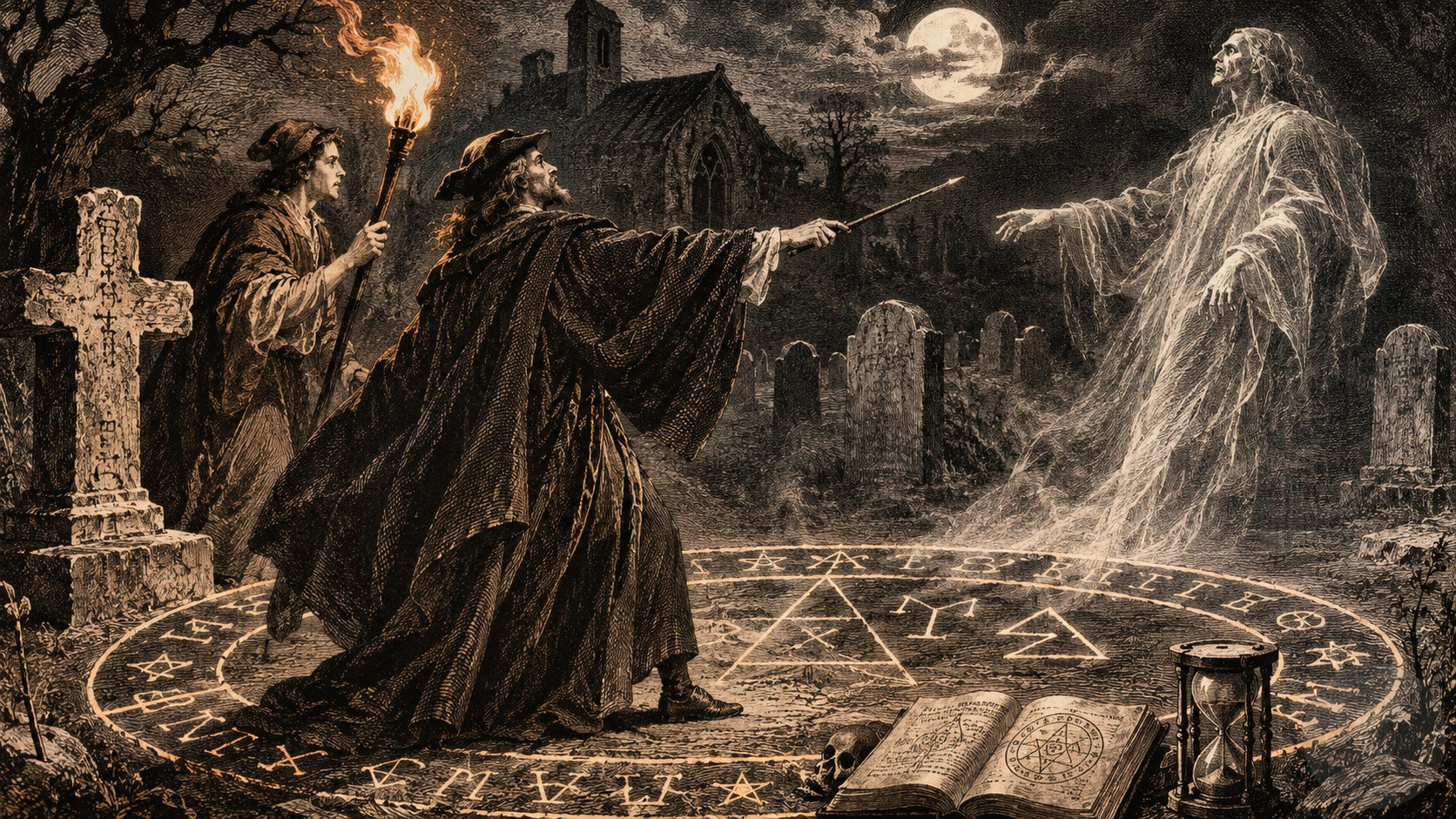
A deserted graveyard, a burning torch and a mysterious circle inscribed with sacred names. Somewhere beneath the magician’s feet lies the body of a person whose spirit he intends to summon.
For centuries, European occultists believed that death was not necessarily the end of communication between the living and the dead. Some even claimed that the deceased could be compelled to appear and reveal secrets they had taken to their graves.
One of the most disturbing descriptions of such a ceremony survives in the writings of Ebenezer Sibly, an eighteenth-century British astrologer and occult author.
The Historical Origins of the Midnight Necromancy Ritual
Ebenezer Sibly explored astrology, ceremonial magic, witchcraft and supernatural phenomena in his extensive work, A New and Complete Illustration of the Occult Sciences.
The fourth part of the publication contains descriptions of forbidden magical operations involving the spirits of the dead, accompanied by historical engravings and ceremonial diagrams.
The complete historical publication is available as a free PDF download from the Internet Archive. Readers can also explore the digitised edition on Wikimedia Commons.
Unlike modern supernatural games, Sibly’s account describes an elaborate ceremony involving religious symbolism, magical protection and the supposed authority to command the deceased.
The Protective Circle Between the Living and the Dead
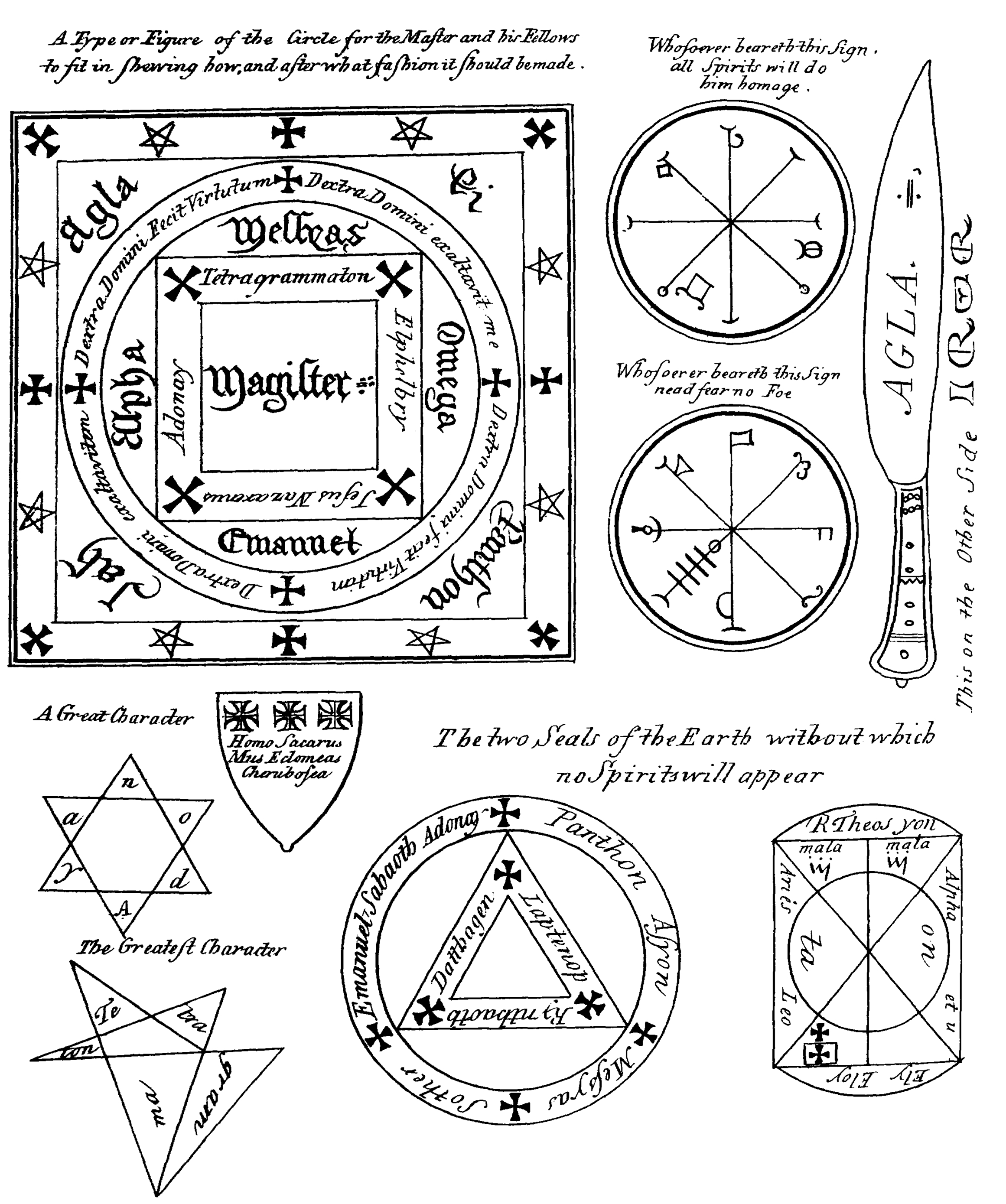
One of the most important elements of historical necromancy was the magical circle.
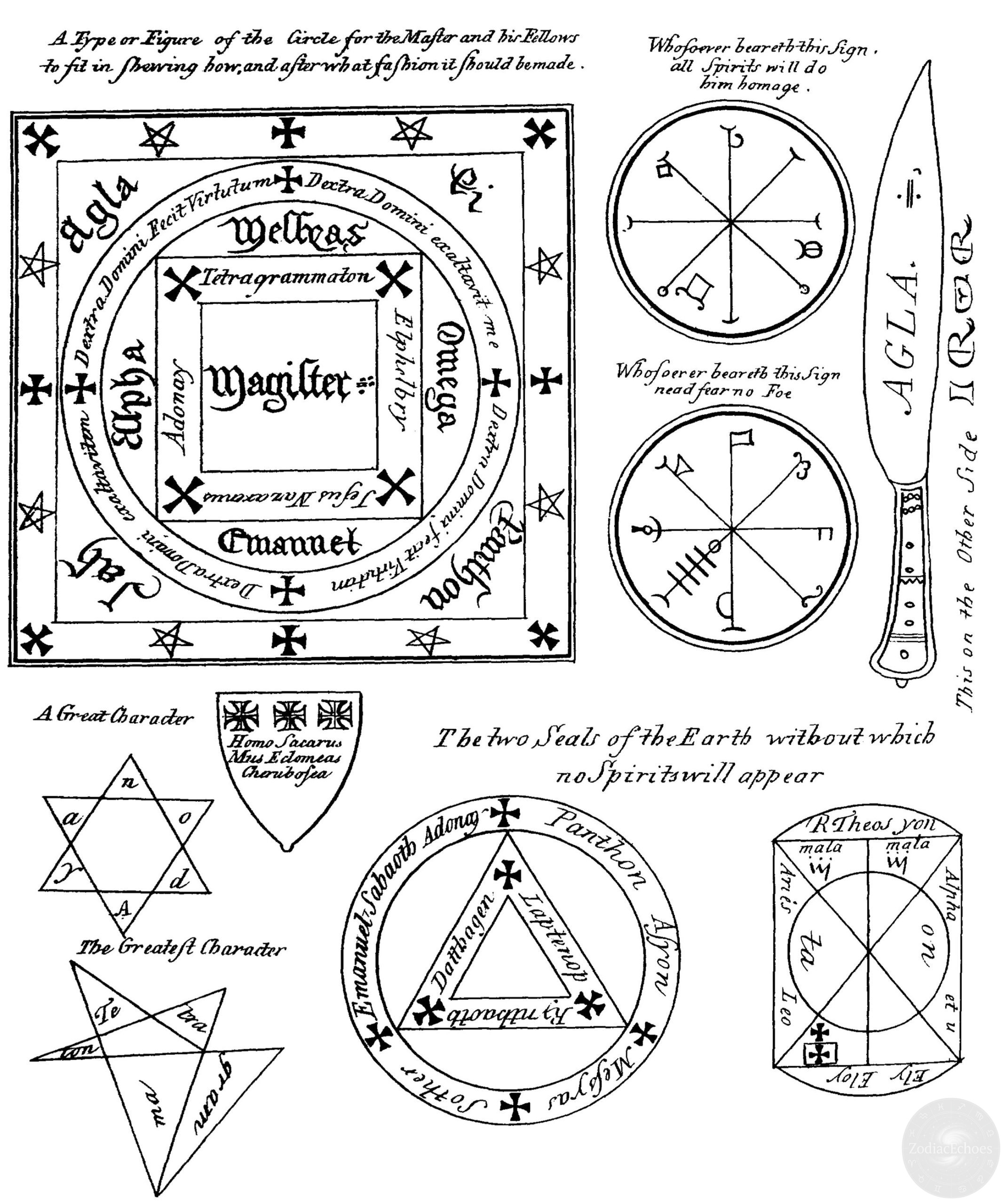
According to occult traditions, the circle created a protected space from which the magician could communicate with supernatural entities. Its boundaries were reinforced through sacred names, magical characters and symbols of divine authority.
Sibly included an elaborate illustration of such a circle alongside other ceremonial instruments. The diagram belongs to his broader system of spirit conjuration and magical protection. The magician’s greatest fear was not necessarily that the ritual would fail. It was that the summoned entity might appear without remaining under his control.
What Was Required for the Necromancy Ritual?
Sibly’s description involved several ceremonial elements, each possessing a particular symbolic function within the operation:
-
A magical circle: intended to protect the participants against supernatural forces.
-
A consecrated torch: carried by the magician’s assistant.
-
A ceremonial wand: representing the magician’s authority.
-
A burial ground: associated with the deceased individual.
-
A magician and an assistant: fulfilling separate ceremonial roles.
-
Sacred invocations: intended to compel the spirit to appear.
-
The midnight hour: the prescribed period for the operation.
The original account also contains disturbing references to physical human remains, reflecting the close historical association between necromancy and the violation of burial sites.
The Midnight Necromancy Ritual Step by Step
The original ceremony is described on page 1106 of Sibly’s work. The historical text of the necromantic invocation survives in a digital edition prepared by Joseph H. Peterson.
Step 1: Choosing the Spirit of the Deceased
The operation targeted a particular dead individual rather than an unidentified supernatural entity. The identity of the deceased was essential, as the magician intended to obtain answers from someone believed to possess specific knowledge.
Step 2: Entering the Graveyard at Midnight
The prescribed ceremonial window lasted only one hour, beginning at midnight. Darkness, isolation and proximity to the dead contributed to the atmosphere of the operation. Sibly’s broader discussion of spirit conjuration also identifies moonlit nights and violent thunderstorms as favourable conditions for supernatural manifestations.
Step 3: Establishing the Magical Circle
The magician and his companion relied upon the protective circle described earlier in Sibly’s publication. Concentric circles, squares, crosses, triangles and sacred names formed the geometric structure of this ceremonial defence. According to the occult beliefs of the period, divine names prevented hostile entities from entering the consecrated space.
Step 4: The Wand and the Consecrated Torch
The magician carried the ceremonial wand, while his assistant held the consecrated torch. The original account describes an interaction with the physical remains of the deceased and an invocation directed towards the four cardinal points.
This macabre element distinguished historical graveyard necromancy from ceremonies that attempted to contact spirits without involving their earthly remains.
Step 5: The Forbidden Invocation
The magician invoked the authority of resurrection and threatened the deceased spirit with supernatural punishment should it refuse to obey. The ceremony concluded its invocation with the mysterious words:
“Berald, Beroald, Balbin gab gabor agaba; arise, arise, arise, I charge and command thee.”
The spirit was commanded rather than invited. This distinction reveals the coercive nature of historical ceremonial necromancy.
Step 6: The Appearance of the Apparition
Sibly claimed that the spirit would subsequently become visible and respond to the magician’s questions. The intended outcome was not the permanent resurrection of the deceased but a temporary manifestation through which hidden information could supposedly be obtained.
What Happened If the Magician Left the Circle?
Sibly issued a particularly disturbing warning concerning the magician’s safety. He believed that the spirits of deceased individuals possessed the ability to cause sudden death under certain circumstances.
The protective circle and the Pentacle of Solomon were therefore regarded as essential safeguards against the supernatural consequences of the operation. The danger, according to this occult tradition, was that the magician might discover too late that the entity he had summoned was more powerful than the authority he claimed to possess.
The Astrological Warning Behind the Ritual
Perhaps the most unusual aspect of Sibly’s description is its connection with natal astrology. Sibly believed that particular planetary configurations in a person’s birth chart could indicate a natural inclination towards forbidden magical practices. He associated such configurations with an increased vulnerability to supernatural retaliation and even a violent or sudden death.
For Sibly, the dangers of necromancy were therefore connected not only with ceremonial protection but also with the magician’s natal horoscope. However, he did not identify the precise planetary configurations in this particular passage, leaving their interpretation unresolved.
Edward Kelley and the Secret of the Dead Man’s Treasure
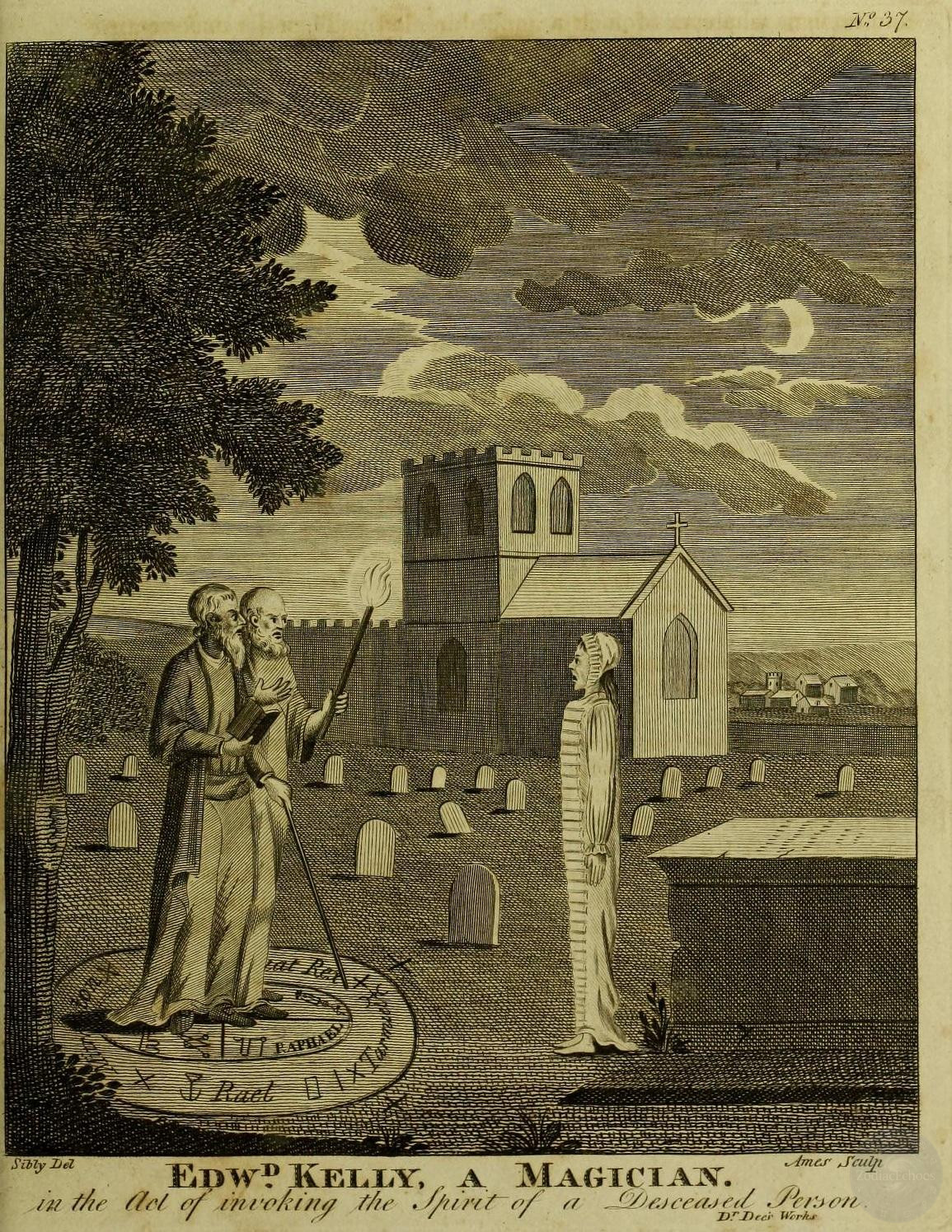
Sibly also recorded a disturbing legend involving the Elizabethan occultist Edward Kelley and his companion Paul Waring. According to the account, the two men visited a churchyard in Walton-le-Dale, Lancashire, where a deceased individual was believed to have concealed a considerable fortune before his death.
The location of the treasure remained unknown. Kelley allegedly summoned the dead man’s spirit at midnight, hoping to discover where the money had been hidden. The apparition supposedly answered their questions and delivered predictions concerning local inhabitants.
The dead were regarded as potential guardians of secrets that could no longer be obtained from the living. The story remains an unverified historical legend, but it inspired one of the most famous illustrations of European necromancy.
Conclusion
The Midnight Necromancy Ritual reveals one of the darkest chapters of European occult history. Its combination of graveyard symbolism, sacred geometry, forbidden invocations and astrological warnings reflects an age in which communication with the dead was considered both possible and extraordinarily dangerous.
The magician sought knowledge that death had concealed, yet feared the very entity capable of revealing it. Perhaps the most terrifying possibility was not that the dead would remain silent, but that they would answer.
Cosmic Highlights
FAQ
What is the Midnight Necromancy Ritual?
It is a historical occult ceremony documented by Ebenezer Sibly, intended to summon the apparition of a deceased individual and obtain answers from that spirit.
When was the Midnight Necromancy Ritual performed?
Sibly specified a ceremonial window between midnight and 1 a.m.
Why did necromancers use a magical circle?
The magical circle was believed to protect practitioners from hostile supernatural entities and establish a boundary reinforced by sacred names and symbols.
What was the purpose of the Pentacle of Solomon?
Within Sibly’s occult tradition, the pentacle served as an additional protective symbol against the alleged dangers of spirit conjuration.
Did Edward Kelley really summon a dead person?
Historical accounts describe such an encounter, but no independently verified evidence establishes that it actually occurred.
Where can I download the original necromancy book?
The historical 1807 edition of Ebenezer Sibly’s work is available as a free PDF through the Internet Archive. The publication is in the public domain.
Does the original magical circle diagram still exist?
Yes. The historical ceremonial diagram is preserved in the digital edition of Sibly’s publication available through Esoteric Archives.