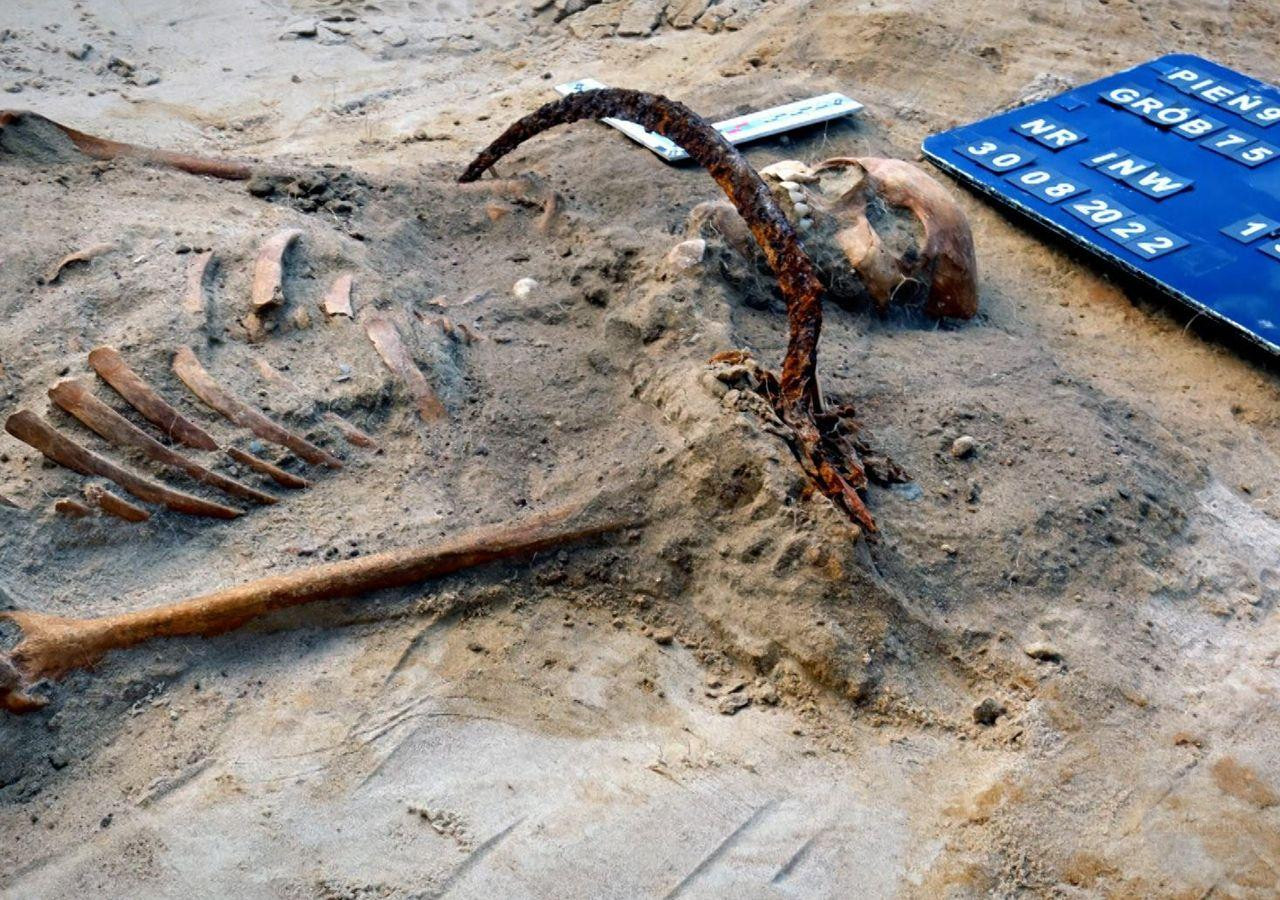
- In 2022, Polish archaeologists discovered a young woman buried with an iron sickle across her neck and a padlock on her left big toe.
- New research published in October 2026 suggests that her grave was reopened to impose additional supernatural protection.
- Genetic and archaeological evidence indicates that the woman may have belonged to a wealthy family and originated outside the local community.
- Her identity, cause of death, and the circumstances that inspired such extraordinary precautions remain unresolved.
Someone in seventeenth-century Poland feared a young woman so deeply that death apparently offered insufficient reassurance. When she was buried, a padlock was attached to her foot. At some point, an iron sickle was positioned across her neck.
More than three centuries later, archaeologists uncovered her remains in the village of Pień. What they discovered was an extraordinary physical record of the fear that the dead might return to threaten the living.
The Disturbing Discovery of Grave 75
In August 2022, researchers from Nicolaus Copernicus University in Toruń uncovered an unusual burial while investigating a historical cemetery in northern Poland.
The deceased was a young woman, estimated to have been between seventeen and twenty-one years old. Her skeleton remained remarkably well preserved, allowing researchers to examine the objects deliberately associated with her burial.
The curved blade above her throat was positioned in a manner consistent with supernatural restraint. According to one interpretation, it was intended to prevent the woman from rising without suffering further physical injury.
The triangular padlock represented another symbolic barrier between the worlds of the living and the dead.
Someone May Have Returned to Her Grave
The discovery attracted international attention, but subsequent research introduced an even more disturbing possibility. A multidisciplinary investigation published in October 2026 suggests that the two protective objects may have been deposited on separate occasions.
The padlock probably belonged to the original burial, while the sickle may have been introduced during a subsequent reopening of the grave.
This raises an unsettling question. What could have happened after the woman’s death to convince members of the community that their original precautions were insufficient? Illness, unexplained deaths, or other collective misfortunes might have revived suspicions surrounding the deceased. The specific events responsible for the intervention remain unknown.
A Woman of Wealth and Mysterious Origins
The circumstances of the burial become more intriguing when the woman’s apparent social position is considered. Fragments of luxurious fabric associated with her headwear and indications of careful funerary preparation suggest that she was treated with considerable respect during her burial.
She may have belonged to a relatively prosperous family rather than occupying the margins of society. Genetic findings have also raised questions about her geographical origins. Researchers suspect that she may have had ancestry outside the immediate region.
Whether her background contributed to the suspicions surrounding her remains is one of the central mysteries of Grave 75. Her personal relationships, reputation, and experiences during life remain undocumented.
A Mysterious Object Inside Her Mouth
Another unusual detail emerged from the examination of the woman’s skull. Greenish discoloration on her palate indicated contact with a copper-containing material. Researchers have considered whether an object, possibly a coin, was originally positioned inside her mouth.
Similar objects have been discovered in other burials at Pień, where they may have fulfilled various ritual and symbolic purposes. If the object served a protective supernatural function, Grave 75 may have contained three separate elements associated with beliefs about death and the afterlife.
When the Dead Became Suspects
Across early modern Europe, communities sometimes attributed epidemics, unexpected deaths, and persistent misfortune to individuals who had already died.
These beliefs developed in societies where the underlying causes of many diseases remained poorly understood. The suspected dead could become targets of collective anxiety, even when they had been respected during their lives.
The archaeological evidence from Pień illustrates how such fears could influence funerary practices, transforming ordinary household objects into instruments of supernatural protection. A grave could become a place of continued suspicion rather than final rest.
Conclusion
Modern researchers have named the young woman Zosia. Scientific investigation has revealed aspects of her physical condition, ancestry, and extraordinary burial, but the events that inspired these precautions remain concealed.
Perhaps the most disturbing question is why someone apparently decided to return to her grave. Whatever happened in seventeenth-century Pień, somebody appears to have believed that locking the dead away was simply not enough.
Cosmic Highlights
FAQ
Who was Zosia, the Polish vampire woman?
Zosia is the modern name given to a young woman whose seventeenth-century grave was discovered in Pień in 2022. Her original identity remains unknown.
Why was a sickle placed across her neck?
Archaeologists interpret the sickle as a protective measure associated with fears that the deceased might return to the world of the living.
Why did she have a padlock on her toe?
The padlock is interpreted as a symbolic means of securing the deceased and preventing her supernatural return.
Was her grave reopened after burial?
Research published in 2026 suggests that the grave underwent a secondary intervention during which the sickle was probably added.
How did the woman die?
Her cause of death remains unknown. Further scientific examinations may provide additional information.
Sources
-
A Unique, Non-normative Burial of a Young Adult Female from a 17th-century Cemetery in Pień, North-central Poland. A Multidisciplinary Approach – Journal of Archaeological Science: Reports, October 2026.
-
Keep Demons in the Grave – Nicolaus Copernicus University, September 2022.
-
‘Vampire’ Grave Mystery Deepens as 17th-century Woman May Have Been an Outsider – Science in Poland, September 2026.