- Ancient origins: The belief that an envious glance can bring misfortune dates back thousands of years to ancient civilizations.
- The protective nazar: Blue glass eye-shaped amulets are traditionally worn to deflect harmful attention and jealousy.
- A broken charm: In some traditions, a shattered evil eye amulet is believed to have absorbed negative energy.
- A living tradition: Evil eye symbols remain popular in jewelry, homes, vehicles, and protective family rituals.
You have probably seen it countless times: a small blue eye surrounded by white and dark blue circles, hanging from a bracelet, decorating a doorway, or attached to a necklace. Today, it is one of the world’s most recognizable protective symbols. But behind this seemingly ordinary decoration lies an ancient belief that has survived for thousands of years.
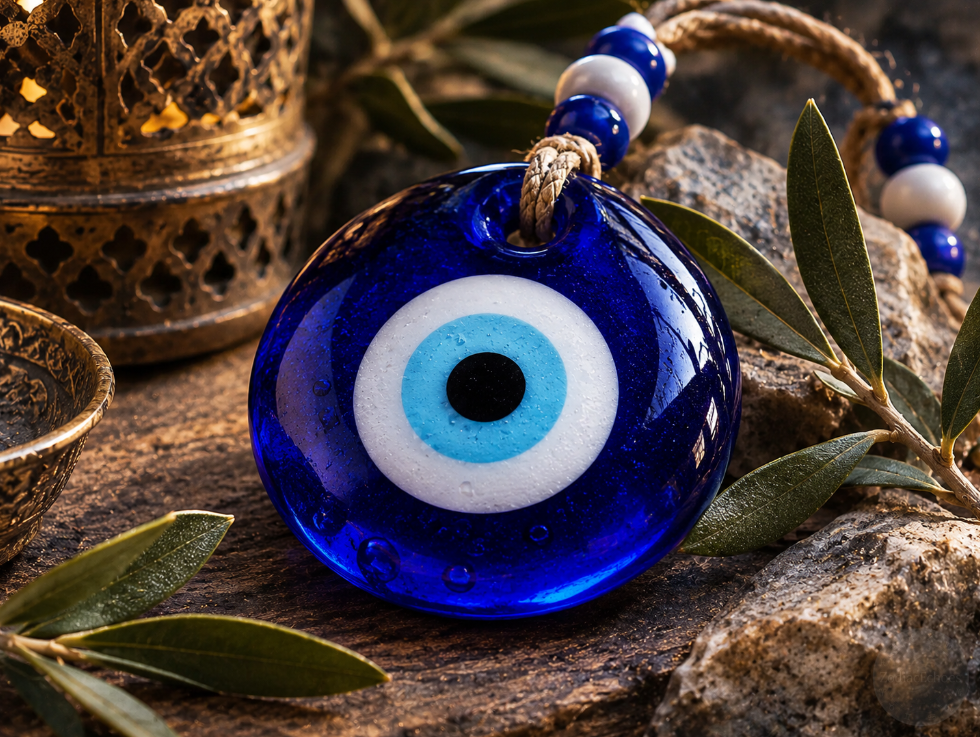
Known as the nazar in Turkey and mati in Greece, the symbol is traditionally believed to protect its owner from the evil eye: a harmful glance driven by jealousy, envy, or excessive admiration. In some cultures, even an innocent compliment was once considered capable of attracting misfortune.
The Ancient Fear of the Evil Eye
The belief in the evil eye has roots in ancient Mesopotamia and later became widespread throughout the Mediterranean, Middle East, and surrounding regions. People believed that certain individuals could transmit harmful influences through their gaze, sometimes intentionally and sometimes without realizing it.
Ancient Greek and Roman writers discussed the power of the human gaze, while protective eye symbols appeared on pottery, jewelry, and household objects. The idea was simple but unsettling: someone else’s jealousy could threaten your health, happiness, prosperity, or family.
Children, newlyweds, beautiful individuals, and prosperous households were often considered particularly vulnerable because they attracted attention and admiration.
Why Is the Nazar Usually Blue?
The traditional Turkish nazar boncuğu is typically made from blue glass, with concentric circles resembling a human eye. The most familiar design combines dark blue, white, light blue, and black.
Blue has long carried protective associations in several Mediterranean traditions. One traditional explanation connects the color with the belief that people with unusually light-colored eyes could cast particularly powerful harmful glances.
The protective eye was intended to confront or deflect the threatening gaze. Instead of allowing jealousy to reach its intended target, the amulet symbolically intercepted it. Although modern evil eye charms appear in many colors, the classic blue design remains the most recognizable.
What Does It Mean When an Evil Eye Bracelet Breaks?
One of the most intriguing beliefs concerns what happens when the amulet suddenly cracks or breaks. In some Turkish and Mediterranean traditions, a broken nazar is interpreted as evidence that the charm has absorbed a powerful harmful influence.
Rather than considering the broken object unlucky, its owner may believe that it successfully fulfilled its protective purpose. The damaged amulet is then replaced with a new one.
For people who follow this tradition, an unexpectedly broken bracelet or pendant can therefore carry a surprisingly positive meaning: the protective symbol supposedly prevented something worse from happening.
Why Were Evil Eye Charms Placed on Babies and Doorways?
The nazar was never intended exclusively as personal jewelry. Protective eyes have traditionally appeared near entrances, inside homes, in shops, and on objects associated with family prosperity.
In some communities, small blue beads were attached to children’s clothing or placed near their sleeping areas. Babies were considered especially vulnerable to unwanted attention and excessive praise.
Hanging a protective eye above a doorway was believed to prevent harmful influences from entering the home. Similar charms were placed in businesses, where they symbolically guarded against jealousy directed toward commercial success. These customs remain recognizable today, even among people who regard the nazar primarily as a cultural decoration rather than a supernatural object.
The Protective Rituals That Still Survive
Wearing an evil eye charm is only one part of a much larger collection of traditions. In Greece, the practice known as xematiasma involves prayers intended to remove the effects of the evil eye. Some Mediterranean families also preserve rituals involving olive oil and water, interpreting the behavior of oil droplets as a symbolic indication of harmful influence.
In other communities, protective words, religious blessings, or traditional gestures accompany the wearing of an amulet. These customs often pass from grandparents to younger family members, preserving beliefs that might otherwise disappear.
The remarkable feature of the evil eye tradition is its ability to adapt. The same protective symbol that once appeared on ancient ornaments now decorates modern bracelets, keychains, clothing, and even digital messages.
Conclusion
The evil eye is more than a familiar blue ornament. It represents an ancient fear of jealousy and unseen harm, together with humanity’s enduring desire for protection against misfortune.
From ancient Mediterranean amulets to modern jewelry, the nazar has preserved its recognizable appearance and symbolic purpose across generations. Whether worn as a spiritual safeguard or a reminder of family heritage, the protective blue eye remains one of the most enduring symbols of ancient tradition in everyday life.
Cosmic Highlights

FAQ
What does wearing an evil eye bracelet mean?
Traditionally, wearing an evil eye bracelet symbolizes protection against jealousy, harmful attention, and misfortune. Today, it can also represent cultural heritage or personal spirituality.
What does a broken evil eye charm mean?
According to some folk traditions, a broken charm has absorbed harmful energy and protected its owner. It is commonly replaced with a new amulet.
Why is the evil eye blue?
Blue has protective associations in several Mediterranean traditions. The familiar blue glass design is especially connected with Turkish and Greek protective amulets.
Is the evil eye symbol still used today?
Yes. Nazar amulets remain common in jewelry, homes, shops, and vehicles, particularly in Turkey, Greece, Cyprus, and other Mediterranean communities.