- Screaming skulls are a distinctive tradition in British folklore, involving human skulls believed to protect houses from supernatural misfortune.
- According to legend, removing one of these skulls could trigger screams, violent disturbances, or terrible bad luck.
- Bettiscombe Manor in Dorset and Burton Agnes Hall in Yorkshire are among the best-known locations associated with these stories.
- Historical records confirm that some skulls were genuinely preserved inside buildings, although their supposed supernatural powers remain part of folklore.
Imagine inheriting an old English manor house and discovering that one object must never be removed from the property: a human skull. According to local tradition, previous owners had tried to bury it, throw it away, or move it elsewhere. Every attempt supposedly ended in terrifying screams, violent disturbances, or unexplained misfortune.
Only when the skull was returned did the house become peaceful again. These extraordinary stories belong to a peculiar tradition known as the screaming skulls of Britain, a collection of legends in which human remains become supernatural guardians of the places where they are kept.
The Screaming Skull of Bettiscombe Manor
One of Britain’s most famous screaming skull legends comes from Bettiscombe Manor in Dorset, a historic house associated with the Pinney family. For generations, a human skull was preserved inside the building. Its presence was believed to protect the household, while removing it supposedly threatened disaster.
In 1847, Anna Maria Pinney recorded that the skull was kept on a beam in the attic, near a chimney. She was told that as long as it remained in the house, no ghost would invade the property. By 1872, the antiquarian John Symonds Udal had recorded a much darker version of the belief.
According to the tradition he encountered, removing the skull would cause the house to shake and bring death to the person responsible within a year. The skull had become more than a disturbing curiosity. It was regarded as a protective object whose removal might expose the entire household to danger.
The Disturbing Story of the Enslaved Servant
One version of the Bettiscombe legend connects the skull with an African man brought to England from the Caribbean by a member of the Pinney family. According to the story, the man wished to be returned to his homeland after death. When this request was ignored, his spirit supposedly became restless.
Some retellings claim that supernatural disturbances followed his burial and that the skull was eventually brought into the manor to restore peace. However, the story’s historical details have changed considerably over time, and the skull’s true origins remain uncertain.
Later examinations reportedly challenged the traditional identification, suggesting that the remains did not belong to the man described in the legend.
The most remarkable mystery may therefore be not whether the skull screamed, but how an unidentified human skull acquired such an elaborate supernatural history.
Burton Agnes Hall: The Woman Who Refused to Leave Her Home
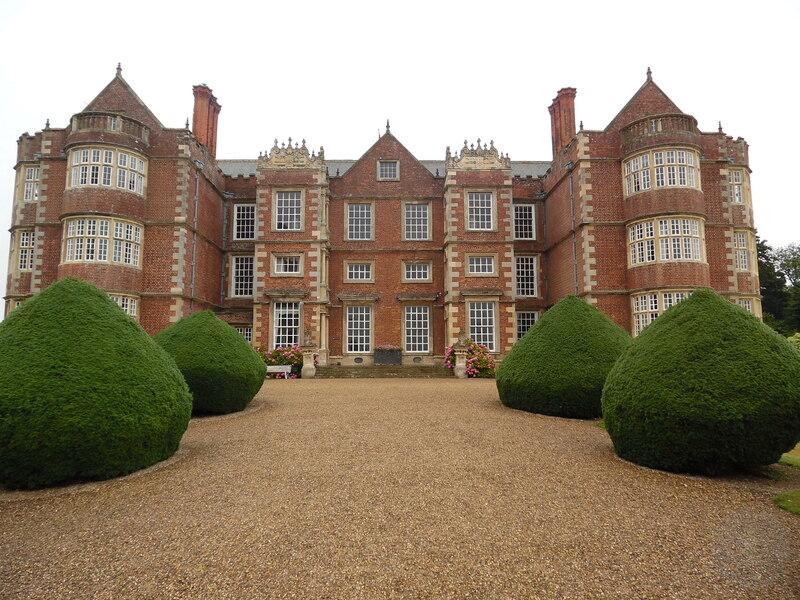
Another famous legend comes from Burton Agnes Hall in East Yorkshire, a magnificent Jacobean mansion built in the early seventeenth century. Its ghost story concerns Anne Griffith, also known in local tradition as Katherine or Anne, one of the daughters of Sir Henry Griffith.
According to the story preserved by Burton Agnes Hall itself, Anne loved the newly constructed house so deeply that she wanted to remain there forever. One day, while traveling near Harpham, she was attacked and robbed. Seriously injured, she was carried home, where she eventually died.
Before her death, she reportedly made an extraordinary request: her head was to be preserved inside the house so that part of her would always remain there. Her sisters promised to honor her wishes but ultimately buried her in the churchyard. Then the disturbances began.
The Ghost That Forced a Family to Open a Grave
According to the Burton Agnes legend, the house became plagued by frightening noises and unexplained disturbances after Anne’s burial. Doors slammed, strange sounds echoed through the rooms, and the household was reportedly terrified.
Remembering Anne’s final request, her sisters consulted a clergyman and arranged for her grave to be opened. Her skull was removed and brought back into the mansion. The disturbances supposedly stopped as soon as the skull returned.
Later attempts to dispose of it allegedly caused the haunting to resume. In one version, the skull was thrown outside, but the supernatural activity continued until it was recovered. The hall’s official account states that the skull is believed to remain concealed within an old wall, possibly somewhere in the Great Hall. Its precise location is unknown.
Why Did People Believe Skulls Protected Houses?
The screaming skull legends belong to a broader historical tradition involving protective objects hidden or preserved inside buildings. In Britain, old houses have sometimes yielded concealed shoes, bottles, animal remains, and other objects associated with ritual protection.
Human skulls carried especially powerful symbolism because they represented both mortality and the continued presence of the dead. In folklore, a skull might be interpreted as the physical link between a deceased person and the house they once inhabited.
Removing it could therefore be imagined as an act of disrespect, breaking an agreement with the dead or disturbing a protective spirit. In this sense, the screaming skull was not necessarily an evil object. It could be the very thing preventing something worse from entering the house.
Why Do So Many British Houses Share the Same Legend?
Similar stories have been recorded in several parts of Britain, including Lancashire, Somerset, Cornwall, and the Lake District. The details vary, but the underlying pattern is strikingly consistent. A skull is kept inside a building. Someone attempts to remove it. Strange noises or misfortune follow. The skull is returned, and peace is restored.
Folklorists have examined these recurring elements as examples of how local legends develop around unusual physical objects. Sometimes the skull itself is documented, while the supernatural narrative grows more elaborate with each generation.
In other cases, the story survives even when the supposed skull can no longer be located. The legends reveal a persistent fascination with the idea that the dead might retain ownership of a place long after their lives have ended.
Conclusion
Britain’s screaming skull legends are among its strangest surviving supernatural traditions. They combine real historic buildings, preserved human remains, family memories, and stories of terrifying consequences for anyone who disturbs the dead.
At Bettiscombe Manor, a mysterious skull became a household guardian whose removal supposedly threatened disaster. At Burton Agnes Hall, a woman’s final wish allegedly left her remains hidden somewhere within the walls of her beloved home.
Whether these stories originated in genuine protective customs, misunderstandings, or generations of imaginative storytelling, their central warning remains unforgettable. Some things, according to British folklore, should never be taken out of the house.
Cosmic Highlights

FAQ
What is a screaming skull?
A screaming skull is a human skull associated with British folklore that supposedly causes supernatural disturbances when removed from its traditional resting place.
Where is the screaming skull of Bettiscombe Manor?
The skull has historically been kept inside Bettiscombe Manor in Dorset. Accounts describe it being stored in the attic and later elsewhere within the house.
Is there really a skull hidden inside Burton Agnes Hall?
According to the hall’s longstanding tradition, Anne Griffith’s skull remains concealed inside an old wall. Its exact location is unknown, and the story is not independently verified.
Why were skulls believed to protect houses?
Some traditions associated human remains with protective spirits, household guardianship, and obligations to the dead.
Are screaming skull legends unique to Britain?
The particular tradition of skulls that must remain inside specific houses is strongly associated with British folklore, although beliefs involving protective ancestral remains occur in many cultures.
Sources
- Burton Agnes Hall – The Ghost
- Dorset Ancestors – Bettiscombe Manor and the Pinney Family
- Dorset Life – The Bettiscombe Skull
- Strange Pages from Family Papers – Historical Folklore Accounts