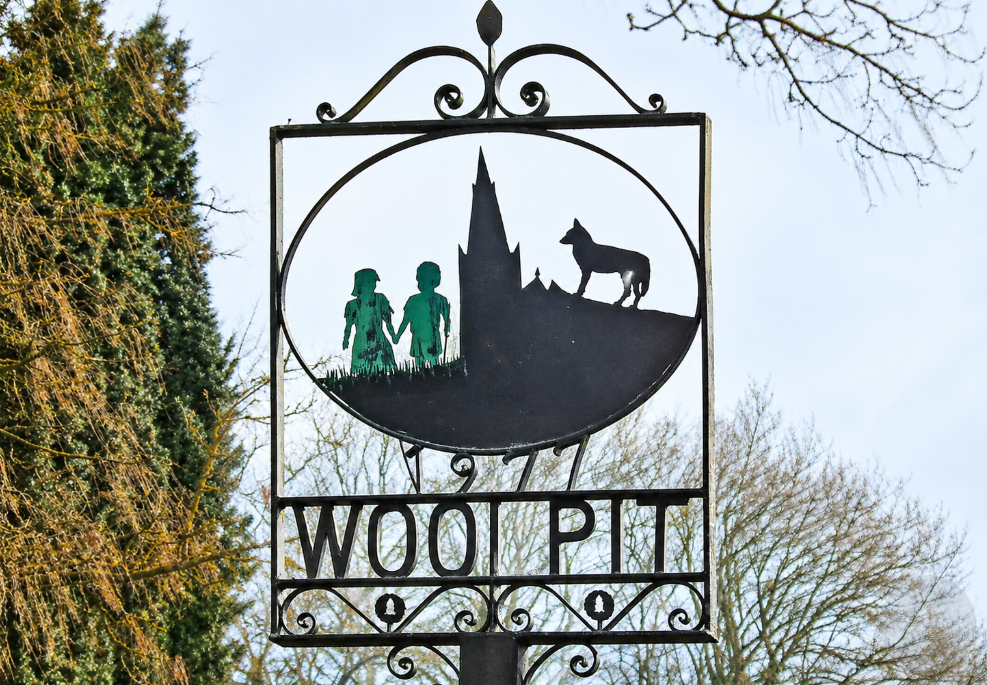
- During the 12th century, two children with green skin reportedly appeared near the English village of Woolpit.
- They spoke an unfamiliar language, wore unusual clothing, and initially refused almost every kind of food except beans.
- The surviving girl claimed they came from St. Martin’s Land, a mysterious country where the sun never shone directly.
- Two medieval chroniclers, William of Newburgh and Ralph of Coggeshall, recorded versions of the extraordinary story.
- Historians have proposed explanations involving displaced children, illness, and medieval folklore, but the original incident remains uncertain.
Imagine discovering two frightened children in a field. Their clothes are unfamiliar, their language is impossible to understand, and their skin is an unnatural shade of green. When someone finally learns where they came from, their answer is even stranger: a distant land where the sun never rises and the world exists in perpetual twilight.
This is the extraordinary story of the Green Children of Woolpit, one of medieval England’s most enduring mysteries. Unlike many legends that emerged centuries after their supposed events, this account survives in two medieval chronicles written relatively close to the period in which the incident allegedly occurred.
Two Strange Children Appear in a Suffolk Village
According to the medieval accounts, the incident took place during harvest season in the village of Woolpit, Suffolk, England. William of Newburgh placed the event during the reign of King Stephen, between 1135 and 1154. Villagers discovered a boy and a girl near one of the pits traditionally associated with trapping wolves, from which Woolpit derived its name.
The children appeared human in every respect except for their green-colored skin, unfamiliar clothing, and completely unintelligible language. Nobody could establish where they had come from.
According to Ralph of Coggeshall, they were taken to the household of Sir Richard de Calne, a local knight. Although apparently starving, they refused the bread and other food offered to them.
Then something unexpected happened. When the children noticed freshly gathered beans, they eagerly began eating them. For a time, beans were reportedly the only food they would accept.
Gradually, they adapted to ordinary meals, and their unusual green coloration began to fade. But the younger child, the boy, became increasingly weak and eventually died. The girl survived, learned the local language, and eventually revealed an astonishing story about her homeland.
The Land of St. Martin: A World Without Sunlight
Once the surviving girl could communicate, she reportedly explained that she and her brother had come from a place called St. Martin’s Land. According to William of Newburgh’s account, the inhabitants of this country were Christian and possessed churches, but their surroundings were unlike anything familiar to the people of Woolpit.
The sun never shone directly upon their homeland. Instead, the landscape remained illuminated by a dim, twilight-like light. Beyond a river, the girl said, another brighter country could be seen.
She could not clearly explain how she and her brother had reached England. In one version, they heard the sound of bells and eventually found themselves among the villagers. Ralph of Coggeshall’s account describes a journey through a cavern, after which the children emerged into the unfamiliar brightness of the English countryside.
Had they wandered through an underground passage, become lost in unfamiliar territory, or entered a world that existed only in medieval imagination?
What Happened to the Surviving Girl?
The chronicles suggest that the girl eventually adapted to her new surroundings. Her skin returned to a normal appearance, she learned English, and she became part of the local community. William of Newburgh reported that she later married a man in King’s Lynn, Norfolk, although the surviving accounts do not provide enough evidence to establish her identity independently.
Her reported survival makes the story particularly intriguing. Unlike a brief encounter with an unexplained creature, this legend describes a child who supposedly lived among ordinary people for years.
Who Were the Green Children of Woolpit?
Several interpretations have been proposed over the centuries. One historical theory suggests that the children were displaced foreigners, possibly of Flemish origin. Their unfamiliar language, clothing, and confusion could reflect the experiences of children separated from their community during a period of political unrest.
Another explanation involves malnutrition or illness. Some writers have suggested that severe dietary deficiencies might account for an unusual skin coloration and the boy’s poor health. However, no medical diagnosis can be established from the medieval descriptions.
Folklorists have also connected the story with medieval traditions about fairies, underground kingdoms, and supernatural otherworlds. The strange language, green coloring, underground passage, and twilight country resemble motifs found in European folklore.
More speculative interpretations involving extraterrestrials or parallel dimensions appeared much later. These remain modern conjectures rather than explanations supported by medieval evidence.
Two Medieval Chronicles Preserve the Mystery
The most important surviving accounts come from William of Newburgh’s Historia Rerum Anglicarum and Ralph of Coggeshall’s Chronicon Anglicanum.
Both describe the children’s unusual appearance, unfamiliar speech, refusal of ordinary food, and the girl’s eventual survival. However, they differ in details, particularly concerning how the children reached Woolpit and what the girl later revealed.
Neither chronicler left an eyewitness record of the original discovery. Their writings establish that the story circulated in medieval England, but they cannot independently confirm every extraordinary detail.
That distinction has not diminished the legend’s appeal. The possibility that a real encounter with frightened, displaced children inspired such an extraordinary story makes the mystery even more compelling.
Conclusion
The Green Children of Woolpit remain one of the strangest stories preserved in medieval English chronicles. Two children allegedly appeared from nowhere, spoke an unknown language, and carried the visible mark of a world nobody around them recognized.
Perhaps they were lost children whose appearance and circumstances became transformed through generations of storytelling. Perhaps the chroniclers preserved a traditional tale about a mysterious otherworld.
What survives is a remarkable question: how did two children who reportedly came from a land without sunlight become part of English history?
Cosmic Highlights

FAQ
Were the Green Children of Woolpit real?
Two medieval chroniclers recorded the story, but there is no independent surviving evidence confirming the children’s identities or the extraordinary circumstances of their appearance.
When did the Green Children of Woolpit appear?
William of Newburgh placed the incident during the reign of King Stephen, between 1135 and 1154. The exact year remains unknown.
Why were the children green?
The chronicles do not establish a cause. Proposed explanations include malnutrition, unusual illness, or folkloric embellishment, but none has been conclusively demonstrated.
What was St. Martin’s Land?
According to the surviving girl’s reported account, St. Martin’s Land was a country illuminated by perpetual twilight, where the sun did not shine directly. Its existence has never been independently established.
What happened to the Green Children of Woolpit?
The boy reportedly died after becoming weak and ill. The girl survived, learned English, and, according to William of Newburgh, eventually married in King’s Lynn.
Sources and Further Reading
-
William of Newburgh and Ralph of Coggeshall — Medieval Chronicles. The earliest surviving accounts of the mysterious children. Read the historical accounts (PDF)
-
Michał Madej (2020) — The Story About the Green Children of Woolpit. An academic comparison of the medieval chronicles. Read the research paper
-
Woolpit Parish Council — Green Children. Local historical information about the legend and its depiction on the village sign. Explore the local history