- Mount Osorezan in northern Japan is traditionally regarded as one of the country’s most sacred places associated with the afterlife.
- Its volcanic landscape, sulfurous fumes, and barren rocks resemble traditional descriptions of Buddhist hell.
- Spirit mediums known as itako have historically performed rituals intended to communicate with deceased relatives.
- Visitors leave stones, offerings, and small objects in remembrance of the dead, particularly children.
Deep in northern Japan lies a mountain where the earth releases sulfurous fumes, the ground resembles a desolate wasteland, and small stone statues stand among offerings left for the dead.
At first glance, the landscape seems almost otherworldly. White volcanic rocks stretch across the ground, steam rises from the earth, and the nearby lake creates an eerie contrast between beauty and desolation. This is Osorezan, often translated as Mount Fear, one of Japan’s most mysterious sacred locations.
For generations, people have traveled here not simply to admire the scenery, but because local religious traditions associate the mountain with the boundary between the world of the living and the realm of the dead.
Why Is Osorezan Called the Mountain of the Dead?
Osorezan is located on the Shimokita Peninsula in Aomori Prefecture, near the northern end of Japan’s main island of Honshu.Its religious importance is centered on Bodai-ji Temple, traditionally associated with the Buddhist monk Ennin, also known as Jikaku Daishi.
According to temple tradition, Ennin established the sacred site in the ninth century after receiving spiritual guidance that led him to the remote mountain. The surrounding landscape contributed enormously to Osorezan’s reputation.
Its barren volcanic terrain, sulfurous emissions, and unusual rock formations evoke the Buddhist imagery of hell, while the calm waters of nearby Lake Usori have been compared with the peaceful landscapes of paradise. At Osorezan, heaven and hell appear to exist beside one another.
The River That Separates the Living From the Dead
One of the most fascinating features of Osorezan is its association with the Sanzu River, the mythical river that souls must cross after death in Japanese Buddhist tradition.
In religious folklore, the manner of crossing depends upon the actions a person performed during life. The river is often compared with the Styx of Greek mythology, although the two traditions developed independently.
At Osorezan, a real stream and bridge near the temple grounds are symbolically associated with this passage between worlds. For pilgrims, crossing into the sacred landscape can therefore carry a deeper meaning: entering a place imagined as being unusually close to the afterlife.
The Stone Towers Built for Dead Children
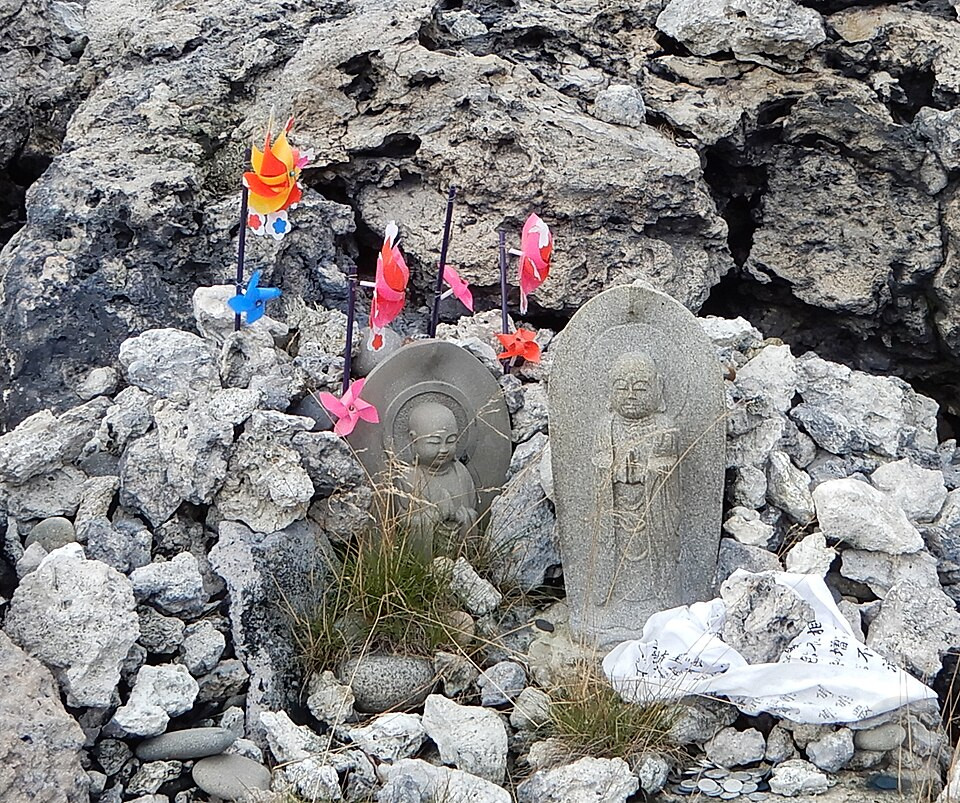
Among the mountain’s most moving sights are small piles of stones, offerings, and statues of Jizo, the Buddhist bodhisattva associated with protecting children and vulnerable souls.
These objects connect Osorezan with the legend of Sai no Kawara, the riverbank where deceased children are said to build stone towers. According to the folklore, the children attempt to construct these towers as acts of devotion to their parents, but demons repeatedly destroy their work.
Jizo intervenes to protect and comfort them. At Osorezan, visitors may leave stones, toys, pinwheels, and other offerings as expressions of remembrance. What appears to be a strange arrangement of rocks may actually represent a family’s continuing connection with a child who died.
The Spirit Mediums Who Speak With the Dead
Perhaps the most extraordinary tradition associated with Osorezan involves women known as itako. Historically, itako were often blind women trained in spiritual practices, including rituals intended to communicate with the deceased.
One such practice is called kuchiyose, in which the medium recites prayers or chants and is believed to transmit messages from a dead person’s spirit. Families have visited these mediums hoping to hear from relatives they lost, sometimes many years earlier. The practice is particularly associated with gatherings around Osorezan’s annual religious festivals.
However, itako are practitioners of a distinct regional spiritual tradition and are not simply ordinary Buddhist temple priests. Their presence at the mountain reflects the meeting of several different strands of Japanese religious culture.
For grieving visitors, the ritual offers the possibility of hearing words from someone they can no longer meet in life.
Why Does the Landscape Look Like the Underworld?
Osorezan’s appearance is not the result of supernatural forces. The mountain belongs to an active volcanic region shaped by geological processes. Gases emerge from openings in the ground, mineral deposits discolor the rocks, and vegetation is sparse in some areas because of the harsh conditions.
The smell of sulfur and the sight of steam rising through barren terrain help create an atmosphere unlike that of an ordinary Japanese mountain shrine. Nearby Lake Usori adds another striking element. Its pale shoreline and calm water stand in sharp contrast to the surrounding volcanic landscape.
This contrast has encouraged religious interpretations of the area as a place where the suffering of hell and the tranquility of paradise exist within the same sacred landscape.
Why Do People Still Visit Osorezan Today?
Osorezan remains an active religious destination, attracting pilgrims, mourners, and travelers interested in Japanese spiritual traditions. Visitors come to pray, remember deceased relatives, and experience the unusual volcanic surroundings.
The temple holds religious observances, while the mountain’s association with the dead continues to influence its reputation. Not every visitor believes that spirits can be contacted here. For some, Osorezan is primarily a Buddhist pilgrimage site; for others, it is a place of personal remembrance.
But the mountain’s powerful symbolism has endured for centuries. Few places in Japan combine the physical appearance of an underworld with such an enduring tradition of communicating with the dead.
Conclusion
Osorezan is one of Japan’s most haunting sacred landscapes. Its volcanic wastelands, symbolic river crossings, stone offerings, and traditions involving spirit mediums have created an extraordinary connection between geography, religion, and the mysteries of death.
Behind the unsettling scenery lies a deeply human purpose: the desire to remember loved ones and maintain a connection with those who are gone.
And perhaps that is what makes the mountain so mysterious. For centuries, people have journeyed to Osorezan believing that the distance between the living and the dead might be smaller there than anywhere else.
Cosmic Highlights

FAQ
Where is Osorezan located?
Osorezan is located on the Shimokita Peninsula in Aomori Prefecture, northern Japan.
Why is Osorezan associated with death?
Its volcanic landscape resembles traditional images of the Buddhist underworld, and local religious traditions associate the mountain with the realm of the dead.
What are itako spirit mediums?
Itako are traditional spiritual practitioners, historically often blind women, who perform rituals intended to communicate with deceased people.
What is the Sanzu River?
The Sanzu River is a mythical boundary between life and death in Japanese Buddhist tradition. A symbolic crossing is associated with Osorezan.
Can tourists visit Osorezan?
Yes. The temple grounds are generally accessible during the warmer months, although seasonal dates and access conditions should be checked before visiting.