Updated September 9, 2026
Occult literature has always attracted both fascination and fear. For centuries, certain books of magic were whispered about as forbidden texts, secret manuals, or dangerous sources of hidden knowledge. Some were copied by hand, circulated among scholars and occultists, or surrounded by legends that made them seem far more powerful than ordinary books.
The Most Dangerous Occult Books are usually not dangerous in the simple sense of being harmful to read. Their reputation comes from what they contain, or what people believed they contained: rituals, invocations, spirit hierarchies, magical symbols, talismans, and instructions connected with invisible forces.
Many of these texts are known as grimoires. A grimoire is a book of magic, often containing ritual formulas, protective symbols, ceremonial instructions, or lists of spiritual beings. Some grimoires focus on angels and divine wisdom. Others became notorious because they describe demonic spirits, forbidden knowledge, or pacts with supernatural powers.
Today, these books are often studied as part of the history of magic, religion, folklore, and esotericism. Yet their dark reputation has never completely disappeared. Even now, the names of certain grimoires still carry an atmosphere of mystery, danger, and ancient power.

The Key of Solomon
One of the most famous grimoires in Western occult history is The Key of Solomon, also known as The Greater Key of Solomon or Clavicula Salomonis.
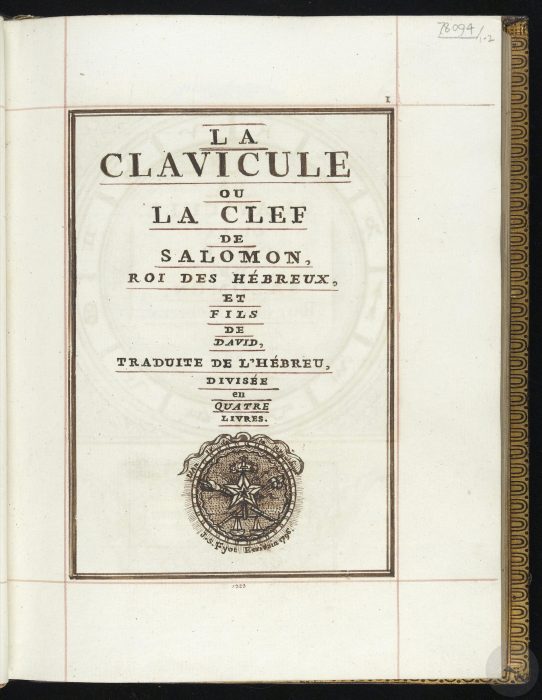
Traditionally, the text is attributed to the biblical King Solomon, who was said in legend to possess extraordinary wisdom and authority over spirits. Historians generally view the book as a medieval or Renaissance grimoire rather than a work actually written by Solomon himself.
The Key of Solomon contains descriptions of magical circles, ritual tools, pentacles, prayers, purification practices, and talismans. It became one of the most influential texts in ceremonial magic because it presented magic as a structured practice requiring preparation, discipline, and symbolic precision.
Its dangerous reputation comes from its connection with spirit work. The book describes methods intended to summon, command, or communicate with spiritual beings. For believers in the power of ritual magic, this made the text both fascinating and frightening.
Unlike sensational legends about cursed books, The Key of Solomon is also an important historical document. It shows how medieval and Renaissance occult traditions combined religion, astrology, symbolism, and ritual into a complex magical system.
Still, its name remains powerful. For many readers, The Key of Solomon represents the archetype of the forbidden grimoire: old, mysterious, ceremonial, and surrounded by centuries of occult fascination.
The Lesser Key of Solomon
Another famous text associated with Solomonic magic is The Lesser Key of Solomon, often called Lemegeton.
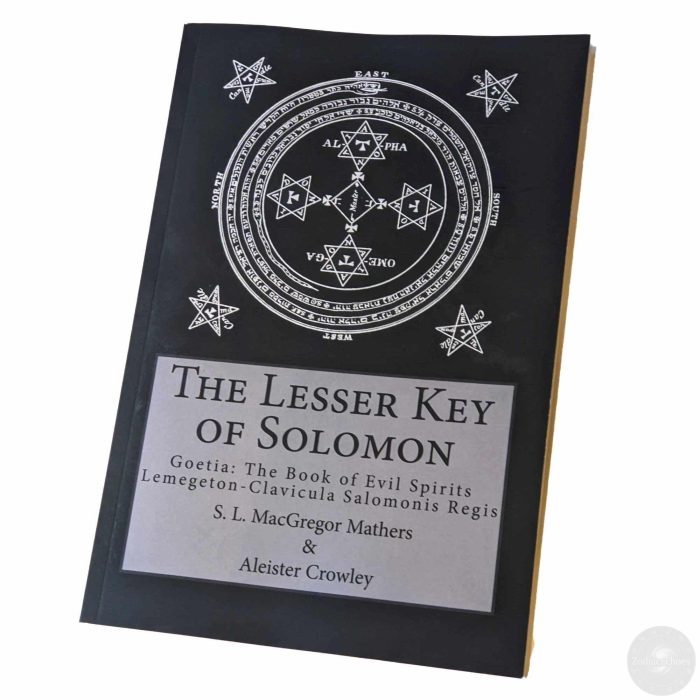
This grimoire is especially well known because of its first section, Ars Goetia, which contains descriptions of 72 spirits or demons. Each spirit is traditionally listed with a name, rank, seal, and set of attributed powers. Because of this, The Lesser Key of Solomon has become one of the most discussed demonological grimoires in Western occult literature.
Its dark reputation is easy to understand. A book that appears to describe the summoning and control of demons will naturally be viewed with suspicion, fear, or fascination. The seals and spirit lists associated with Ars Goetia have appeared in modern occultism, fiction, art, games, horror culture, and internet mythology.
However, the text should also be understood historically. The Lesser Key of Solomon is a compilation of older magical traditions, reflecting the worldview of a time when people believed the universe was filled with visible and invisible hierarchies. Angels, demons, planets, stars, names, symbols, and prayers were all thought to have spiritual importance.
For modern readers, The Lesser Key of Solomon is often less a practical manual than a window into the imagination of Western esotericism. Its danger lies mainly in its reputation: it is one of the books people think of when they imagine forbidden rituals, demonic seals, and hidden magical knowledge.
The Grand Grimoire
Few occult books have a darker reputation than The Grand Grimoire, also known as Le Dragon Rouge or The Red Dragon.
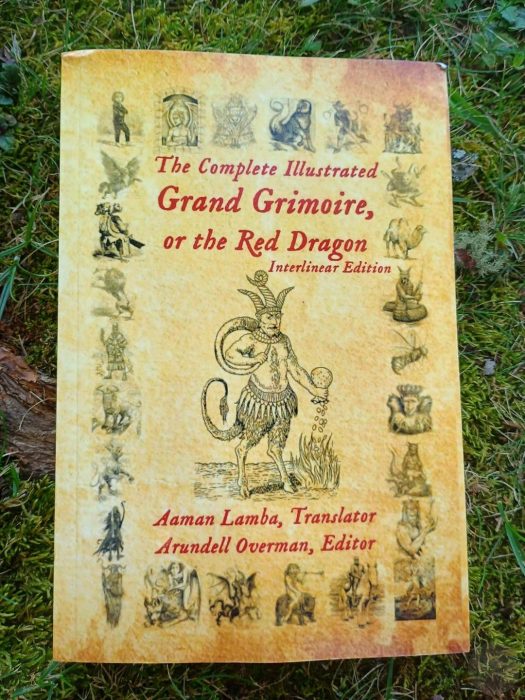
This text is often associated with black magic, demonic conjuration, and stories of pacts with infernal beings. Because of that, it is frequently described as one of the most dangerous grimoires in European occult tradition.
The Grand Grimoire is surrounded by uncertainty. Different editions and legends give different claims about its age and origin. Some versions present it as an ancient Solomonic text, while scholars generally treat it as a later grimoire tradition that developed through multiple editions and adaptations.
Its most infamous theme is the idea of making a pact with a powerful demonic figure. This is what gave the book its terrifying aura. Unlike grimoires that emphasize purification, angelic contact, or philosophical magic, The Grand Grimoire became associated with ambition, command, temptation, and forbidden bargains.
That reputation made it irresistible to later occult writers, collectors, and readers interested in dark magical folklore. Whether viewed as a genuine occult text, a sensational magical manual, or a product of grimoire publishing culture, The Grand Grimoire remains one of the most notorious books in the history of Western magic.
Its danger is partly literary, partly symbolic, and partly cultural. It represents the fear that knowledge, when pursued without wisdom or moral restraint, can become destructive.
The Book of Abramelin
The Book of Abramelin, often known in English through the title The Book of the Sacred Magic of Abramelin the Mage, has a different atmosphere from many other grimoires.
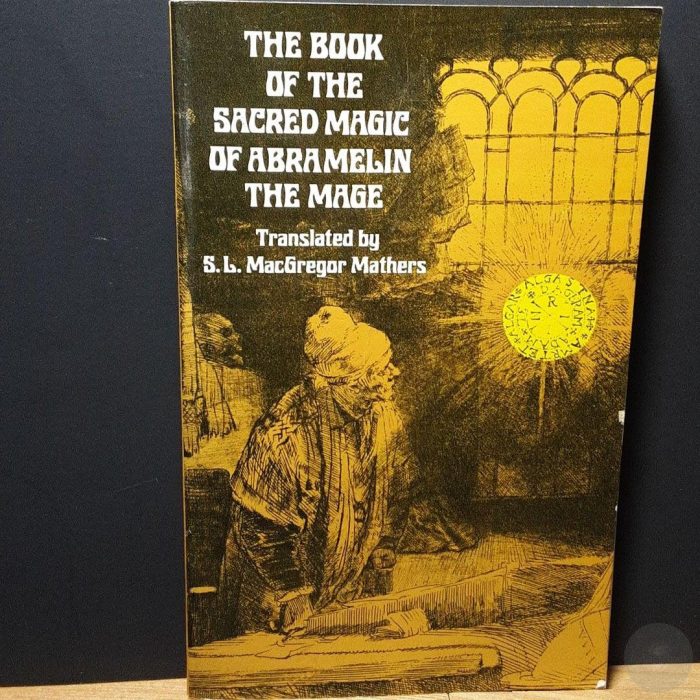
Rather than focusing only on commanding spirits or creating talismans, this text describes a long and demanding spiritual operation. The central goal is contact with the Holy Guardian Angel, a concept that later became highly influential in Western esoteric traditions.
The story is framed around Abraham of Worms, who is said to have received secret magical knowledge from an Egyptian mage named Abramelin. The book includes spiritual teachings, ritual preparation, purification, and magical word squares.
Its reputation for danger comes less from shock value and more from intensity. The Abramelin operation is often described as requiring discipline, isolation, devotion, and serious spiritual preparation. It is not presented as casual magic or quick wish fulfillment.
For that reason, many occultists have treated The Book of Abramelin with caution. It suggests that spiritual power cannot be separated from inner purification and responsibility. The book’s darker side appears in its descriptions of commanding lower spirits after achieving contact with the Holy Guardian Angel.
Historically, The Book of Abramelin became especially important through modern occult movements, including the Hermetic Order of the Golden Dawn and later ceremonial magic traditions. Today, it remains one of the most respected and intimidating grimoires in Western esotericism.
It is not frightening because it is loud or theatrical. It is frightening because it suggests that true transformation demands everything from the practitioner.

Picatrix
Picatrix is one of the most important texts of medieval astral magic. Its original Arabic title is usually given as Ghāyat al-Ḥakīm, often translated as The Goal of the Wise.
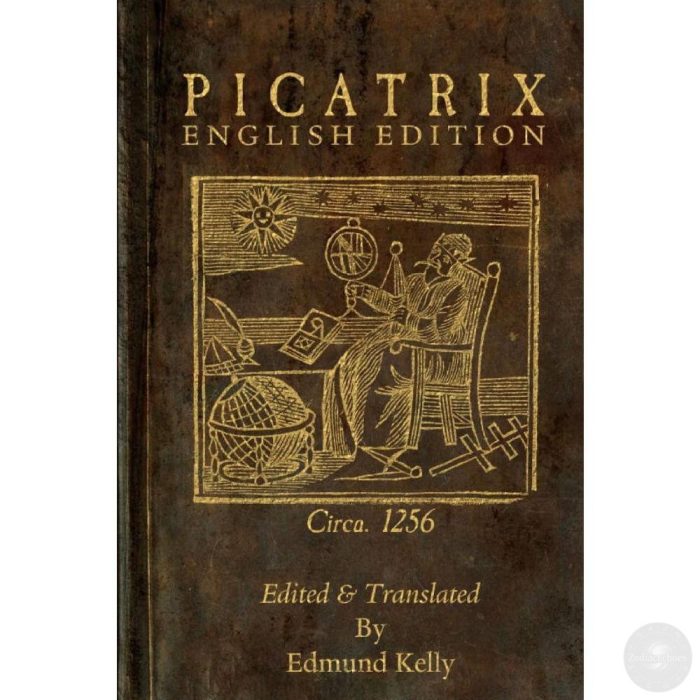
Unlike grimoires focused mainly on demons or ceremonial conjuration, Picatrix combines astrology, philosophy, cosmology, talismanic magic, and ritual symbolism. It reflects a worldview in which the stars, planets, and hidden forces of the cosmos were believed to influence earthly life.
The text was originally written in Arabic, probably in the medieval Islamic world, and was later translated into Spanish and Latin. In Europe, the Latin version became known as Picatrix and had a significant influence on Renaissance esotericism.
Its dangerous reputation comes from its complexity and ambition. Picatrix does not simply describe folk charms or simple spells. It presents a vast magical universe in which planetary forces, timing, images, materials, prayers, and intentions are all connected.
Some passages describe the creation of talismans under specific astrological conditions. Others explore the relationship between the human mind, celestial powers, and the hidden structure of reality. To medieval readers, this made Picatrix both powerful and unsettling.
Today, Picatrix is usually studied as a historical work of astral magic and medieval philosophy. Yet it still feels mysterious because it belongs to a world where astrology, science, religion, and magic were not always separated in the way they are today.
Among the Most Dangerous Occult Books, Picatrix stands apart. It is not famous because of demons alone, but because it presents the cosmos itself as a living system of hidden power.
The Sworn Book of Honorius
The Sworn Book of Honorius, also known as Liber Iuratus Honorii, belongs to the oldest surviving tradition of medieval ritual magic. It should not be confused with the later Grimoire of Pope Honorius. Surviving manuscripts show that the text circulated in Europe centuries before many of the better-known printed grimoires appeared.
According to its legendary introduction, a group of magicians gathered after church authorities threatened to destroy magical knowledge. They supposedly condensed their most important secrets into a single book and bound its transmission by an oath. That story helped give the work an atmosphere of forbidden knowledge from the beginning.
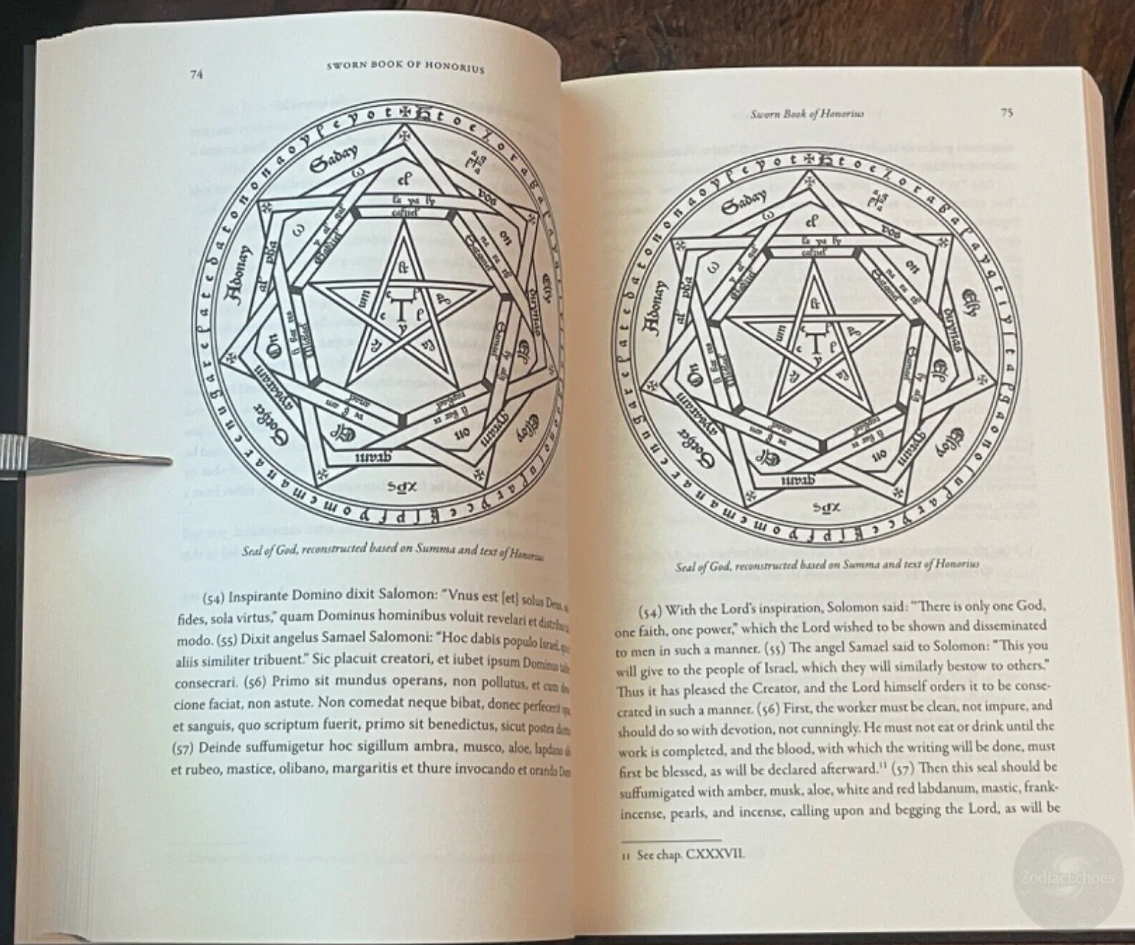
The text combines prayers, angelic hierarchies, sacred names, ritual purification, spirit conjuration, and an elaborate magical diagram known as the Seal of God. One of its highest goals is not wealth or revenge but the vision of the divine. Yet the same system also moves into the command of spirits and other forms of ceremonial magic.
A fifteenth-century copy preserved by the British Library contains sections on angels and spirits, suffumigations, exorcism, sacred seals, and ritual procedures. Another manuscript was once owned by the Elizabethan astrologer and occult philosopher John Dee.
Its reputation for danger therefore comes from an unusual contradiction. The book presents itself as sacred and deeply Christian while describing practices that church authorities could regard as illicit magic. To a medieval reader, the boundary between divine revelation and forbidden conjuration could become disturbingly thin.
Among ancient grimoires, The Sworn Book of Honorius feels dangerous not because it promises instant supernatural power, but because it treats access to the invisible world as secret knowledge worth protecting with an oath.

The Munich Manual of Demonic Magic
Few surviving medieval magical texts are as direct as the work now commonly called the Munich Manual of Demonic Magic. Its manuscript is catalogued as CLM 849 and dates from the fifteenth century.
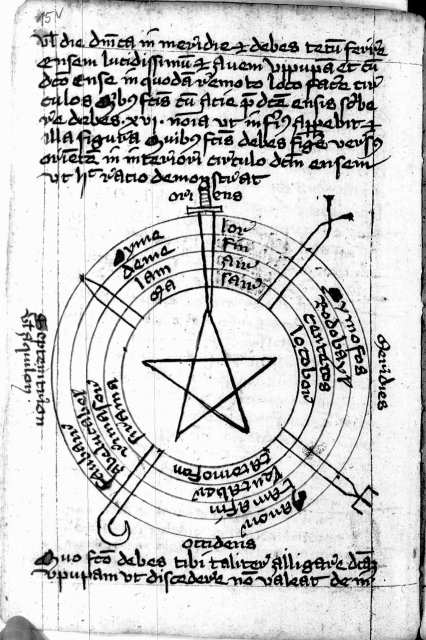
Unlike many grimoires that wrap magical practices in philosophical discussion or claims of divine wisdom, this manuscript is heavily concerned with necromancy, demonic conjuration, divination, and the calling of spirits. That makes it one of the clearest surviving examples of the type of magic medieval authorities genuinely feared.
The book contains ritual circles, strange signs, names of spirits, invocations, and operations intended to obtain knowledge or supernatural assistance. Some sections also incorporate astrology and techniques that would have looked familiar to educated clerics of the period.
That last detail is especially important. The anonymous compiler appears to have belonged to a learned environment. Medieval necromancy was not necessarily imagined as village witchcraft performed far from universities and churches. Some surviving texts suggest a much more uncomfortable possibility: educated men with knowledge of Latin, Christian ritual, astrology, and liturgy adapting those traditions for prohibited magical purposes.
Historian Richard Kieckhefer published a scholarly study of the manuscript under the title Forbidden Rites: A Necromancer’s Manual of the Fifteenth Century. The survival of CLM 849 therefore gives historians unusually direct evidence of the kinds of ritual practices that were otherwise often known only through accusations and condemnations.
If any book deserves a place among the Most Dangerous Occult Books for historical reasons rather than legend alone, the Munich Manual is a strong candidate. It represents exactly the kind of learned necromancy that could place its owner in serious danger in medieval Europe.
Heptameron

The Heptameron is a compact but extremely influential manual of ceremonial magic traditionally attributed to the medieval physician and philosopher Peter of Abano. Modern scholarship considers that attribution doubtful, and surviving evidence points instead to a later magical tradition using his prestigious name.
Its title refers to seven days, and the structure of the book follows the planetary week. Different days are connected with different angels, spirits, planetary influences, ritual clothing, prayers, and ceremonial arrangements.
Where Picatrix can feel like an enormous cosmological system, the Heptameron is strikingly practical. It lays out the construction of magical circles, the names to be used, the directions associated with spirits, and the ceremonial framework for invocation. Its relatively concise format may have helped it spread widely through later magical literature.
The text became influential enough that it appeared in several early printed collections of occult material. Joseph Peterson notes that it had already attracted enough suspicion to be placed on the Index of prohibited books in the late sixteenth century.
Its dangerous reputation came from accessibility. A mysterious philosophical book could be dismissed as obscure speculation. The Heptameron looked much more like a working manual. It transformed complex ideas about angels, planets, sacred names, and spirit communication into a sequence of procedures.
That practical character helped its ideas survive. Elements associated with the Heptameron appear repeatedly in later ceremonial magic, making it one of the quiet foundations beneath the more famous grimoires that followed.
Arbatel de Magia Veterum

At first glance, Arbatel de Magia Veterum seems like an unusual choice for a list of dangerous occult books. It is far less sinister than the Grand Grimoire or the Munich Manual. Yet its place in the history of forbidden magic makes it fascinating.
The anonymous Latin work appeared in Basel in 1575. Rather than presenting magic primarily as domination over demons, it describes a universe filled with divine order, spiritual beings, planetary forces, and seven mysterious entities usually called the Olympic Spirits.
The book repeatedly stresses piety, wisdom, moderation, and dependence upon God. In that sense, it almost reads like the opposite of stereotypical black magic. Yet that did not make it harmless in the eyes of everyone who encountered it. Magical communication with spiritual intelligences remained deeply controversial, even when framed in Christian language.
Its seven Olympic Spirits became especially famous. Each is associated with planetary and cosmic powers, and the system later influenced ceremonial magicians and esoteric writers across Europe.
The Arbatel also demonstrates why the history of occult books is more complicated than simply dividing texts into “white” and “black” magic. To its author, spiritual magic could be compatible with a religious worldview. To critics, the attempt to communicate with invisible beings could itself cross a forbidden boundary.
That tension gives the book its eerie power. It is not a manual screaming about demons. Instead, it calmly describes a hidden spiritual administration behind the visible world and suggests that certain people may learn how to approach it.
The Grimoire of Pope Honorius
![1760 [1840] - The Grimoire of Pope Honorius — Esoterica Rare Occult Books](https://images.squarespace-cdn.com/content/v1/66216a78c7952609736e8df9/66dfd76a-2806-4ca2-a6e2-4cbf91c757ea/Grimoire-112.jpg)
It must also be distinguished from the much older Sworn Book of Honorius. The two works belong to different traditions, despite the confusing similarity of their names.
Later editions of the Grimoire of Pope Honorius present the text as though papal authority had sanctioned powerful magical rites. This deliberate blending of Catholic ritual language with conjuration and occult practice gave the book an especially scandalous reputation.
The grimoire includes prayers, ritual instructions, invocations, and material associated with commanding spirits. Its legendary authorship makes the atmosphere even darker: the idea that secret magic might have been preserved inside the very institution publicly condemning it was irresistible to generations of readers.
This was probably part of the attraction. Grimoires often borrowed the names of Solomon, Moses, saints, popes, or ancient sages because prestigious authorship made hidden knowledge seem older and more authoritative than it really was.
The Grimoire of Pope Honorius pushes that strategy to an extreme. Its power as an occult object comes as much from the contradiction in its identity as from the rites inside it. It presents forbidden magic wearing the clothes of religious authority.
Historically, that does not make it evidence of secret papal sorcery. It makes it evidence of something almost as interesting: how occult publishing used fear, authority, religion, and claims of ancient secrecy to create books that felt dangerous before the reader even reached the first ritual.
Why Were These Books Considered Dangerous?
The most famous occult books were considered dangerous for several reasons. First, many of them claimed to give humans access to invisible powers. Whether those powers were described as angels, demons, planetary spirits, or hidden cosmic forces, the idea was unsettling.
These texts suggested that reality could be influenced through ritual, symbols, names, and intention. Second, some grimoires challenged religious authority. In many historical periods, attempting to summon spirits, practice ritual magic, or work with forbidden symbols could be seen as dangerous, heretical, or morally suspicious.
Third, these books often required secrecy. Their mysterious language, coded symbols, strange diagrams, and ritual instructions made them seem like texts meant only for initiates. The less people understood them, the more frightening they became.
Finally, the danger was psychological. Books like The Grand Grimoire or The Lesser Key of Solomon became powerful because they touched deep human fears: temptation, control, hidden knowledge, and the possibility of contacting forces beyond ordinary understanding.
Conclusion
The Most Dangerous Occult Books are dangerous mostly because of the legends, fears, and symbolic power that surround them. The Key of Solomon represents ceremonial magic and the authority of sacred names and symbols. The Lesser Key of Solomon became infamous through its demonological material and the 72 spirits of Ars Goetia.
The Grand Grimoire, or The Red Dragon, carries one of the darkest reputations because of its association with demonic pacts. The Book of Abramelin is feared for its demanding spiritual operation and intense discipline. Picatrix stands as a monumental work of astral magic, connecting astrology, philosophy, and talismanic practice.
Other grimoires reveal just how broad the forbidden magical tradition became. The Sworn Book of Honorius blends Christian devotion with secret angelic and spirit rituals supposedly protected by solemn oaths. The Munich Manual of Demonic Magic offers a much darker glimpse into medieval necromancy and the practical conjuration of spirits. Heptameron transformed planetary and angelic magic into an organized ritual system based around the seven days of the week, while Arbatel de Magia Veterum presented a more spiritual form of Renaissance magic centered on the mysterious Olympic Spirits.
Perhaps the most provocative of the group is The Grimoire of Pope Honorius, a work that deliberately blurred the boundary between Catholic religious authority and forbidden magical practice. Its supposed papal origins are legendary rather than historical, yet that very contradiction helped make the book notorious.
Whether viewed as forbidden manuals, historical documents, misunderstood religious texts, or symbolic works of mystical imagination, these books continue to fascinate because they stand at the border between knowledge and fear. Some promised contact with angels, others command over spirits, hidden planetary powers, or knowledge supposedly reserved for a select few. Across centuries, that combination of secrecy, authority, ritual, and danger has made grimoires some of the most enduring objects of fascination in occult history.
Cosmic Highlights
FAQ
What are the Most Dangerous Occult Books?
The Most Dangerous Occult Books usually include famous grimoires such as The Key of Solomon, The Lesser Key of Solomon, The Grand Grimoire, The Book of Abramelin, and Picatrix.
What is a grimoire?
A grimoire is a book of magic that may contain rituals, symbols, talismans, invocations, spirit lists, or instructions related to ceremonial or occult practice.
Is The Lesser Key of Solomon the same as The Key of Solomon?
No. The Key of Solomon, also called The Greater Key of Solomon, is a different grimoire from The Lesser Key of Solomon, also known as Lemegeton.
Why is The Grand Grimoire called The Red Dragon?
The Grand Grimoire is also known by the French title Le Dragon Rouge, which translates as The Red Dragon. This title helped strengthen its dark and mysterious reputation.
What is Picatrix about?
Picatrix is a medieval text of astral magic and astrology. It explores talismans, planetary influences, magical timing, philosophy, and the hidden relationship between the cosmos and earthly life.
Are occult books dangerous to read?
Most occult books are not dangerous simply to read, especially when approached as historical or symbolic texts. Their dangerous reputation usually comes from legends, ritual content, and associations with forbidden knowledge.
Why do occult books still fascinate people?
Occult books fascinate people because they deal with mystery, hidden knowledge, spiritual power, fear, transformation, and the possibility that reality contains forces beyond ordinary understanding.