- Festival: Lupercalia, celebrated every February 15 in ancient Rome.
- Shocking Tradition: Nearly naked men ran through the city striking people with goatskin strips.
- Fertility Belief: Some women willingly accepted the blows, hoping to become pregnant or experience easier childbirth.
- Bloody Ceremony: The ritual involved animal sacrifices, blood, milk, and ceremonial laughter.
- Famous Participant: Mark Antony took part in Lupercalia in 44 BC, shortly before Julius Caesar’s assassination.
When Getting Whipped Was Supposed to Help You Get Pregnant
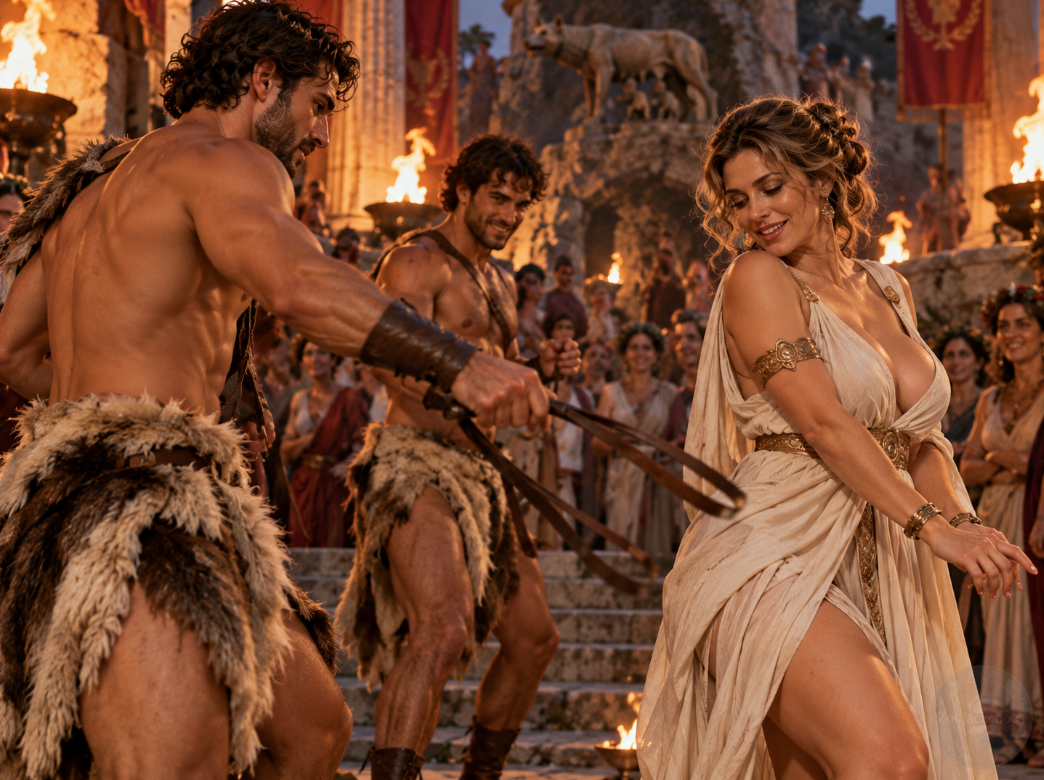
Imagine ancient Rome on February 15. Nearly naked men race through the streets carrying strips of freshly sacrificed goatskin. Instead of running away, some women deliberately position themselves in their path, waiting to be struck. What sounds like an outrageous scene from an adult historical drama was actually part of Lupercalia, one of Rome’s most extraordinary religious festivals.
The ceremony combined fertility, ritual purification, public nakedness, and animal sacrifice in a spectacle that survived for centuries. For women hoping to conceive, receiving a blow from a goatskin strip was considered an act of religious significance. The ancient historian Plutarch recorded that young married women did not avoid the ritual, because they believed it could encourage conception and make childbirth easier.
Why Did Roman Women Voluntarily Accept the Blows?
The participants carrying out the ritual were known as the Luperci, members of religious associations connected with the festival. After sacrificing goats and a dog, they cut the goatskins into strips and began their ceremonial run, wearing little more than a covering around their waists.
According to ancient accounts, women sometimes deliberately stepped forward to receive the blows, believing that contact with the sacred goatskin could improve their chances of pregnancy. Plutarch even described women of high social standing participating in the tradition, suggesting that the practice was not confined to poorer Romans or marginal religious groups.
The Roman poet Ovid offered a particularly strange explanation involving the legendary women of early Rome. In his account, an ancient fertility problem was resolved through a divine instruction involving a goat and the ritual striking of women with its hide. The story illustrates how closely fertility, religious symbolism, and physical ritual were connected in Roman imagination.
Blood, Milk, Naked Men, and Ceremonial Laughter
The fertility whipping was only one part of Lupercalia’s unusual proceedings. Another ceremony involved two young men of noble birth whose foreheads were touched with a bloodied sacrificial knife. The blood was then wiped away using wool soaked in milk, after which the young men were expected to laugh.
These strange actions formed part of a festival traditionally associated with purification and the legendary origins of Rome. The Lupercal, a cave near the Palatine Hill, was linked to the story of Romulus and Remus, the twin brothers supposedly nursed by a she-wolf.
Even the festival’s precise origins remain uncertain. Ancient writers proposed several explanations, connecting it with wolves, pastoral traditions, purification, and fertility. What is clear is that the combination of animal sacrifice, near-naked running, and ritual striking made Lupercalia unlike an ordinary Roman celebration.
Even Mark Antony Took Part in This Bizarre Festival
Perhaps the most surprising detail is that Lupercalia was not merely a festival for anonymous priests or ordinary citizens. Some of Rome’s most powerful political figures participated in its ceremonies.
On February 15, 44 BC, Mark Antony joined the ritual running while Julius Caesar watched from a prominent position in the Forum. During the celebration, Antony approached Caesar and offered him a royal diadem, which Caesar publicly rejected. The incident became one of the most famous political moments of Caesar’s final weeks.
Just one month later, on March 15, Caesar was assassinated. This extraordinary historical connection places Lupercalia at the intersection of ancient sexuality, religious spectacle, and Roman political power.
Conclusion
Ancient Rome had many unusual customs, but Lupercalia stands out as one of its most provocative fertility traditions. The sight of nearly naked men running through the city and striking willing participants with goatskin strips would be difficult to imagine as an accepted public celebration today.
Yet for some Roman women, the ritual represented hope for pregnancy and a safer childbirth. What appears bizarre to modern observers was embedded in a religious tradition that survived for centuries, revealing just how differently ancient societies understood fertility, the body, and sacred rituals.
Cosmic Highlights

FAQ
What Was Lupercalia in Ancient Rome?
Lupercalia was an annual Roman religious festival celebrated on February 15, traditionally associated with purification, fertility, and the legendary beginnings of Rome.
Why Were Women Whipped During Lupercalia?
Some women believed that being struck with strips of sacrificed goatskin could promote conception and make childbirth easier. Ancient writers, including Plutarch, described this belief.
Were the Men Really Naked During Lupercalia?
Ancient descriptions indicate that the Luperci ran naked or nearly naked, sometimes wearing only a girdle or covering made from animal skin.
Did Julius Caesar Participate in Lupercalia?
Julius Caesar attended the festival in 44 BC, while Mark Antony participated in the ceremonial running. Antony famously offered Caesar a royal diadem during the celebration.
Was Lupercalia Connected to Valentine’s Day?
Both are associated with February, but a direct historical connection between Lupercalia and the origins of Valentine’s Day has not been established. Lupercalia was primarily a Roman religious festival rather than a celebration of romantic couples.