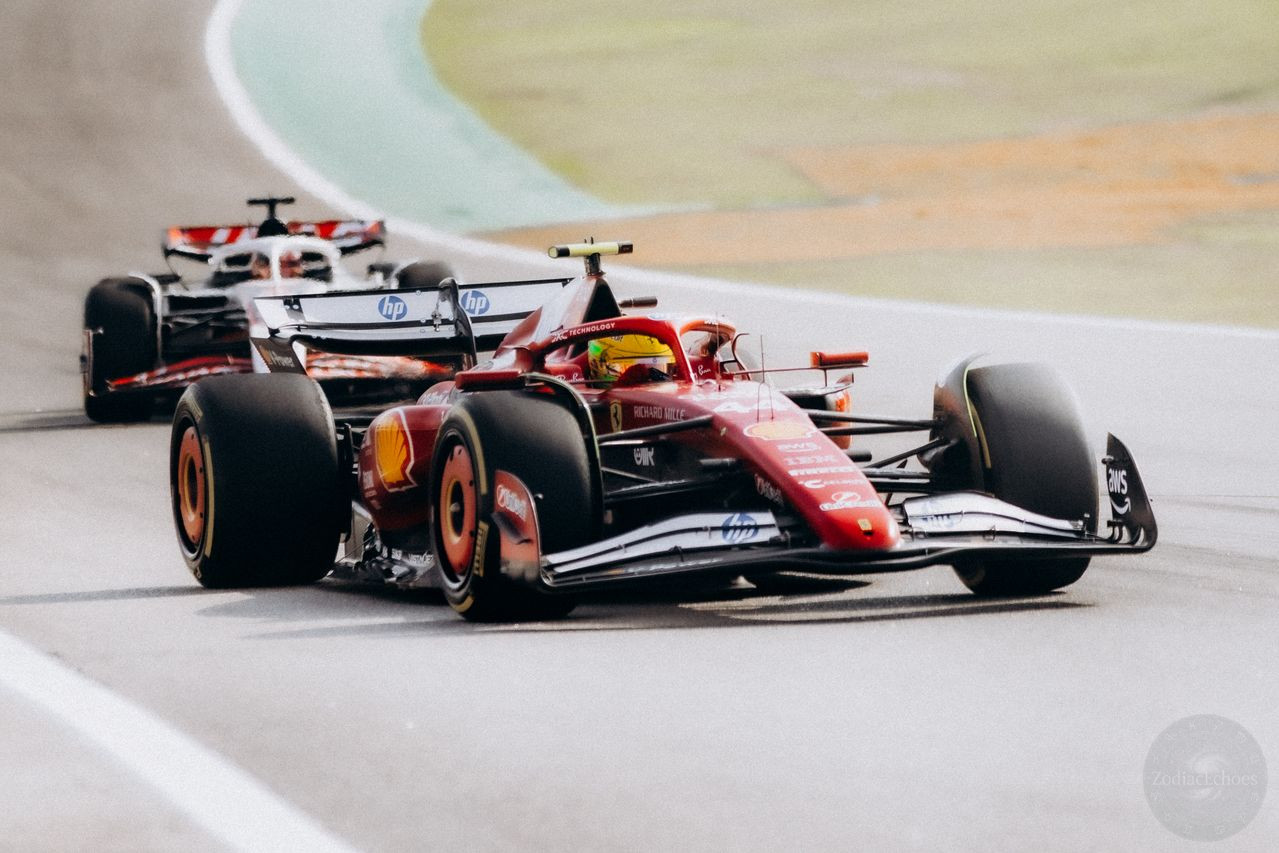
- 2026 Grid: All 22 Formula 1 drivers examined through their Sun signs, Mars placements and major planetary aspects.
- Historical Champions: Seven legendary drivers, from Juan Manuel Fangio to Sebastian Vettel.
- Mars Connections: The reference data identifies 13 current drivers with major Mars aspects involving Saturn, Uranus or Pluto.
- Closest Mars–Saturn Aspect: Esteban Ocon — trine, approximately 0.09°.
- Closest Mars–Pluto Aspect: Liam Lawson — trine, approximately 0.19°.
At more than 300 km/h, Formula 1 drivers must make decisions in fractions of a second. They need extraordinary concentration, technical awareness, physical endurance and the ability to recognize opportunities before their rivals. Yet the personalities behind the steering wheels can be remarkably different. Some champions thrive on confrontation, others rely on calculated patience, and a few seem capable of finding speed where nobody else can.
Could their birth charts reveal intriguing similarities beneath these contrasting approaches to racing? ZodiacEchoes examined the astrological profiles of all 22 drivers on the 2026 Formula 1 grid, alongside seven legendary world champions: Ayrton Senna, Alain Prost, Michael Schumacher, Niki Lauda, Jim Clark, Juan Manuel Fangio and Sebastian Vettel.
The investigation focuses on Mars, the planet traditionally associated with competition and action, and its relationships with Saturn, Uranus and Pluto. These planetary combinations offer an intriguing way to compare racing personalities across different generations.
Why Mars Matters in Formula 1 Astrology
Mars represents initiative, courage, physical energy and the instinct to compete. Its zodiac placement describes how someone expresses determination, while its aspects to other planets introduce additional dimensions. Mars–Saturn aspects are associated with discipline, endurance and the relationship between ambition and restraint. Mars–Uranus aspects symbolize independence, unexpected decisions and unconventional action, while Mars–Pluto aspects are traditionally linked with intensity, persistence and concentrated competitive drive.
In Formula 1, all these qualities have recognizable parallels. Drivers must attack without losing control, improvise without making unnecessary mistakes and maintain extraordinary discipline throughout a demanding season. The following analysis explores these traditional astrological interpretations through the birth charts of some of the world’s most accomplished racing drivers.
Part One: The 2026 Formula 1 Grid
We begin with the current generation of Formula 1 drivers, examining the planetary combinations that distinguish their astrological profiles and comparing the different expressions of competitive instinct across the grid.
The Birth Charts of All 22 Formula 1 Drivers
The table below presents the Sun and Mars signs of the 2026 drivers, together with the major Mars aspects identified in the reference calculations.
| Driver | Sun Sign | Mars Sign | Mars Aspects Within 5° |
|---|---|---|---|
| Lando Norris | Scorpio | Capricorn | None |
| Oscar Piastri | Aries | Sagittarius | Sextile Uranus (1.14°) |
| Charles Leclerc | Libra | Sagittarius | Trine Saturn (3.92°) |
| Lewis Hamilton | Capricorn | Pisces | None |
| Max Verstappen | Libra | Sagittarius | Conjunct Pluto (2.36°), sextile Uranus (3.72°) |
| Isack Hadjar | Libra | Libra | None |
| George Russell | Aquarius | Pisces | None |
| Kimi Antonelli | Virgo | Virgo | Square Pluto (2.88°) |
| Fernando Alonso | Leo | Cancer | Square Saturn (2.04°) |
| Lance Stroll | Scorpio | Virgo | None |
| Pierre Gasly | Aquarius | Aquarius | None |
| Franco Colapinto | Gemini | Aquarius | Sextile Pluto (1.22°) |
| Esteban Ocon | Virgo | Leo | Trine Saturn (0.09°), opposite Uranus (3.93°), trine Pluto (4.04°) |
| Oliver Bearman | Taurus | Pisces | Conjunct Uranus (4.86°) |
| Liam Lawson | Aquarius | Aries | Trine Pluto (0.19°) |
| Arvid Lindblad | Leo | Gemini | Square Saturn (3.99°) |
| Carlos Sainz | Virgo | Cancer | Trine Saturn (1.07°) |
| Alex Albon | Aries | Pisces | Conjunct Saturn (0.94°), trine Pluto (3.91°), sextile Uranus (4.60°) |
| Nico Hülkenberg | Leo | Leo | None |
| Gabriel Bortoleto | Libra | Libra | None |
| Sergio Pérez | Aquarius | Sagittarius | None |
| Valtteri Bottas | Virgo | Virgo | Sextile Pluto (3.06°) |
Aspect values follow the latest reference dataset, including Fernando Alonso’s revised Mars–Saturn orb of 2.04°. The complete dataset has not been independently revalidated for this draft.
The First Finding: 13 of 22 Drivers Have a Major Mars Connection
The reference dataset identifies 13 of the 22 current drivers, approximately 59%, with at least one major aspect between Mars and Saturn, Uranus or Pluto within a five-degree orb. The distribution is particularly interesting because these drivers do not share one universal planetary configuration. Instead, several distinct patterns emerge. Some drivers possess Mars–Saturn aspects associated with discipline and control, others have Mars–Uranus connections traditionally linked with independence and quick adaptation, while a third group displays Mars–Pluto relationships associated with intensity and determination.
Two drivers stand out for the number of qualifying aspects: Esteban Ocon and Alex Albon, each with three. Meanwhile, several highly accomplished drivers, including Lewis Hamilton, Lando Norris and George Russell, have no qualifying aspect under the selected criteria. This creates a more complex picture than simply associating racing success with one particular planetary combination.
Max Verstappen: Mars Conjunct Pluto — The Relentless Competitor
Sun: Libra | Mars: Sagittarius
Max Verstappen possesses one of the most striking configurations in the modern-grid analysis: Mars conjunct Pluto with an orb of approximately 2.36°. In astrology, this conjunction represents concentrated ambition, determination and the desire to overcome resistance. Mars symbolizes the instinct to compete, while Pluto intensifies themes of power, control and persistence. Verstappen also has Mars sextile Uranus (3.72°), introducing the symbolism of independence, unconventional decisions and rapid responses to changing circumstances.
His Libra Sun creates an interesting contrast. Libra is traditionally associated with balance and strategic awareness, while Sagittarius Mars suggests directness, confidence and the willingness to pursue opportunities. The combination offers a compelling symbolic portrait of a driver whose competitive approach is characterized by extraordinary determination and an unwillingness to surrender an advantage. Mars–Pluto intensity combined with Mars–Uranus independence makes Verstappen one of the most interesting subjects in the investigation.
Charles Leclerc: Mars Trine Saturn — The Controlled Competitor
Sun: Libra | Mars: Sagittarius
Charles Leclerc shares two major placements with Verstappen: a Libra Sun and Mars in Sagittarius. Yet their highlighted planetary aspects are different. Leclerc has Mars trine Saturn (3.92°), traditionally associated with discipline, endurance and the ability to direct competitive energy toward a defined objective. Where Verstappen’s Mars–Pluto conjunction emphasizes intensity, Leclerc’s Mars–Saturn trine introduces patience, structure and controlled effort.
His Sagittarius Mars symbolizes confidence and ambition, while Libra adds the themes of balance and strategic judgment. This comparison illustrates why examining planetary aspects can be more revealing than relying exclusively on Sun signs or Mars placements. Two drivers can share the same Sun and Mars signs while displaying different astrological patterns of competitive energy.
Lewis Hamilton: Capricorn Sun, Pisces Mars — The Discipline Behind Seven Titles
Sun: Capricorn | Moon: Cancer | Mars: Pisces
Lewis Hamilton’s seven world championships place him among the most successful drivers in Formula 1 history. His birth chart offers an intriguing combination of ambition, intuition and emotional determination. Born on January 7, 1985, Hamilton has his Sun in Capricorn, the zodiac sign traditionally associated with discipline, persistence and long-term achievement. Capricorn is ruled by Saturn, making themes of responsibility, preparation and sustained effort particularly important in its astrological interpretation.
Hamilton’s Mars in Pisces introduces a contrasting quality. Pisces Mars is traditionally associated with intuition, adaptability and the ability to respond fluidly to changing circumstances. This symbolism is especially interesting when considering Hamilton’s reputation for tire management, sensitivity to changing track conditions and exceptional performances in wet weather. His Moon falls in Cancer, creating a Capricorn–Cancer polarity that also appears in Michael Schumacher’s chart. That shared configuration becomes particularly remarkable when considering that both drivers have won seven Formula 1 world championships.
Hamilton does not possess a qualifying major Mars aspect to Saturn, Uranus or Pluto within the five-degree threshold used in this investigation. His chart therefore demonstrates that the selected Mars aspects are not necessary to construct a compelling astrological portrait of a champion. Capricorn ambition, Cancer emotional determination and Pisces adaptability create a distinctive combination of discipline and instinct. Hamilton’s reported birth times are conflicting, so precise house placements and his Ascendant are not treated as established.
Esteban Ocon: The Tightest Mars–Saturn Aspect
Sun: Virgo | Mars: Leo
Esteban Ocon produces one of the investigation’s most striking numerical results. His Mars–Saturn trine has an orb of approximately 0.09° in the reference dataset, making it the closest Mars–Saturn relationship identified among the 22 current drivers. In astrology, this aspect symbolizes disciplined effort, endurance and the ability to channel competitive energy toward long-term objectives.
Ocon also has Mars opposite Uranus (3.93°) and Mars trine Pluto (4.04°). These additional aspects introduce independence and concentrated determination, creating a complex combination of potentially contrasting influences. His Virgo Sun symbolizes precision and analysis, while Leo Mars represents confidence, pride and the desire to perform decisively. Ocon’s chart combines discipline, independence and intensity, making it one of the most layered astrological profiles on the grid.
Alex Albon: Mars Conjunct Saturn and Two Additional Aspects
Sun: Aries | Mars: Pisces
Alex Albon is the other current driver with three qualifying Mars aspects in the reference calculations. His closest is Mars conjunct Saturn (0.94°), a relationship traditionally associated with persistence, restraint and the ability to operate under demanding limitations. He also has Mars trine Pluto (3.91°) and Mars sextile Uranus (4.60°).
His Aries Sun represents initiative and competitive instinct, while Pisces Mars suggests a more adaptable expression of action. The Saturn conjunction introduces structure and self-control, creating an interesting contrast with the impulsive symbolism traditionally associated with Aries. Albon’s chart therefore emphasizes determination guided by restraint rather than aggression alone.
Liam Lawson: An Exceptionally Close Mars–Pluto Trine
Sun: Aquarius | Mars: Aries
Liam Lawson has one of the closest aspects in the entire modern-grid reference dataset: Mars trine Pluto with an orb of approximately 0.19°. Mars in Aries is particularly notable because Aries is traditionally ruled by Mars. This placement symbolizes direct action, courage, initiative and a strong desire to compete. The trine to Pluto adds themes of sustained ambition, persistence and concentrated competitive energy.
Unlike a conjunction, the trine is traditionally interpreted as a harmonious relationship between planetary influences. Lawson’s Aquarius Sun introduces independence and unconventional thinking, creating a combination of assertive action and individual determination. His Mars–Pluto trine is the closest relationship between these two planets identified among the current drivers.
Oscar Piastri: Mars Sextile Uranus — The Instinctive Strategist
Sun: Aries | Mars: Sagittarius
Oscar Piastri has Mars sextile Uranus (1.14°), one of the tighter Mars–Uranus relationships in the modern-grid dataset. This aspect is traditionally associated with independence, quick adaptation and the ability to respond decisively to unexpected situations. Piastri also has an Aries Sun and Sagittarius Mars, bringing together two fire signs associated with initiative, ambition and confidence.
His Mars placement is shared by Verstappen and Leclerc, but the prominent Uranus connection creates a different astrological emphasis. While Verstappen’s chart highlights intensity and Leclerc’s emphasizes discipline, Piastri’s Mars–Uranus sextile symbolizes adaptability and unconventional thinking.
Fernando Alonso: Mars Square Saturn — Determination Through Resistance
Sun: Leo | Mars: Cancer
Fernando Alonso’s chart contains Mars square Saturn, with an orb of approximately 2.04° in the latest reference calculation. Mars represents action and competitive instinct, while Saturn symbolizes limits, responsibility and discipline. Their square is traditionally associated with tension between the desire to move forward and the need to overcome obstacles.
Alonso’s Mars in Cancer adds an emotional and instinctive dimension. Cancer Mars is associated with determination rooted in personal commitment rather than immediate confrontation, while his Leo Sun introduces confidence, pride and the desire to demonstrate excellence. This combination offers an intriguing symbolic parallel to Alonso’s remarkable longevity and ability to remain competitive across multiple generations of Formula 1 machinery. His chart emphasizes resilience developed through challenge rather than effortless progress.
Carlos Sainz: Mars Trine Saturn — Precision and Endurance
Sun: Virgo | Mars: Cancer
Carlos Sainz shares Mars in Cancer with Fernando Alonso, but his relationship with Saturn is different. Sainz has Mars trine Saturn (1.07°), traditionally associated with controlled effort, discipline and practical endurance. Alonso’s Mars–Saturn square symbolizes tension and resistance, while Sainz’s trine represents a more harmonious relationship between action and structure.
His Virgo Sun adds the symbolism of analysis, attention to detail and methodical preparation. The contrast demonstrates how two drivers with the same Mars sign can have different astrological interpretations when their planetary aspects are considered.
Kimi Antonelli: Mars Square Pluto — The Pressure of Ambition
Sun: Virgo | Mars: Virgo
Kimi Antonelli has Mars square Pluto (2.88°) in the reference calculations. This aspect is traditionally associated with powerful ambition, internal pressure and the determination to overcome resistance. His Virgo Sun and Virgo Mars create a strong emphasis on precision, technical understanding and continuous improvement.
The Mars–Pluto square introduces a more intense dimension, suggesting a symbolic struggle between the desire to control circumstances and the need to adapt when events develop unexpectedly. For a young driver facing extraordinary expectations, this combination creates an interesting astrological portrait of ambition and pressure.
Oliver Bearman: Mars Conjunct Uranus — The Unpredictable Factor
Sun: Taurus | Mars: Pisces
Oliver Bearman has Mars conjunct Uranus (4.86°) in the reference dataset. The conjunction is traditionally associated with independence, sudden action and unconventional approaches. His Taurus Sun symbolizes patience, determination and stability, while Pisces Mars introduces intuition and adaptability.
The Uranus connection adds an unexpected quality, creating a contrast between Taurus’s preference for consistency and Uranus’s association with change. Because the reported aspect lies close to the five-degree threshold, its inclusion requires particular care when the exact birth time is uncertain.
Arvid Lindblad: Mars Square Saturn — Learning Through Challenges
Sun: Leo | Mars: Gemini
Arvid Lindblad has Mars square Saturn (3.99°) in the reference calculations. The aspect symbolizes tension between immediate action and the discipline required to overcome limitations. His Leo Sun represents confidence and competitive pride, while Gemini Mars introduces curiosity, flexibility and rapid mental responses.
Together, these placements create an astrological profile centered on ambition, adaptation and the process of developing control under pressure.
Franco Colapinto and Valtteri Bottas: Different Mars–Pluto Connections
Franco Colapinto has a Gemini Sun, Aquarius Mars and Mars sextile Pluto (1.22°). This aspect is traditionally associated with the ability to direct determination through adaptability and focused effort. Valtteri Bottas has a Virgo Sun, Virgo Mars and Mars sextile Pluto (3.06°). His chart places greater symbolic emphasis on precision, routine and methodical preparation.
Although both drivers possess harmonious Mars–Pluto aspects, their Mars signs introduce different expressions of competitive energy. Colapinto’s Aquarius Mars emphasizes independence and experimentation, while Bottas’s Virgo Mars suggests analysis and technical discipline.
The Nine Drivers Without Qualifying Mars Aspects
The remaining nine drivers are Lando Norris, Lewis Hamilton, Isack Hadjar, George Russell, Lance Stroll, Pierre Gasly, Nico Hülkenberg, Gabriel Bortoleto and Sergio Pérez. None has a qualifying major Mars aspect to Saturn, Uranus or Pluto within the selected five-degree threshold in the reference dataset.
Their Mars signs nevertheless offer different symbolic interpretations. Norris has Mars in Capricorn, traditionally associated with patience and strategic ambition. Russell and Hamilton have Mars in Pisces, emphasizing intuition and adaptability. Hadjar and Bortoleto have Mars in Libra, associated with balance and calculated responses, while Stroll has Mars in Virgo, symbolizing precision and methodical effort. Gasly’s Mars in Aquarius suggests independence, Hülkenberg’s Mars in Leo represents confidence, and Pérez’s Mars in Sagittarius symbolizes ambition and the desire to pursue opportunities.
These drivers demonstrate that competitive astrology cannot be reduced to one narrow selection of planetary aspects.
Part Two: Seven Formula 1 Legends and Their Birth Charts
The historical comparison takes us from Formula 1’s pioneering years to the championship eras of Senna, Prost, Schumacher and Vettel, revealing how similar planetary themes appear in remarkably different racing personalities.
The Birth Charts of Seven Formula 1 Legends
| Driver | Sun Sign | Moon Sign | Mars Sign | Mars Aspects Within 5° |
|---|---|---|---|---|
| Ayrton Senna | Aries | Capricorn | Aquarius | Opposite Uranus (3.30°) |
| Alain Prost | Pisces | Pisces | Aries | Square Uranus (4.45°), trine Pluto (3.27°) |
| Michael Schumacher | Capricorn | Cancer | Scorpio | None |
| Niki Lauda | Pisces | Capricorn | Pisces | None |
| Jim Clark | Pisces | Leo | Aries | None |
| Juan Manuel Fangio | Cancer | Taurus* | Aries | None |
| Sebastian Vettel | Cancer | Unconfirmed | Cancer | None |
Fangio’s Taurus Moon depends on the reported local birth time and historical time-zone conversion. Vettel’s Moon sign is not presented as definitive without a verified birth time.
Ayrton Senna: Mars Opposite Uranus — Racing at the Limit
Sun: Aries | Moon: Capricorn | Mars: Aquarius
Ayrton Senna’s chart contains one of the most intriguing configurations in the historical comparison: Mars opposite Uranus (3.30°) in the reference calculations. Born on March 21, 1960, at a reported time of 02:35 in São Paulo, Senna combined an Aries Sun with Mars in Aquarius. Aries represents courage, initiative and the instinct to compete, while Aquarius Mars introduces independence, experimentation and a willingness to challenge established methods.
The opposition to Uranus amplifies these themes, symbolizing tension between personal drive and the desire to act without restriction. This creates a compelling astrological portrait of a driver famous for extraordinary qualifying performances, exceptional commitment and an ability to approach the limits of a racing car. His Capricorn Moon introduces an important counterbalance, as Capricorn is traditionally associated with discipline, self-control and the pursuit of mastery. Senna’s chart combines the courage of Aries, the independence of Aquarius and the discipline of Capricorn.
Alain Prost: Mars in Aries — The Professor’s Competitive Fire
Sun: Pisces | Moon: Pisces | Mars: Aries
Alain Prost became famous for his calculated approach to racing, earning the nickname The Professor. Yet his birth chart contains one of the zodiac’s most assertive Mars placements. Born on February 24, 1955, at a reported time of 11:45 in Lorette, France, Prost has Mars in Aries, a sign traditionally ruled by Mars. His chart also contains Mars square Uranus (4.45°) and Mars trine Pluto (3.27°) in the reference calculations.
The Uranus square symbolizes independence and competitive tension, while the Pluto trine represents sustained determination and the ability to direct ambition toward a defined objective. His Pisces Sun and Moon introduce sensitivity, intuition and adaptability, creating a fascinating contrast with assertive Aries Mars. The result is an astrological portrait of someone capable of combining competitive aggression with calculated decision-making. Prost’s chart suggests that strategic patience and fierce ambition can coexist within the same planetary configuration.
Michael Schumacher: Capricorn Sun, Scorpio Mars — The Architecture of Dominance
Sun: Capricorn | Moon: Cancer | Mars: Scorpio
Michael Schumacher’s seven world championships established him as one of the defining figures in Formula 1 history. Born on January 3, 1969, at a reported time of 13:43 in Hürth, Germany, Schumacher has his Sun in Capricorn, a sign traditionally associated with discipline, ambition, endurance and long-term achievement. His Mars in Scorpio adds another powerful dimension. Scorpio is traditionally ruled by Mars, but its expression differs from the direct action associated with Aries. Scorpio Mars symbolizes concentrated determination, strategic persistence and the ability to pursue an objective through prolonged effort.
This interpretation is particularly interesting when considering Schumacher’s role in Ferrari’s transformation into a dominant championship-winning organization. His success depended not only on extraordinary driving ability but also on preparation, technical development and the coordination of an entire racing team. Between 2000 and 2004, Schumacher won five consecutive world championships, demonstrating an exceptional level of sustained competitive performance. His Cancer Moon introduces themes of loyalty, emotional commitment and attachment to familiar environments.
The combination of Capricorn Sun and Cancer Moon also creates an intriguing connection with Lewis Hamilton, who shares these placements. Schumacher has no qualifying major Mars aspect to Saturn, Uranus or Pluto within the selected five-degree threshold in the reference dataset. His competitive symbolism therefore emerges primarily from Capricorn discipline and Scorpio Mars determination. The reported 13:43 birth time is publicly available, although Astro-Databank assigns it a C reliability rating, meaning the time should not be treated as equally well documented as a birth record with the highest source rating.
Niki Lauda: Pisces Mars and Capricorn Moon — Courage With Restraint
Sun: Pisces | Moon: Capricorn | Mars: Pisces
Niki Lauda’s career offers one of motorsport’s most extraordinary examples of determination. Following his devastating accident at the Nürburgring in 1976, Lauda returned to racing just six weeks later. He eventually became a three-time Formula 1 world champion. Born on February 22, 1949, at a reported time of 11:02 in Vienna, Lauda has both his Sun and Mars in Pisces.
Pisces symbolizes sensitivity, adaptability and intuition, while his Capricorn Moon introduces discipline, resilience and practical judgment. This combination creates an intriguing contrast between emotional instinct and calculated restraint. Lauda’s willingness to withdraw from the dangerous Japanese Grand Prix in 1976 was as revealing of his character as his remarkable return from injury. His chart does not contain a qualifying major Mars aspect to Saturn, Uranus or Pluto under the selected criteria. Instead, Pisces adaptability and Capricorn endurance provide the central themes of his astrological profile.
Jim Clark: Pisces Sun, Aries Mars — The Instinctive Champion
Sun: Pisces | Moon: Leo | Mars: Aries
Jim Clark was celebrated for his remarkably smooth driving style and extraordinary natural talent. Born on March 4, 1936, at a reported time of 15:25 in Balmerino, Scotland, Clark combined a Pisces Sun with Mars in Aries. Pisces is traditionally associated with intuition, sensitivity and the ability to respond fluidly to changing circumstances, while Mars in Aries introduces courage, initiative and direct competitive action.
His Leo Moon adds confidence, pride and the desire to perform at the highest level. Clark’s reputation for making extraordinary speed appear almost effortless makes this combination particularly interesting. His chart does not contain a qualifying major Mars aspect to Saturn, Uranus or Pluto within the selected threshold. Instead, it emphasizes instinctive adaptability combined with decisive competitive energy.
Juan Manuel Fangio: Cancer Sun, Aries Mars — The Pioneer of Controlled Speed
Sun: Cancer | Moon: Taurus | Mars: Aries*
Juan Manuel Fangio dominated Formula 1’s formative years, winning five world championships between 1951 and 1957. Born on June 24, 1911, in Balcarce, Argentina, Fangio has a reported local birth time of 00:10. His chart combines a Cancer Sun with Mars in Aries, one of the signs traditionally ruled by Mars. Cancer represents instinct, emotional intelligence and the ability to recognize changing circumstances, while Aries Mars symbolizes courage, initiative and decisive action.
The reported Taurus Moon adds patience, stability and persistence, although this placement depends on the accuracy of the historical time conversion. Fangio became famous for combining exceptional speed with tactical intelligence and mechanical sympathy. His approach to racing was not simply about attacking at every opportunity; he understood when to preserve his machinery and when to take calculated risks. Fangio has no qualifying major Mars aspect to Saturn, Uranus or Pluto within the selected threshold. His chart symbolizes direct competitive energy balanced by instinct and patience.
Sebastian Vettel: Cancer Sun and Mars — The Emotional Competitor
Sun: Cancer | Mars: Cancer
Sebastian Vettel won four consecutive Formula 1 world championships between 2010 and 2013. Born on July 3, 1987, Vettel has both his Sun and Mars in Cancer, creating a strong emphasis on the sign traditionally associated with emotional determination, instinct and loyalty. Mars in Cancer differs from Mars in Aries or Sagittarius, as its competitive energy is traditionally interpreted as protective, emotionally motivated and strongly connected to personal commitment.
Vettel’s career also demonstrated a deep interest in racing history, technical details and the relationships within a team. His birth time is not securely established in the sources used for this comparison, so his Moon sign, Ascendant and house placements are not presented as definitive. The reference dataset identifies no qualifying major Mars aspect to Saturn, Uranus or Pluto. Vettel’s chart emphasizes competitive determination driven by instinct, loyalty and emotional commitment.
Part Three: Comparing Modern Drivers With Formula 1 Legends
The most interesting discoveries emerge when the current grid is compared with champions from earlier generations. The planetary combinations reveal several intriguing similarities between drivers whose careers unfolded under radically different technical conditions.
The Most Notable Cross-Generational Connections
| Drivers | Shared Astrological Theme | Interpretation |
|---|---|---|
| Schumacher and Hamilton | Capricorn Sun, Cancer Moon | Ambition, endurance and emotional commitment |
| Senna and Prost | Challenging Mars–Uranus aspects | Independence and competitive tension |
| Senna and Ocon | Mars opposite Uranus | Resistance to limitations |
| Prost and Lawson | Mars trine Pluto | Concentrated determination |
| Fangio, Clark and Prost | Mars in Aries | Initiative and direct competitive energy |
| Verstappen and Lawson | Major Mars–Pluto aspects | Intensity and persistence |
| Alonso and Sainz | Mars in Cancer, Saturn aspects | Instinct combined with discipline |
| Piastri and Verstappen | Mars in Sagittarius, Uranus aspects | Independence and adaptability |
Schumacher vs. Hamilton: Two Capricorn Champions, Fourteen World Titles
Michael Schumacher and Lewis Hamilton share one of the most striking combinations in the investigation. Both were born under Capricorn, with birthdays on January 3 and January 7 respectively. Both have Cancer Moons in the reference calculations, and both achieved seven Formula 1 world championships.
Their Mars signs, however, reveal an important contrast. Schumacher’s Mars in Scorpio symbolizes strategic persistence, concentrated energy and the willingness to pursue an objective through prolonged effort. Hamilton’s Mars in Pisces introduces intuition, adaptability and the ability to respond fluidly to changing circumstances. The Capricorn–Cancer combination traditionally represents a relationship between external ambition and internal emotional commitment.
Both champions demonstrated extraordinary discipline and longevity, but their careers developed in different technical eras and through different competitive circumstances. Their shared Sun–Moon polarity is a remarkable astrological parallel, while their different Mars signs suggest contrasting expressions of competitive determination.
Senna vs. Prost: Different Personalities, the Same Planetary Conflict
Ayrton Senna and Alain Prost are remembered for one of the greatest rivalries in Formula 1 history. Their driving styles were famously different. Senna became associated with extraordinary qualifying performances and an intense pursuit of speed, while Prost emphasized strategic intelligence, race management and calculated decisions.
Yet both possess challenging Mars–Uranus aspects in the reference calculations. Senna has Mars opposite Uranus (3.30°), while Prost has Mars square Uranus (4.45°). Both configurations traditionally symbolize tension between competitive drive and the desire for independence. Their contrasting personalities demonstrate that similar astrological themes can be expressed in very different ways. The shared Mars–Uranus connection is one of the most intriguing findings in the historical comparison.
Verstappen, Lawson and Prost: Three Mars–Pluto Signatures
Max Verstappen, Liam Lawson and Alain Prost all possess qualifying Mars–Pluto aspects in the reference dataset. Verstappen has Mars conjunct Pluto (2.36°), Lawson has Mars trine Pluto (0.19°), and Prost has Mars trine Pluto (3.27°). In astrology, these relationships symbolize concentrated ambition, persistence and the desire to overcome resistance.
However, the conjunction and trine are interpreted differently. The conjunction emphasizes intensity and the concentration of planetary energy, while the trine traditionally represents a more harmonious relationship between the two influences. The comparison connects three drivers from different competitive circumstances through a common astrological theme of determination.
Three Legendary Champions With Mars in Aries
Another interesting historical pattern appears in the charts of Alain Prost, Jim Clark and Juan Manuel Fangio. All three possess Mars in Aries, a sign traditionally ruled by Mars. Their careers span different generations, from Fangio’s dominance in the 1950s to Clark’s championships in the 1960s and Prost’s success in the 1980s and 1990s.
Yet their approaches to racing were far from identical. Fangio became famous for tactical intelligence and mechanical sympathy, Clark was celebrated for natural precision, while Prost emphasized calculation and race management. The shared Mars placement therefore does not describe one universal driving style. Instead, it introduces a common symbolic theme of courage, initiative and competitive determination.
Mars–Saturn: The Discipline Behind Competitive Excellence
Saturn emerges as an important planet in the modern-grid analysis. Ocon, Leclerc and Sainz possess Mars–Saturn trines, while Alonso has a square and Albon has a conjunction. These relationships represent different interactions between competitive action and discipline. A trine is traditionally associated with harmonious cooperation between planetary influences, a square introduces tension, while a conjunction concentrates their combined symbolism.
In Formula 1, drivers must constantly balance aggression with restraint. Tire management, mechanical limitations, strategy and changing track conditions all require careful judgment. The different Mars–Saturn configurations offer an intriguing astrological framework for exploring these contrasting approaches to competition.
What the Full Comparison Reveals
The reference dataset identifies 13 of 22 current drivers and two of seven historical champions with at least one qualifying major Mars aspect to Saturn, Uranus or Pluto. Across the complete group, that represents 15 of 29 drivers, approximately 51.7%.
| Group | Drivers Analyzed | Drivers With Qualifying Mars Aspects | Percentage |
|---|---|---|---|
| 2026 Formula 1 Grid | 22 | 13 | 59.1% |
| Historical Champions | 7 | 2 | 28.6% |
| Combined Sample | 29 | 15 | 51.7% |
These figures describe the selected reference dataset and aspect criteria. The most interesting finding is the variety of planetary patterns rather than the dominance of one particular aspect. Different generations of Formula 1 champions display different astrological expressions of courage, discipline, adaptability and determination.
How ZodiacEchoes Conducted the Analysis
The investigation examines the Sun and Mars placements of 22 drivers on the 2026 Formula 1 grid and seven historical world champions. The selected planetary relationships are Mars conjunctions, sextiles, squares, trines and oppositions involving Saturn, Uranus and Pluto, using a maximum five-degree orb.
The article’s numerical tables are based on the latest reference dataset assembled for this investigation. Exact aspect values should be independently recalculated from documented birth dates and times before being treated as a fully verified astronomical dataset. Where a reliable birth time is available, it should be used to establish the Moon, Ascendant and house placements. Where the time is uncertain or conflicting, those chart elements must not be presented as definitive.
Astro-Databank distinguishes between different levels of birth-time reliability. A published time with a lower source rating is not equivalent to an independently documented birth record. The interpretations throughout the article follow traditional astrological symbolism, exploring connections between planetary configurations and racing personalities rather than claiming that birth charts determine sporting performance.
Conclusion
The birth charts of Formula 1 drivers reveal a fascinating variety of astrological configurations associated with competition, courage and control. Among the current drivers, Verstappen’s Mars–Pluto conjunction, Ocon’s exceptionally close Mars–Saturn trine and Lawson’s near-exact Mars–Pluto trine stand out in the reference dataset.
The historical champions reveal different connections. Senna and Prost share challenging Mars–Uranus aspects, while Schumacher and Hamilton possess a remarkable Capricorn–Cancer Sun–Moon combination. Three legendary champions — Prost, Clark and Fangio — also share Mars in Aries despite competing in different eras and developing contrasting approaches to racing.
The central finding is that Formula 1 astrology does not revolve around a single zodiac sign or planetary aspect. Across generations, the charts offer several distinct symbolic expressions of the determination, instinct and discipline associated with racing excellence.
FAQ
Which planet represents competition and courage in astrology?
Mars traditionally represents courage, initiative, physical action and competitive instinct. Its sign and planetary aspects are used to interpret different expressions of determination.
Which 2026 Formula 1 driver has the closest Mars–Saturn aspect?
Esteban Ocon has a Mars–Saturn trine with an orb of approximately 0.09° in the reference dataset.
Which driver has the closest Mars–Pluto aspect?
Liam Lawson has Mars trine Pluto with an orb of approximately 0.19° in the reference dataset.
What is Max Verstappen’s most notable Mars aspect?
His Mars–Pluto conjunction, reported at approximately 2.36°, stands out for its traditional associations with competitive intensity and persistence.
Do Ayrton Senna and Alain Prost share an astrological connection?
Yes. Both have challenging Mars–Uranus aspects in the reference calculations. Senna has an opposition, while Prost has a square.
What do Michael Schumacher and Lewis Hamilton have in common astrologically?
Both have Capricorn Suns and Cancer Moons in the reference calculations. They also share the achievement of seven Formula 1 world championships.
Is Michael Schumacher’s exact birth time available?
A birth time of 13:43 on January 3, 1969, in Hürth, Germany is publicly reported. Astro-Databank assigns it a C reliability rating, indicating uncertainty about the original source.
Can a Formula 1 driver’s birth chart be analyzed without an exact birth time?
Yes. Sun signs, many planetary positions and several aspects can be examined using the birth date. However, exact birth times are important for reliably determining the Ascendant, houses, Moon position and aspects close to a selected orb threshold.
Sources and References
- Formula 1 — Official Drivers
- FIA — Formula One World Championship
- Swiss Ephemeris — Astrodienst
- Astro-Databank — Ayrton Senna
- Astro-Databank — Alain Prost
- Astro-Databank — Michael Schumacher
- Astro-Databank — Niki Lauda
- Astro-Databank — Jim Clark
- Astro-Databank — Juan Manuel Fangio
- Astro-Databank — Sebastian Vettel
- Astro-Databank — Lewis Hamilton