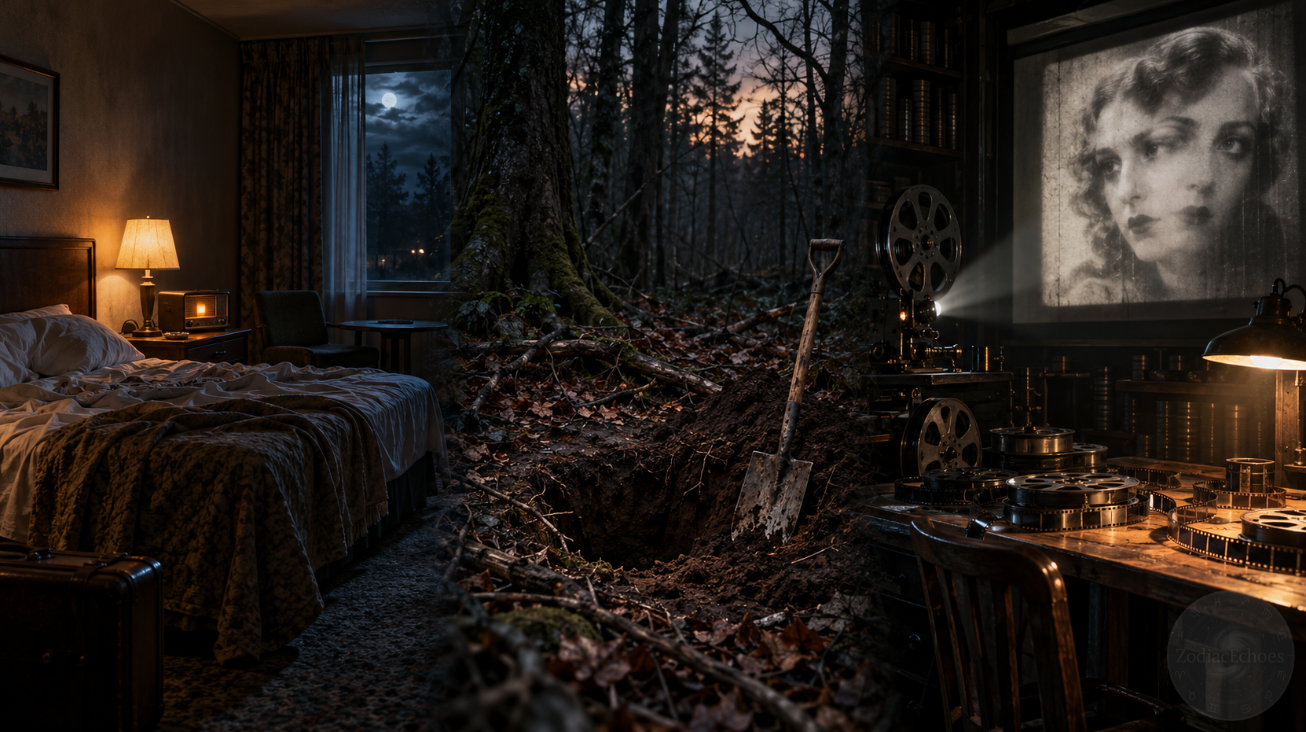
- Jennifer Carpenter reported a radio switching itself on while she was making The Exorcism of Emily Rose.
- Laura Linney separately described similar trouble with her hotel television, although she considered faulty wiring a possible explanation.
- Antrum deliberately builds a fictional history of a dangerous film, making its supposed curse part of the viewing experience.
- Return to Babylon belongs to Hollywood drama rather than conventional horror, but its director’s claims about disturbing images gave it a haunted reputation.
A radio suddenly starts playing while an actress is falling asleep. A film warns viewers that previous screenings ended in disaster. A director studies his footage and becomes convinced that the faces recorded by his camera are changing into something else.
The Exorcism of Emily Rose, Antrum and Return to Babylon approach the idea of a cursed film from three different directions. One accumulated unsettling accounts during production, another constructed its own forbidden history, and the third acquired a paranormal narrative through its filmmaker’s interpretation of the images. Following the original interviews reveals where each story began—and which details grew in the retelling.
The Exorcism of Emily Rose: The Radio That Switched Itself On
Jennifer Carpenter’s performance in The Exorcism of Emily Rose required her to portray frightening experiences with her own body and voice. Away from the cameras, she recalled a much smaller disturbance: on two or three occasions, her radio switched itself on as she was going to sleep. One incident startled her because the music was particularly loud. The song was Pearl Jam’s “Alive.”
That combination supplied an almost ready-made production legend. An actress playing a young woman whose condition is interpreted as possession hears an unexpected song about being alive. In Carpenter’s original account, however, the incident was brief, and she told it with laughter rather than describing a sustained attack.
She also explicitly rejected one detail that would have made the story resemble the film more closely. Asked whether it happened at 3 a.m., the hour given sinister importance in the screenplay, Carpenter said it did not. She had checked.
Laura Linney described her own experience in a separate interview. Her hotel television in Vancouver switched on by itself several times. She recalled laughing when it happened and considering faulty wiring as an explanation. Like Carpenter, she said the incidents did not occur at the film’s significant hour.
The two accounts make an effective pairing because the disturbances followed the performers back to their accommodation. Their working day involved rehearsed scares and carefully controlled effects; the electronics apparently behaving oddly belonged to the hours when they were supposed to be resting. Neither interview establishes what caused the incidents, but both preserve the actors’ own reactions before later retellings made the story more elaborate.
Antrum: A Curse Written Into the Film
Antrum: The Deadliest Film Ever Made begins by preparing its audience to distrust the act of watching. Documentary-style material introduces an allegedly dangerous old film before presenting the film itself. The supposed history of harmful screenings belongs to that fictional framework.
Directors David Amito and Michael Laicini were unusually clear about the design in their interviews. Speaking to Clapper, they explained that the documentary framing, legal notice and 1970s appearance had been part of the concept from the beginning. The atmosphere of a recovered, forbidden object was something they constructed.
Amito traced the idea to a question he asked himself while working on another project: what would still frighten him? His answer was a film he believed had a history of harming its viewers. The fear would continue beyond the ending, because an audience member could keep wondering whether watching had exposed them to something. That became the experience the filmmakers wanted to create.
The feature within the framing follows two siblings entering a woodland setting associated with a gateway to hell. Its period appearance and unsettling interruptions encourage viewers to inspect the image itself for danger. In their Fangoria interview, the filmmakers discussed deliberately shaping the material to affect the audience psychologically.
The response sometimes extended beyond the game they had devised. In a later interview, the creators said they received messages from people who believed they might actually be cursed. They also acknowledged wanting to preserve uncertainty about the project for as long as possible. The genuine story behind Antrum is therefore how a manufactured film legend persuaded some viewers to worry about their own participation.
Return to Babylon: The Faces Inside the Frames
Return to Babylon is an unusual companion to these horror films. It is a black-and-white silent production about scandals in early Hollywood, with performers including Jennifer Tilly, Debi Mazar and Tippi Hedren. Its place in cursed-film discussions comes from the story told about its footage, rather than its classification as a horror film.
In a 2008 interview, director Alex Monty Canawati claimed that close examination revealed actors’ faces apparently transforming into grotesque shapes. He compared some of the images with figures from silent horror, including Nosferatu and the Phantom of the Opera. According to Canawati, these appearances had not been intentionally created as effects.
He described discovering the anomalies while examining footage with a photography instructor, then showing the material to other film professionals and paranormal researchers. His central claim was that the unusual images existed on the original negative. The interview records that assertion, but does not provide an independent technical examination establishing its cause.
Canawati also discussed the production’s deliberately distressed appearance. A hand-cranked camera sometimes jammed, producing abrupt cuts that he felt suited the film. That physical approach matters to the viewing experience: the images already evoke an older, imperfect cinema in which a face can become difficult to read between frames.
The resulting legend asks the audience to become an investigator, stopping and studying images for something the camera supposedly captured unintentionally. Where Emily Rose has an unexpected sound and Antrum has a warning, Return to Babylon has the unsettling promise of something hidden in plain sight.
FAQ
Did Jennifer Carpenter’s radio switch on at 3 a.m.?
No. Carpenter specifically said that it did not happen at that hour, despite its significance in The Exorcism of Emily Rose.
Did Laura Linney report a similar experience?
Yes. She said her hotel television switched on by itself several times, and suggested faulty wiring as a possible explanation.
Is Antrum really a recovered cursed film?
Its recovered-film history is part of the fictional presentation. The directors have discussed planning the framing and period appearance themselves.
Were the images in Return to Babylon proven paranormal?
The director interpreted them that way. His interview does not establish an independently verified paranormal cause.
Sources
- Dread Central — Jennifer Carpenter on The Exorcism of Emily Rose
- Radio Free Entertainment — Jennifer Carpenter Interview
- Blackfilm — Laura Linney Interview
- Rue Morgue — David Amito and Michael Laicini on Antrum
- Fangoria — Interview With the Creators of Antrum
- Rox-TV — Antrum Creators Discuss the Film’s Reception
- Return to Babylon — Alex Monty Canawati Interview
- Rotten Tomatoes — Return to Babylon