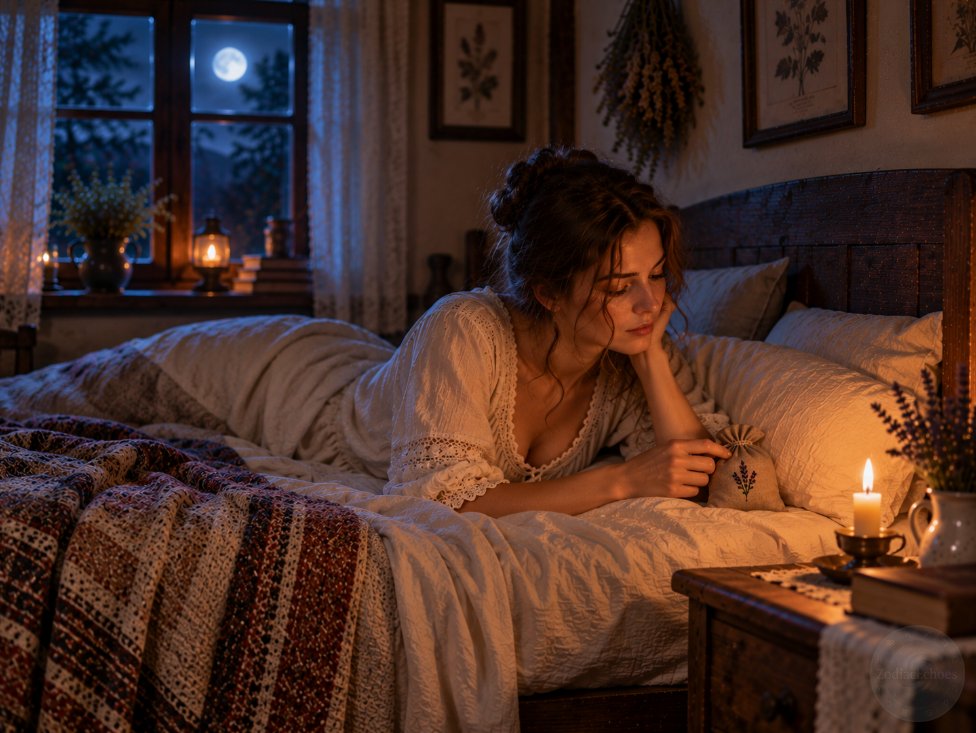
Today, when we wake from a nightmare, we might check the time, drink some water, turn over the pillow, and try to fall asleep again. For our ancestors, however, a bad dream could mean something much more serious.
Nightmares weren’t always dismissed as unpleasant creations of the sleeping mind. People could interpret them as warnings, bad omens, messages about something yet to happen, or even the influence of hostile supernatural forces. Sleep itself was considered a vulnerable state, which is why many folk traditions developed around protecting both the sleeper and the space surrounding the bed.
Herbs, prayers, religious objects, water, and simple morning rituals all played a part. And interestingly, some of those old practices don’t feel quite as strange today as we might expect.
Protective Herbs Belonged Under the Pillow
Plants were among the simplest forms of nighttime protection. In folk tradition, herbs weren’t valued only for healing. Certain plants were also believed to possess protective qualities and to help keep harmful influences away.
For sleep, people used herbs such as St. John’s wort, wild thyme, lavender, and mugwort. Dried plants could be placed inside a small cloth pouch and kept beside the bed or underneath the pillow. Their fragrance was supposed to create a calming atmosphere while the herbs themselves provided symbolic protection for the sleeping person.
St. John’s wort held an especially important position in European folk traditions. It was associated with protection against various forms of evil, so its role wasn’t limited to the bedroom. Protective plants could also be hung around the home or placed near locations through which people once believed something harmful might enter.
A small bag of herbs under a pillow therefore wasn’t simply an early version of aromatherapy. For someone who believed in their protective power, those plants created a boundary between the vulnerable sleeper and whatever might be waiting in the darkness.

A Bad Dream Shouldn’t Stay With You for Long
Protection didn’t end when morning arrived. What someone did immediately after waking from a nightmare could be just as important.
According to old beliefs, a disturbing dream needed to be neutralized so that its meaning or influence wouldn’t follow the dreamer into waking life. In some traditions, the nightmare was told to running water, which would symbolically carry it away. Elsewhere, people turned to prayer or protective words.
Water was one of the strongest symbols of purification, so washing after a frightening dream made sense within this worldview. A person could wash their face or hands while imagining that whatever had frightened them during the night was disappearing with the water.
There is something surprisingly useful hidden inside that old custom even without believing that a nightmare can predict the future. After waking from a disturbing dream, you don’t necessarily need to spend the next hour searching for the meaning of every person, object, or strange detail you remember.
Sometimes you can simply get up, open the window, drink some water, and allow the dream to leave with the night.
Protective Objects Were Kept Beside the Bed
Herbs weren’t the only things guarding a sleeping person. Protective objects and religious symbols also had an important place beside the bed.
In Christian households, this might have been a cross, rosary, image of a saint, or another blessed object. The object itself was only part of the ritual. Just as important was the reassurance that the person wasn’t going to sleep completely unprotected.
Evening prayer was an ordinary part of life in many families and could include a request for protection during the night. Other traditions relied on plants, amulets, and objects believed to prevent harmful forces from approaching someone while they slept.
The sleeping area itself also mattered. A bed wasn’t regarded merely as another piece of furniture. People spent a significant portion of their lives there, and the place where they slept was supposed to remain clean, peaceful, and protected.
A Peaceful Home Was Part of the Ritual
Our ancestors didn’t have the modern concept of “sleep hygiene,” but some of their evening habits would feel remarkably familiar today.
The end of the day was a time for the household to settle down. Work stopped, the home became quieter, and prayer or contemplation could mark the transition between daytime activity and sleep. Going to bed immediately after an argument, filled with fear, or with a troubled mind wasn’t considered ideal. Unpleasant thoughts, people believed, could follow you into your dreams.
You don’t need to recreate an elaborate historical protection ritual to borrow something from that idea. Air out the bedroom in the evening, dim the lights, put your phone aside, make herbal tea if that’s something you normally enjoy, and try not to spend the final minutes before sleep mentally solving every problem waiting for you tomorrow.
And if a nightmare does come, remember the old principle: what frightened you during the night doesn’t have to accompany you into the new day.
Why These Old Nightmare Rituals Still Feel Familiar
The beliefs behind these customs belonged to a very different world. A pouch of herbs could be viewed as supernatural protection, a religious object might guard the sleeper, and running water could symbolically remove the power of a frightening dream.
Yet the rituals themselves often created something very practical: a sense of safety.
A familiar scent beside the bed, a quiet evening routine, prayer, washing your face after a nightmare, opening a window, or simply deciding that the dream is over all mark a transition between fear and calm.
Our ancestors may have explained nightmares differently, but their response often followed the same basic idea: make the place where you sleep feel safe, calm yourself before bed, and don’t allow a frightening night to take possession of the following day.
Conclusion
For our ancestors, nightmares could be warnings, omens, or signs that something harmful had entered the vulnerable world of sleep. They responded with whatever forms of protection their traditions offered: herbs beneath the pillow, prayers before bed, sacred objects nearby, and cleansing rituals after waking.
St. John’s wort, wild thyme, lavender, and mugwort were among the plants associated with nighttime protection, while water offered a symbolic way to send a disturbing dream away.
You don’t have to believe that a nightmare carries a supernatural message to appreciate the underlying idea. Create a peaceful place to sleep, give yourself time to become calm before bed, and when a bad dream wakes you, leave it where it belongs — in the night.
Looking for more? Visit our Astro Tools page and explore free astrology, numerology, tarot, and magic tools created to reveal more about yourself.
Cosmic Highlights

FAQ
What herbs did people traditionally put under their pillows for bad dreams?
The source mentions St. John’s wort, wild thyme, lavender, and mugwort. Dried herbs could be placed in a small cloth pouch and kept underneath the pillow or close to the bed.
Why was St. John’s wort used for protection?
Folk traditions attributed strong protective qualities to St. John’s wort, including the ability to guard people against evil. It could therefore be used around sleeping areas as well as elsewhere in the home.
What did people do after having a nightmare?
One tradition involved telling the dream to running water so that it could symbolically be carried away. Prayer and protective words were also used, while washing the face or hands could represent cleansing yourself of the frightening experience.
What objects were traditionally kept beside the bed for protection?
In Christian households, people might keep a cross, rosary, image of a saint, or another blessed object near the bed. Plants and various protective amulets were also used in folk traditions.
Did people believe nightmares could predict the future?
Some people historically interpreted dreams as warnings, bad omens, important messages, or signs of events that might happen later. This was one reason nightmares could be taken much more seriously than they generally are today.