- Mysterious symbols have been discovered on the walls, beams, fireplaces, and doorways of historic British buildings.
- Many are interpreted as apotropaic marks, symbols intended to protect people from witches, demons, and evil spirits.
- Six-petalled daisy wheels and overlapping V-shaped markings are among the most recognizable examples.
- Some marks remained hidden beneath plaster or inside buildings for centuries before being rediscovered.
Imagine renovating a centuries-old English cottage and discovering a strange symbol scratched into a wooden beam. It resembles a flower enclosed within a circle, but its lines are unusually precise. Nearby, another carving looks like two overlapping letters V.
At first, they might appear to be meaningless decorations left by an earlier owner. Yet similar markings have been found in churches, barns, manor houses, and even underground caves across Britain.
These mysterious carvings are commonly known as witch marks, although their traditional purpose may have been the opposite of what the name suggests. Rather than inviting supernatural forces into a building, some were believed to keep them out.
The Secret Symbols Hidden in Britain’s Oldest Buildings
Witch marks, also called ritual protection marks or apotropaic symbols, have been recorded in buildings dating from the medieval period through the nineteenth century. According to Historic England, such markings are frequently found around doorways, windows, fireplaces, and other openings.
These locations were especially important in traditional supernatural beliefs. A doorway was not merely an entrance for people; it could also be imagined as a passage through which invisible dangers might enter.
Fireplaces and chimneys were similarly vulnerable. Their openings connected the interior of a home with the outside world, making them natural places for protective symbols. For people who feared witchcraft, disease, misfortune, and unexplained disasters, carving a symbol into a wall may have offered reassurance that their household was protected.
The Daisy Wheel: A Trap for Evil Spirits?
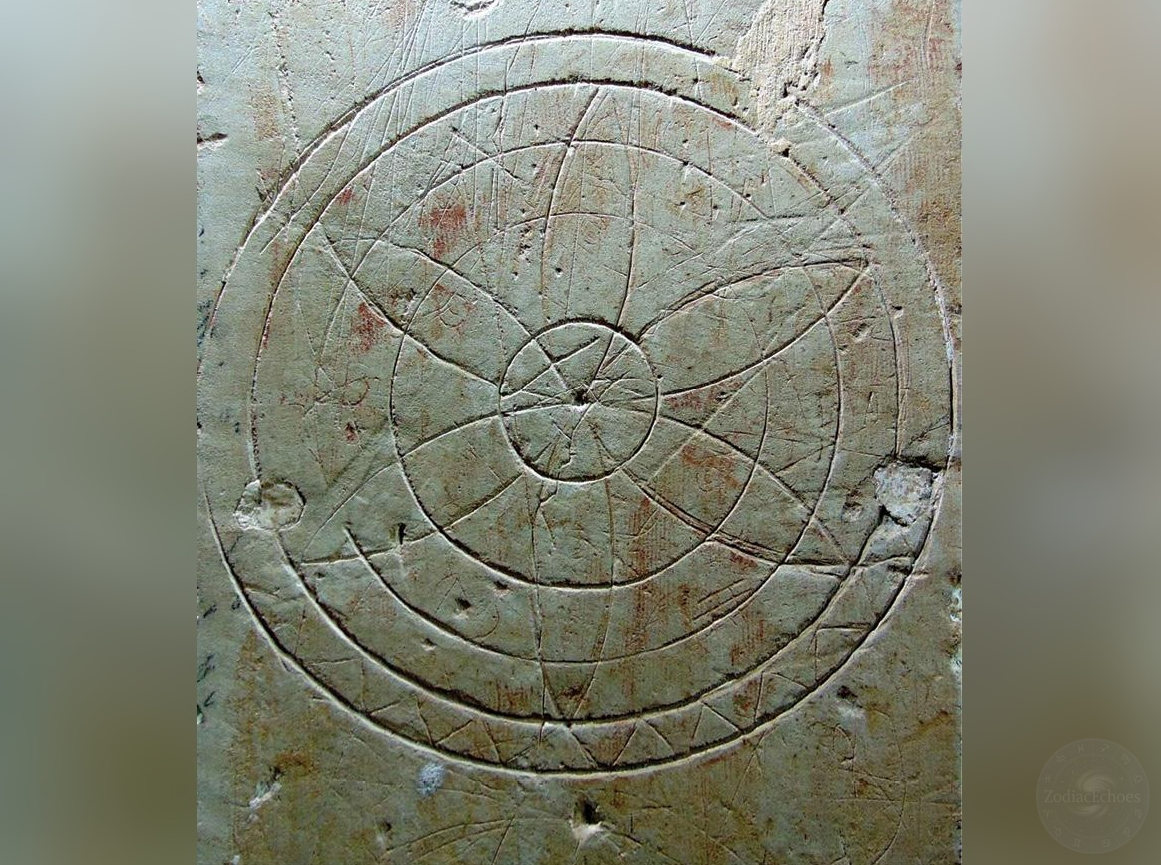
One of the most recognizable symbols is the daisy wheel, also known as a hexafoil. It consists of six overlapping arcs arranged into a flower-like geometric pattern, often enclosed within a circle. Craftspeople could create the design using a compass or dividers.
According to one traditional interpretation, evil spirits might become trapped by following the symbol’s continuous lines. The pattern’s apparently endless geometry was therefore thought to confuse or contain supernatural intruders.
But the meaning of every daisy wheel is not certain. Some architectural historians argue that many examples may have been practical geometric exercises or decorative marks rather than magical protection symbols. Even so, their repeated appearance near entrances and other vulnerable parts of buildings has encouraged the interpretation that at least some carried protective significance.
Why Did People Carve the Letters V and M Into Walls?
Another group of mysterious carvings consists of overlapping V-shaped symbols and combinations resembling the letters M, A, or W. These are often described as Marian marks, associated with the Virgin Mary.
The overlapping Vs have been interpreted as an abbreviation of Virgo Virginum, meaning Virgin of Virgins. Other markings may represent invocations such as Ave Maria.
In this interpretation, the symbols were not pagan spells but expressions of Christian devotion, calling upon the Virgin Mary’s protection against evil. The same household might therefore combine religious faith with a powerful fear of supernatural attack.
The Strange Marks Inside Shakespeare’s Birthplace
One particularly fascinating discovery was made at Shakespeare’s Birthplace in Stratford-upon-Avon. Near the entrance to the cellar, researchers identified two daisy-wheel markings carved into the historic building. The cellar was once used to store beer, a valuable commodity that households and businesses wanted to protect from spoilage or misfortune.
The Shakespeare Birthplace Trust suggests the marks may date from around the early seventeenth century, when the building was leased to a publican. The discovery provides a remarkable connection between everyday life in Shakespeare’s England and the protective customs that may have existed behind ordinary domestic walls.
Witches’ Chimney: The Underground Cave Covered in Symbols
Some of Britain’s most mysterious ritual markings were not discovered inside houses at all. At Wookey Hole in Somerset, a cave passage known as Witches’ Chimney contains a remarkable concentration of carved symbols interpreted as protective marks.
The cave system has long been associated with legends of witchcraft, including stories about the Witch of Wookey Hole. Researchers have identified numerous markings in the caves, including geometric designs and symbols associated with protection. Why would people carve such symbols deep underground?
One interpretation is that the markings were intended to guard against supernatural dangers believed to inhabit the darkness. Yet the precise motivations of individual carvers remain unknown, making the cave one of the more intriguing places associated with Britain’s historical ritual markings.
Why Were Some Symbols Hidden for Centuries?
Many witch marks were never intended to be prominent decorations. Some were scratched into timber before buildings were completed. Others appeared beneath plaster, around concealed structural spaces, or in locations that later renovations covered. As buildings changed over generations, the marks disappeared from view.
Modern restoration projects have brought some of these carvings back into the light, revealing traces of beliefs that were once part of ordinary domestic life. Their survival is especially remarkable because the people who created them often left no written explanation of their purpose.
Conclusion
The mysterious marks hidden in Britain’s old buildings offer a fascinating glimpse into a world where invisible dangers were treated as part of everyday life. Whether carved to invoke divine protection, confuse evil spirits, or serve another purpose entirely, these symbols connect modern visitors with the fears and beliefs of earlier generations.
And perhaps the most unsettling thought is that countless other marks may still remain hidden behind the walls, ceilings, and fireplaces of ordinary homes.
Cosmic Highlights

FAQ
What are witch marks in old houses?
Witch marks are historical carvings or symbols found in buildings. Many are interpreted as protective markings intended to ward off evil spirits, witchcraft, or misfortune.
What does the daisy wheel symbol mean?
The six-petalled daisy wheel is often interpreted as a protective symbol whose continuous lines could supposedly confuse or trap evil spirits. Other interpretations include decorative or geometric uses.
Where are witch marks usually found?
They are commonly recorded near doors, windows, fireplaces, wooden beams, and other architectural features in historic buildings.
Are witch marks pagan symbols?
Not necessarily. Some markings have Christian associations, particularly Marian marks connected with the Virgin Mary.
Can witch marks still be found today?
Yes. Historic England, the National Trust, and other heritage organizations continue to document examples in churches, houses, barns, and caves.
Sources
- Historic England – What Are Witches’ Marks?
- National Trust – Warding Off Evil with Witch Marks
- Shakespeare Birthplace Trust – Witch Markings and Magic