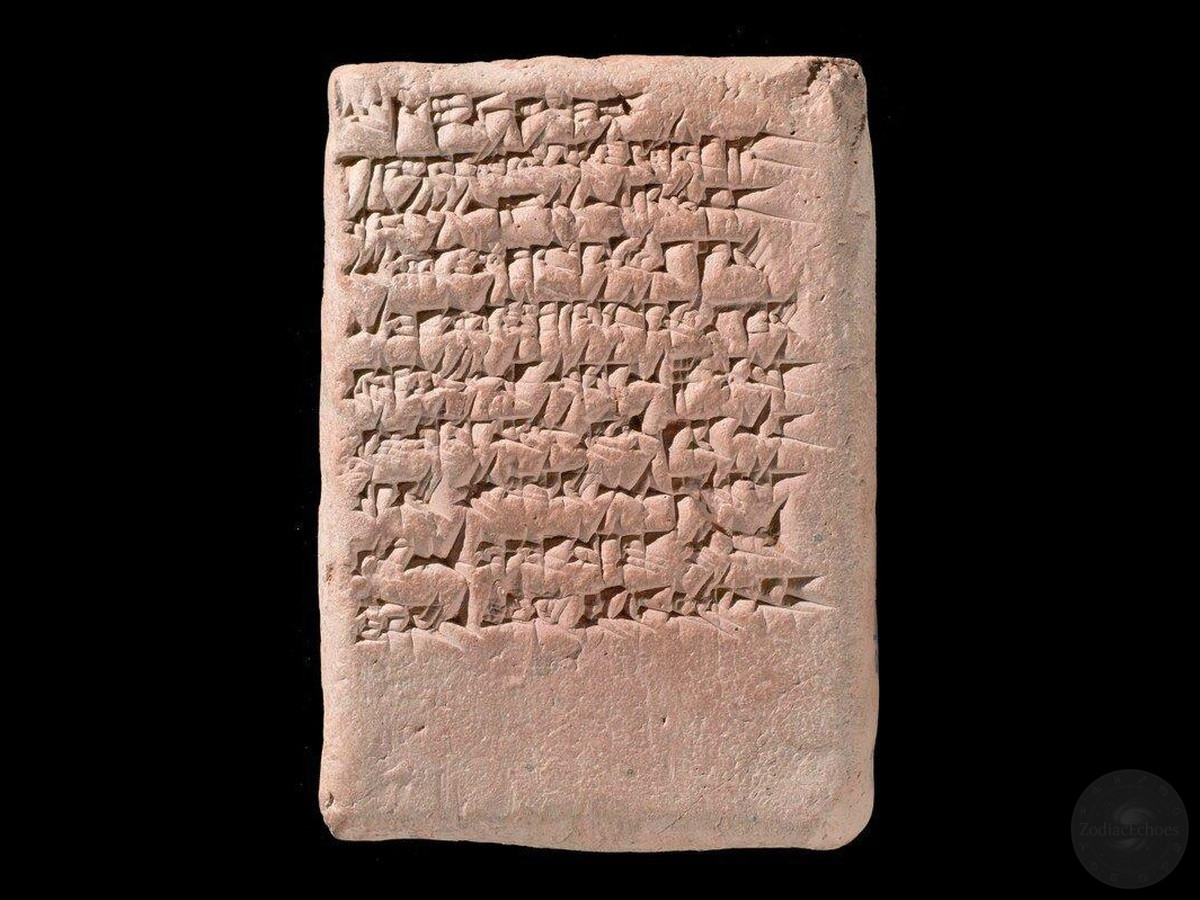
- The oldest surviving personal horoscopes date to 410 BC in ancient Mesopotamia.
- Babylonian astrologers recorded planetary movements and celestial events surrounding a person’s birth.
- Some later horoscopes included predictions about longevity, children, and prosperity.
- These clay tablets reveal the ancient origins of personal birth charts.
More than 2,400 years ago, long before modern astrology apps and computerized birth charts, Babylonian astrologers were already studying the heavens to understand an individual’s destiny. Their observations were carefully preserved on small clay tablets covered in cuneiform writing.
One of these remarkable documents dates to 410 BC, making it among the oldest surviving personal horoscopes in human history. But what exactly did these ancient astrologers believe the stars could reveal?
A Child Born Under an Ancient Sky
The earliest known Babylonian horoscopes were produced during the reign of the Persian king Darius II. One tablet records the birth of a child in January 410 BC, together with astronomical events surrounding that date.
Another horoscope from April of the same year contains something even more recognizable to modern astrology enthusiasts: the positions of planets within zodiac signs.
It places Jupiter in Pisces, Venus in Taurus, Saturn in Cancer, and Mars in Gemini. The Moon was described as appearing beneath the horn of the Scorpion, while Mercury was invisible at the time.
These details demonstrate that Babylonian scholars were already connecting the arrangement of the heavens at birth with the lives of individual people.
Could the Planets Reveal a Person’s Fate?
Babylonian astrology originally focused heavily on kings, kingdoms, wars, harvests, and major celestial omens. Eclipses and unusual planetary events were interpreted as possible messages concerning the future of entire nations.
By the fifth century BC, however, this tradition was changing. The heavens were no longer consulted only for rulers; they were also being examined for individual destinies.
Most surviving Babylonian birth horoscopes contain astronomical observations rather than elaborate predictions. A small number include brief statements about a person’s future, sometimes referring to long life, children, or prosperity. Unlike modern birth charts, these early records did not use the familiar circular zodiac wheel with twelve astrological houses.
The Mystery of Astrology’s First Birth Charts
What makes these tablets fascinating is how much they reveal about the development of astrology. Babylonian scholars maintained detailed astronomical records, allowing them to determine planetary positions even when certain celestial bodies were invisible.
Yet important questions remain. Who requested these personal horoscopes? Were they reserved for wealthy families, religious officials, or other privileged members of society? And how much interpretation was delivered verbally rather than written on the tablets? Only a relatively small collection has survived, leaving much of this ancient practice unknown.
Conclusion
The Babylonian horoscopes of 410 BC mark an extraordinary turning point in astrological history. For the first time in the surviving record, the sky surrounding an individual’s birth became the subject of a personal astrological document.
More than two millennia later, the same fundamental idea remains central to natal astrology: that the positions of celestial bodies at birth carry symbolic meaning for a person’s life.
Cosmic Highlights

FAQ
What is the oldest surviving horoscope?
The earliest known personal horoscopes date to 410 BC and were written in cuneiform on clay tablets in ancient Mesopotamia.
Did Babylonian astrologers use zodiac signs?
Yes. Babylonian astrologers recorded planetary positions in zodiac signs, including Pisces, Taurus, Cancer, and Gemini.
Did ancient Babylonian horoscopes predict the future?
Some contained brief predictions concerning longevity, children, or prosperity, although most surviving examples primarily record astronomical information.