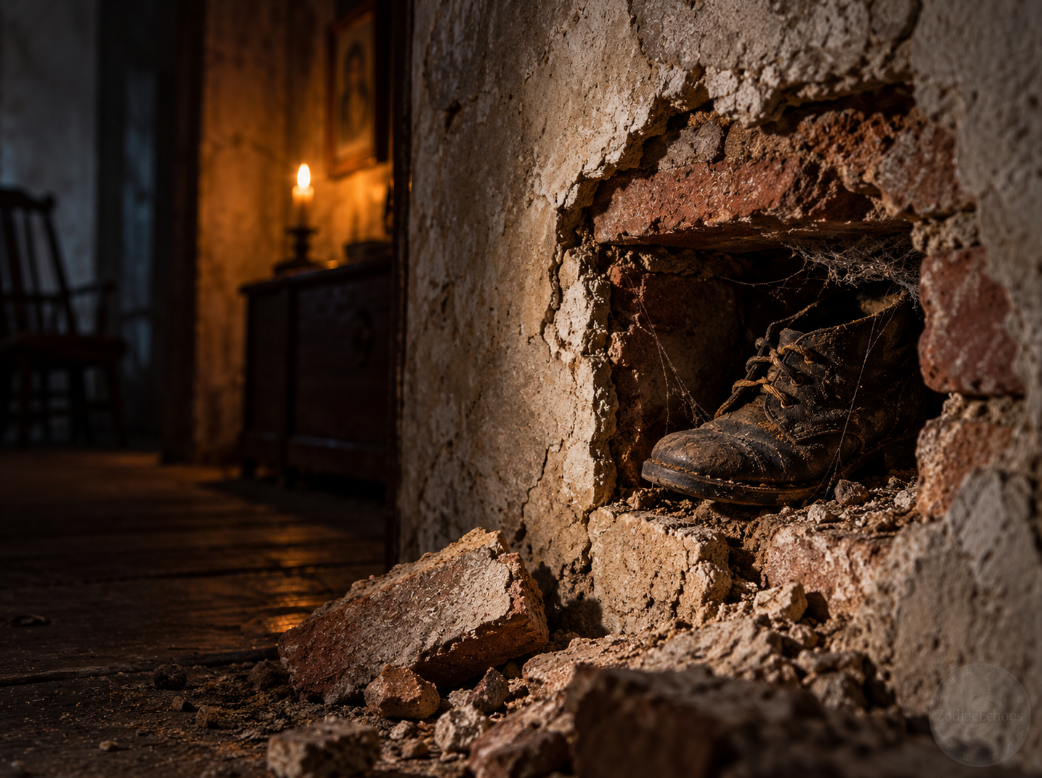
- Real Hidden Objects: Thousands of old shoes have been documented inside historic buildings.
- Protection From Evil: One explanation suggests that shoes were concealed to protect homes from witches and malicious spirits.
- Strange Hiding Places: Shoes have been discovered inside chimneys, beneath floors, above ceilings, and behind walls.
- The Devil in a Boot: A medieval legend about John Schorn may help explain the belief that footwear could imprison evil.
- An Unsolved Mystery: Researchers still debate why so many people deliberately hid worn shoes in their houses.
Imagine renovating a centuries-old house and discovering a small cavity behind the fireplace. Inside lies a single leather shoe, blackened with age, its sole worn thin by someone who died hundreds of years ago. There is no matching shoe, no forgotten suitcase, and no obvious reason why anyone would have sealed it inside the wall.
Yet discoveries like this are surprisingly common. Across Britain and other countries, builders and historians have uncovered old shoes deliberately hidden inside the structures of buildings. One of the most disturbing explanations is that these objects were placed there to protect the occupants from witches, demons, and other invisible threats.
Why Were Shoes Hidden Inside Houses?
In early modern Britain, people sometimes concealed objects within their homes as a form of supernatural protection. These could include witch bottles, protective markings, animal remains, and worn footwear. The hidden objects were frequently placed near locations considered vulnerable, such as fireplaces, doorways, and openings through which unwanted influences might enter.
According to one interpretation, an old shoe could act as a protective charm against evil spirits. The object was not meant to be displayed. Its purpose depended on remaining concealed, quietly guarding the household for years or even generations.
The practice was not restricted to poor cottages. Concealed footwear has been discovered in a wide variety of buildings, including substantial houses and religious properties. The same mysterious custom crossed social boundaries and survived for centuries.
Why Did People Use Old, Worn-Out Shoes?
One of the strangest details is that concealed shoes were usually heavily worn. Many had been repaired repeatedly, and a considerable number belonged to children. Single shoes appear far more frequently than complete pairs.
One possible explanation concerns the intimate relationship between footwear and its owner. Unlike many other possessions, a leather shoe gradually takes on the shape of the person who wears it. In a world where personal objects could be associated with magical influence, an old shoe may have seemed to retain something of its owner’s identity.
Other interpretations suggest that shoes were hidden as good-luck charms, fertility symbols, or memorial objects connected with deceased family members. The exact purpose of any individual discovery is often impossible to determine.
Could a Shoe Really Trap the Devil?
A particularly fascinating connection comes from the medieval legend of John Schorn, an English religious figure who died in 1313. According to stories associated with him, Schorn managed to capture the Devil inside a boot.
The legend became popular enough to appear on medieval pilgrim badges. Images of the Devil imprisoned in footwear offered a powerful symbol of evil being contained rather than allowed to roam freely.
Some researchers have suggested that this story may help explain why shoes became associated with protection against supernatural forces. The connection remains a historical interpretation rather than a proven origin of the custom, but it gives the hidden objects an especially eerie meaning.
How Many Hidden Shoes Have Been Discovered?
The discoveries are extensive enough to have inspired a dedicated historical database. Northampton Museum and Art Gallery maintains a Concealed Shoes Index recording finds from Britain and other countries.
By 2012, the museum had documented approximately 1,900 reports, and later archaeological research described a collection exceeding 2,000 examples. Many more shoes may remain undiscovered behind old walls and beneath forgotten floorboards.
National Museums Scotland also holds examples of concealed footwear, including shoes recovered from historic buildings. Their existence demonstrates that this unusual practice was more than a frightening legend: the shoes themselves are genuine historical evidence.
What Should You Do If You Find a Shoe Hidden in a Wall?
Finding an old shoe during renovation may reveal something important about the history of the building. Its location, age, condition, and surrounding materials can help researchers understand when and why it was concealed. Removing it without documenting the discovery can erase valuable clues.
Northampton Museum encourages people who discover concealed shoes to report them for its historical index. Some homeowners even choose to return the footwear to its original hiding place after recording the find, preserving a tradition whose original meaning has largely been forgotten.
Conclusion
The mystery of concealed shoes is one of the strangest surviving traces of historical household magic. For centuries, people hid worn footwear inside walls, chimneys, and floors, possibly hoping to trap evil, protect their families, or preserve a connection with someone they had lost. Researchers have documented thousands of examples, yet many questions remain unanswered. Somewhere inside an ordinary old house, a single forgotten shoe may still be waiting behind the plaster, exactly where someone placed it hundreds of years ago.
Cosmic Highlights

FAQ
Why Did People Put Shoes Inside Walls?
One major interpretation is that concealed shoes served as protective charms against witches, evil spirits, or bad luck. Other explanations include fertility customs and memorial practices.
Why Are Hidden Shoes Usually Old and Worn?
Worn shoes retain the shape of their owners’ feet, which may have given them symbolic significance. Researchers have also noted that many concealed examples were repaired or heavily used.
Were Shoes Really Used to Trap the Devil?
A medieval legend describes John Schorn trapping the Devil inside a boot. Historians have proposed a connection between this story and protective shoe concealment, although the link is not conclusively established.
Where Are Concealed Shoes Most Commonly Found?
They have been discovered inside chimneys, behind walls, beneath floors, above ceilings, and near doors or windows in historic buildings.
What Should I Do If I Discover an Old Shoe During Renovation?
Photograph the shoe and record exactly where it was found. Northampton Museum and Art Gallery maintains an index of concealed shoes and welcomes reports of new discoveries.