The Moon is constantly changing above us. Sometimes it disappears almost completely, then slowly returns, reaches the brilliance of the Full Moon, and gradually fades again. For centuries, people have connected this repeating cycle with changes in energy, emotions, decisions, and everyday life.
You don’t necessarily have to believe in lunar magic to find the idea interesting. The lunar cycle can also be treated simply as a recurring framework for deciding when to begin something, when to push harder, when to look at the bigger picture, and when to slow down.
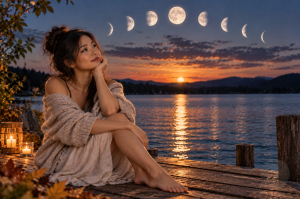
Traditional lunar astrology gives each major phase a different purpose. The New Moon represents beginnings, the waxing Moon encourages action and growth, the Full Moon brings things into the light, and the waning Moon is associated with release, recovery, and closure.

New Moon: A Time for New Beginnings
The New Moon is the point in the lunar cycle when the Moon is not visible from Earth. Symbolically, this darkness is often treated as a blank page—a moment when the previous cycle has ended but the next one has not fully begun.
That makes the New Moon traditionally associated with fresh starts and new experiences. It can be a good symbolic moment to begin a new chapter in a relationship, make changes at work, start a personal project, or simply decide that something in your everyday life needs to be different.
The same principle can be applied to habits. If you’ve been thinking about learning another language, exercising more regularly, changing your routine, or becoming less affected by other people’s negative opinions, the New Moon offers a natural point at which to say: I’m starting now.
Think of it as a monthly reset. You don’t have to erase everything that happened before, but you can decide what you don’t want to carry into the next cycle.
Waxing Moon: It’s Time to Move
Once the New Moon passes, the illuminated part of the Moon gradually grows. In lunar traditions, this period represents increasing momentum. If the New Moon is about deciding what you want, the waxing Moon is about doing something about it.
The first quarter in particular is associated with action, determination, and confronting obstacles. Instead of continuing to plan indefinitely, this is the phase traditionally connected with taking control, speaking up, tackling challenges, and moving a project forward.
It is also linked with creativity and flexibility. If you’re facing a task that requires an original solution or a different way of looking at a problem, this part of the lunar cycle is traditionally considered particularly useful.
Confidence can also become important here. Sometimes progress doesn’t require another month of preparation—it requires believing that you’re capable of handling whatever happens once you begin.
Full Moon: Everything Comes Into the Light
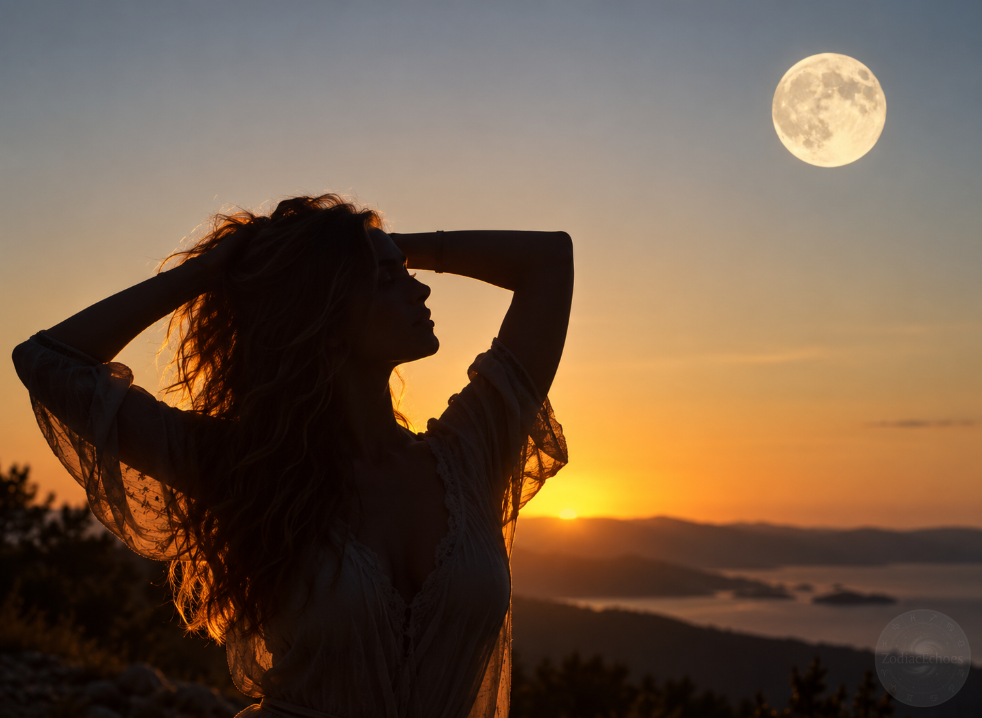
Then comes the most visually dramatic point of the lunar cycle. During the Full Moon, the entire visible face of the Moon is illuminated. Symbolically, this phase has long been associated with clarity, culmination, heightened emotions, and seeing what was previously hidden.
For sensitive people, the Full Moon can feel intense. But that intensity is not necessarily negative. The original lunar interpretation presents it as a period when you may gain enough distance to see the entire situation rather than focusing only on individual details.
This can make the Full Moon a useful symbolic time for self-reflection. Emotions that have been difficult to understand may become easier to recognize, and questions you’ve been avoiding may demand attention.
Traditionally, it is also considered a good period for meditation, therapy, personal development, and examining parts of yourself that usually remain beneath the surface.
And if there’s a conversation you’ve been postponing, the Full Moon is associated with bringing things into the open. That doesn’t mean starting an argument simply because the Moon is full. Rather, its symbolism encourages honesty, clarity, and finally saying what has been left unsaid.
Waning Moon: Let Go of What You No Longer Need
After the Full Moon, the illuminated part of the Moon begins to shrink again. This changes the emphasis of the cycle. Instead of expansion, ambition, and outward movement, the waning Moon traditionally turns attention toward evaluation, release, and rest.
What worked during the previous weeks? What didn’t? Which plans are still worth pursuing, and which ones are consuming energy without giving anything meaningful back?
The last quarter can therefore become a natural checkpoint. Rather than immediately starting something else, you can look at what has happened during the current lunar cycle and decide what should continue into the next one.
It’s also traditionally associated with letting go. That could mean an outdated habit, an unnecessary commitment, a lingering resentment, or simply a routine that no longer works. You don’t have to keep carrying something merely because you’ve carried it for a long time.
The Waning Moon Is Also a Time to Rest
There is another important part of this phase: recovery. As the Moon’s visible light decreases, lunar tradition encourages people to slow down as well. Instead of constantly demanding more from yourself, this period can be used to restore energy before another cycle begins.
That may mean sleeping more, spending time alone, reducing unnecessary commitments, or paying attention to emotional wounds you’ve been ignoring. The original source also connects the final quarter with physical recovery and healing, although medical decisions such as the timing of surgery or dental treatment should of course be based on professional medical advice rather than the lunar calendar alone.
The underlying idea is simple: rest is part of the cycle, not an interruption of it. If you never allow yourself to slow down, eventually your body or mind may make that decision for you.
You Don’t Have to Believe in Lunar Magic to Follow the Cycle
Perhaps the most useful part of living with the lunar phases is that you don’t have to treat them as supernatural forces controlling your life. They can simply provide a rhythm.
- The New Moon asks, What do I want to begin?
- The waxing Moon asks, What am I willing to do about it?
- The Full Moon asks, What can I finally see clearly?
- And the waning Moon asks, What am I ready to release?
Then the darkness of the New Moon returns, and the entire process begins again.
Looking for more personalized insights? Explore our free Astro Tools and discover astrology, numerology, witch type, and many more mystical experiences.
Conclusion
The lunar cycle offers a simple way to divide life into periods of beginning, action, reflection, and release. The New Moon represents a fresh start, while the waxing Moon encourages you to build momentum and pursue what you’ve begun. The Full Moon brings the cycle to its brightest point and traditionally invites greater clarity and emotional awareness.
Then the waning Moon reminds you that progress isn’t only about adding more. Sometimes the most important thing you can do is evaluate what happened, let go of what no longer serves you, rest, and prepare for another beginning.
Whether you see the Moon as a source of mystical influence or simply as a beautiful natural clock, its repeating cycle offers one useful reminder: you don’t have to move at full speed all the time.
Cosmic Highlights
FAQ
What are the four main phases of the Moon?
The lunar cycle is commonly divided into the New Moon, waxing Moon, Full Moon, and waning Moon, with quarter phases occurring during the transitions.
What is the New Moon traditionally good for?
In lunar traditions, the New Moon represents beginnings, intentions, new habits, and starting a new chapter.
What should you do during the waxing Moon?
The waxing Moon is traditionally associated with action, growth, creativity, confidence, and building momentum toward a goal.
What does the Full Moon represent?
The Full Moon is associated with culmination, emotional intensity, clarity, self-reflection, and bringing previously hidden issues into the light.
What is the waning Moon good for?
Traditionally, the waning Moon is a period for slowing down, evaluating what has happened, releasing unnecessary things, resting, and preparing for the next lunar cycle.
Do Moon phases scientifically control our emotions or health?
The spiritual and astrological meanings described here are traditional interpretations rather than established evidence that lunar phases directly control human emotions or health. The lunar cycle can still be used as a personal framework for reflection, planning, and creating routines.
✨ Explore More from Zodiac Echoes ✨Explore More from ZE
Choose your zodiac sign to explore daily, weekly, monthly, and yearly horoscopes.