-
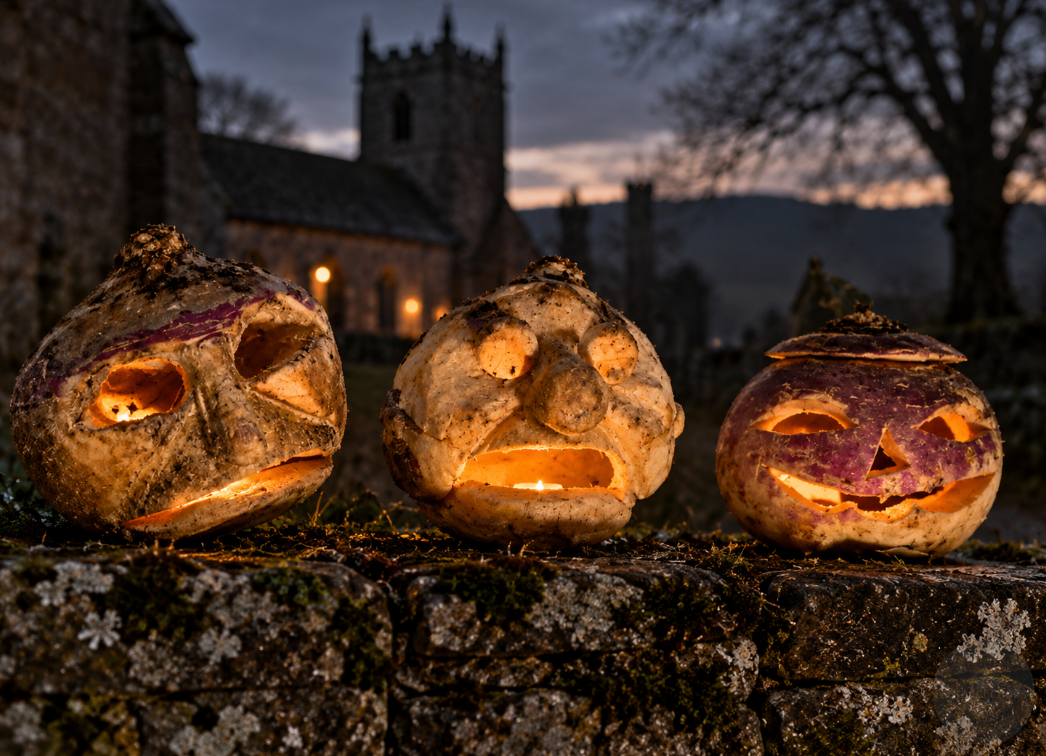
Before Pumpkins: Scottish families traditionally carved frightening faces into turnips, locally called tumshies.
-
The Original Purpose: The lanterns were associated with protection against ghosts and dangerous fairies.
-
Samhain Connection: Halloween traditions developed around a season associated with supernatural encounters.
-
A Frightening Appearance: Hollowed-out turnips with candles inside could look considerably more disturbing than modern pumpkins.
-
A Living Tradition: Turnip carving remains part of Scotland’s Halloween heritage.
Halloween Once Had a Much More Frightening Face
Imagine walking through a Scottish village on a cold October night, long before glowing orange pumpkins became the universal symbol of Halloween. Outside a cottage, something grotesque watches from the darkness. Its face is twisted, its teeth uneven, and a small flame flickers behind its hollow eyes. It looks almost like a severed head illuminated from within.
But this is not a scene from a horror movie. It is an old-fashioned Halloween lantern carved from a turnip.
Before pumpkins became popular Halloween decorations, people in Scotland carved terrifying faces into turnips to frighten away supernatural visitors. These lanterns were not originally intended to look friendly, funny, or particularly attractive. Their disturbing appearance was part of their purpose.
The tradition belonged to a world in which Halloween was more than an opportunity to wear costumes and collect sweets. It was a night when ghosts, fairies, and other dangerous beings were believed to move among the living.
Why Scottish Families Carved Faces Into Turnips
In Scotland, carved turnips were sometimes known as tumshie lanterns. Preparing one required considerably more effort than carving a modern pumpkin. Turnips are smaller, harder, and denser, making them difficult to hollow out with ordinary household tools.
Once the interior had been removed, the carver created a frightening face and placed a candle inside. The light illuminated the carved features, producing an eerie expression that became especially unsettling after dark.
According to Historic Environment Scotland, these evil-looking faces were intended to scare away ghosts and fairies. The lantern therefore had a protective role, rather than serving merely as a seasonal decoration.
This distinction changes the way we understand the custom. A modern Halloween pumpkin often welcomes visitors with a cheerful grin. Its Scottish predecessor was designed to make unwanted visitors think twice about approaching.
Samhain: The Night When Spirits Came Closer
The supernatural atmosphere surrounding turnip lanterns was connected with older seasonal traditions associated with Samhain, known in Scottish Gaelic as Samhainn. The festival marked a significant transition in the agricultural year, as the lighter months gave way to winter.
In later Scottish folklore, this seasonal boundary became associated with dangerous encounters between ordinary people and supernatural beings. Fairies were not always the harmless, delicate creatures familiar from modern children’s stories. In Scottish tradition, they could be unpredictable and threatening.
Certain supernatural beings were believed capable of causing harm, misleading travelers, or interfering with human households. Halloween was therefore a night when protection mattered. The frightening faces carved into turnips belonged to a broader collection of customs intended to keep danger at a distance.
Bonfires, Disguises, and Other Ways to Keep Spirits Away
Turnip lanterns were only one part of Scotland’s traditional Halloween defenses. Communities also lit bonfires, sometimes known in Gaelic as samhnagan. According to Historic Environment Scotland, these fires were associated with repelling malicious spirits until daylight returned. In some island communities, households even competed to build particularly impressive fires.
Another custom involved disguising children. The Scottish tradition of guising, an important predecessor of modern trick-or-treating, was associated with the idea that disguises could prevent wandering fairies and spirits from recognizing or stealing children.
Together, these customs reveal a remarkably different Halloween from the one celebrated today. People did not simply dress as frightening creatures for entertainment. They sometimes dressed frighteningly because they feared what might be waiting outside.
Why Turnip Lanterns Look Scarier Than Pumpkins
There is something unusually disturbing about the appearance of a carved turnip. Its irregular shape, pale flesh, rough skin, and small size can make the face resemble a grotesque human head. Unlike a large pumpkin, which offers plenty of space for elaborate designs, a turnip often produces narrow eyes, uneven mouths, and distorted expressions.
The candlelight intensifies the effect. Shadows collect inside the carved openings, while the surrounding flesh glows faintly. From a distance, the lantern may look less like a vegetable and more like a strange face emerging from the darkness. Modern pumpkin carving has become a form of creative entertainment, but the older turnip tradition retains an unmistakably unsettling appearance.

How Pumpkins Replaced the Old Lanterns
As Halloween customs crossed the Atlantic, pumpkins became increasingly associated with the celebration in North America. Their size and softer interior made them considerably easier to carve than turnips. They also provided a larger illuminated surface, making elaborate faces and decorative designs more practical.
Over time, the orange pumpkin became the internationally recognized Halloween symbol. The older, more disturbing turnip lantern gradually disappeared from mainstream Halloween imagery, although the tradition remained familiar in Scotland and other parts of Britain and Ireland.
Today, the difference between the two reflects a broader transformation of Halloween itself: from a season filled with supernatural precautions to a holiday centered on entertainment, creativity, and celebration.
Conclusion
Before Halloween pumpkins became cheerful decorations, Scottish turnip lanterns were frightening faces intended to protect households from supernatural danger. Their grotesque expressions, flickering candlelight, and connection with Samhain reveal an older Halloween shaped by fear of ghosts and fairies. The next time you see a smiling pumpkin outside someone’s home, remember that its ancestors were considerably more sinister—and were carved to frighten something away.
Cosmic Highlights
FAQ
What Did People Carve Before Halloween Pumpkins?
In Scotland, people traditionally carved turnips, sometimes called tumshies. These were hollowed out, decorated with frightening faces, and illuminated with candles.
Why Were Turnip Lanterns Supposed to Be Scary?
The frightening faces were associated with driving away ghosts and dangerous fairies during Halloween.
Are Turnip Lanterns Connected to Samhain?
Yes. They belong to Scottish Halloween traditions associated with Samhainn, a seasonal celebration surrounded by supernatural folklore.
Why Did Pumpkins Replace Turnips?
Pumpkins were abundant in North America and much easier to hollow out and carve because of their size and softer flesh.
Do People Still Carve Turnips for Halloween?
Yes. Turnip carving survives as a traditional Halloween custom, particularly among people interested in preserving Scottish heritage.
Research source: Historic Environment Scotland – Samhainn and the Scottish Traditions of Hallowe’en.