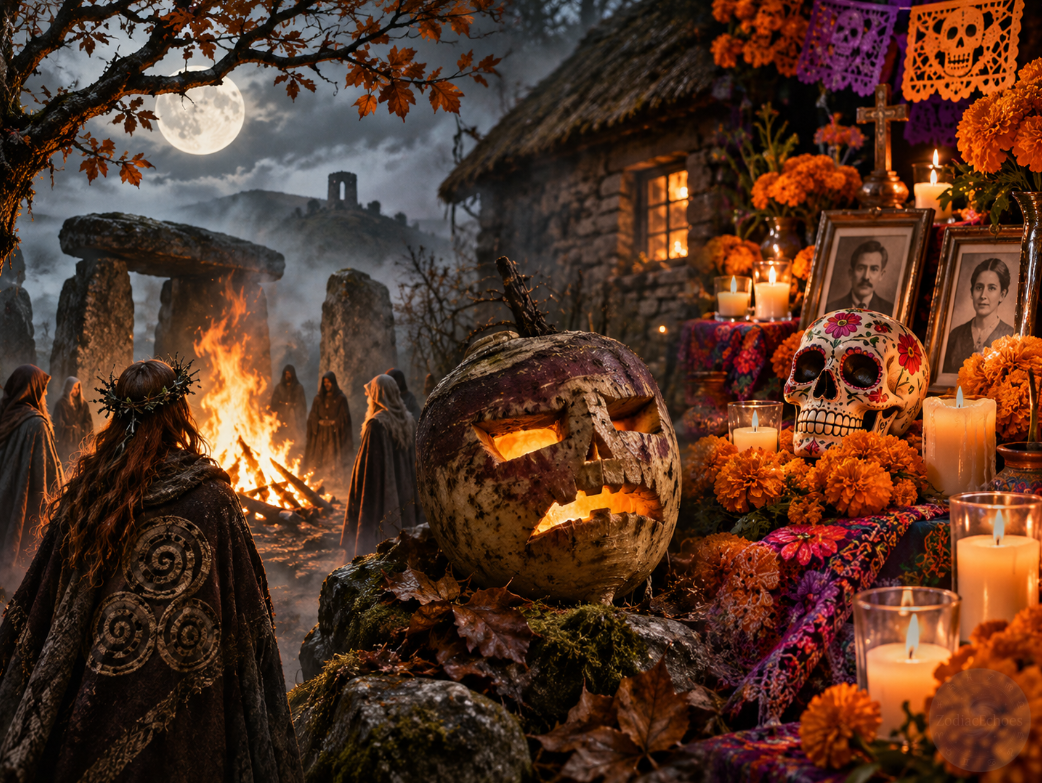
- Halloween has historical connections to Samhain, an ancient Gaelic festival marking the transition from the harvest season into winter.
- In Ireland, bonfires, traditional foods, costumes, and celebrations preserve elements of Halloween’s older heritage.
- In the United States, trick-or-treating, haunted attractions, and elaborate decorations have become defining traditions.
- Mexico’s Día de los Muertos honors deceased loved ones through family altars, offerings, flowers, and remembrance, but is distinct from Halloween.
- Across Central Europe, All Souls’ Day remains an important occasion for visiting graves and lighting candles.
Every October 31, millions of people carve pumpkins, dress as witches and ghosts, and prepare for a night of frightening entertainment. Yet Halloween has a much older and more mysterious history than costumes, horror movies, and candy. Its traditions connect ancient seasonal celebrations, Christian observances, folklore about wandering spirits, and customs that developed across several continents.
Although Halloween is now celebrated in many countries, the meaning of the season changes dramatically depending on where you are. In Ireland, the festivities recall ancient Gaelic traditions. In America, entire neighborhoods transform into theatrical landscapes of skeletons and illuminated pumpkins. In Mexico, a separate but neighboring celebration welcomes the memory of deceased relatives through carefully decorated altars.
Behind these different customs lies a recurring human fascination: what happens when the living remember the dead, and why has the end of October become associated with the supernatural?
Samhain: The Ancient Festival Behind Halloween
One of Halloween’s most important historical predecessors is Samhain, a Gaelic festival traditionally associated with the end of the harvest and the beginning of winter. Celebrated around the transition from October to November, it marked a significant turning point in the agricultural calendar.
In Irish folklore, Samhain was also associated with supernatural encounters. Stories described beings from the Otherworld entering human affairs, while later traditions connected the season with spirits, divination, and unusual events.
Bonfires, communal gatherings, and seasonal customs formed part of the wider celebrations. The darkness of approaching winter helped give the festival its enduring mysterious reputation.
Halloween’s history also includes Christian influences. The name derives from All Hallows’ Eve, the evening before All Saints’ Day on November 1. Over centuries, different religious and folk traditions interacted, gradually shaping the observances familiar today. Modern Halloween cannot be traced to one unchanged ancient ceremony.
Why Were Turnips Carved Before Pumpkins?
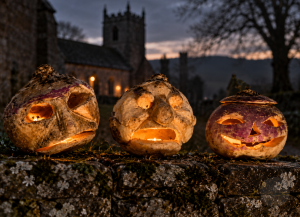
One of Halloween’s most recognizable symbols originally looked quite different. Before pumpkins became popular, people in Ireland and parts of Britain carved frightening faces into turnips and other root vegetables. Hollowed-out lanterns were illuminated from within, creating eerie expressions in the darkness.
The tradition became associated with stories of wandering souls, particularly the Irish folktale of Stingy Jack, a trickster condemned to wander with a makeshift lantern.
When Irish immigrants brought their customs to North America, pumpkins offered a larger, softer, and easier-to-carve alternative. The glowing jack-o’-lantern eventually became a defining feature of American Halloween and spread internationally through popular culture.
United States: Trick-or-Treating and Haunted Neighborhoods
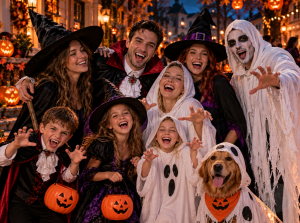
In the United States, Halloween has developed into an enormous community celebration. Residential streets fill with costumed children visiting decorated houses and asking for candy through the familiar phrase “trick or treat.”
Some households create elaborate displays featuring artificial gravestones, skeletons, fog machines, and mechanical monsters. Others organize costume contests, pumpkin-carving events, horror movie marathons, or visits to haunted attractions.
Modern American Halloween combines several historical influences, including European immigrant customs and later community traditions. Trick-or-treating in its recognizable modern form became particularly widespread during the twentieth century.
For many families, the celebration is primarily playful. But its imagery still draws heavily on older fears of death, ghosts, darkness, and the unknown.
Ireland: Where Halloween’s Ancient Roots Remain Visible
Ireland maintains a particularly strong connection to Halloween’s Gaelic heritage. Festivals, parades, bonfires, storytelling, and seasonal celebrations recall the traditions associated with Samhain.
One distinctive Halloween food is barmbrack, a fruit-filled bread historically associated with fortune-telling. Small objects were sometimes baked inside, with each object carrying a symbolic prediction about the person who discovered it.
For example, finding a ring was traditionally associated with marriage. These customs reflect the broader importance of divination in Halloween folklore, when people sought clues about their future relationships and fortunes.
Today, Irish Halloween festivals blend historical themes with contemporary entertainment. The supernatural atmosphere remains central, even as the celebrations evolve.
Mexico: Día de los Muertos and the Altars of the Dead
During the same season, Mexico observes Día de los Muertos, or the Day of the Dead, especially on November 1 and 2. Although it is frequently mentioned alongside Halloween, it is a distinct cultural and religious tradition with its own history and meaning.
Families create memorial altars known as ofrendas, displaying photographs of deceased relatives, candles, flowers, favorite foods, and personal objects. Marigolds, decorated skulls, and colorful artistic displays are especially recognizable elements of the celebration.
Rather than focusing primarily on fear, Día de los Muertos emphasizes remembrance, family connections, and the continuing importance of loved ones who have died. The observance draws on a complex mixture of Indigenous Mexican traditions and Catholic commemorations.
Its vibrant imagery should not obscure its deeper purpose. For participating families, these altars are meaningful acts of remembrance rather than simply seasonal decorations.
Central Europe: Candles, Cemeteries, and All Souls’ Day
In countries such as the Czech Republic and Slovakia, All Souls’ Day on November 2 remains an important tradition. Families visit cemeteries, clean graves, place flowers, and light candles in memory of deceased relatives.
In Czech culture, the occasion is commonly known as Dušičky. Unlike the theatrical atmosphere of Halloween, its traditional character is generally quieter and more reflective.
However, modern Halloween celebrations have become increasingly visible across Central Europe. Pumpkin festivals, costume parties, children’s events, and haunted attractions now exist alongside established remembrance customs.
The two observances can coexist without carrying the same meaning: one may emphasize playful encounters with the supernatural, while the other focuses on remembering real people who have died.
A Simple Halloween Ritual for Leaving the Past Behind
Halloween’s associations with seasonal change and endings have inspired many modern symbolic rituals. One simple reflective practice uses a candle, an apple, two pieces of paper, and a pen. It is a contemporary personal exercise rather than a historically verified ancient Samhain rite.
On the first piece of paper, write something you would like to leave behind: an old resentment, an unhelpful habit, a recurring fear, or an emotional attachment that no longer serves you. Tear the paper into small pieces and discard it as a symbolic act of release.
On the second piece, write a specific intention for the coming months. Instead of a vague wish for happiness, describe something meaningful and achievable. Place the paper beside an apple and a safely positioned candle, then take a moment to reflect on the changes you want to make.
Fold the paper toward yourself three times and keep it somewhere private until the end of November. The following day, eat the apple as a symbolic reminder of your intention.
The most important part comes afterward: take one practical step toward your goal during the first week of November. The ritual itself does not guarantee an outcome; its value lies in reflection, commitment, and action.
Conclusion
Halloween is far more than pumpkins, candy, and horror movies. Its history reaches into ancient seasonal traditions, Irish folklore, Christian observances, and the changing customs of communities around the world. From illuminated turnips to American trick-or-treating, the celebration has continually evolved.
Meanwhile, traditions such as Mexico’s Día de los Muertos and Central Europe’s All Souls’ Day demonstrate how differently cultures remember the dead. Whether the season is marked by laughter, frightening stories, candlelight, or quiet remembrance, the end of October continues to connect people with questions about mortality, memory, and the unknown.
Cosmic Highlights

FAQ
Where Did Halloween Originally Come From?
Halloween developed through a combination of historical influences, including Gaelic Samhain traditions and Christian observances surrounding All Saints’ Day. Its modern customs emerged gradually over centuries.
Why Did People Originally Carve Turnips for Halloween?
Turnips and other root vegetables were traditionally carved into lanterns in Ireland and parts of Britain. Pumpkins later became popular in North America because they were larger and easier to carve.
Is Día de los Muertos the Same as Halloween?
No. Día de los Muertos is a distinct Mexican tradition centered on remembering and honoring deceased loved ones. Although it takes place around the same time of year, its history and cultural significance differ from Halloween.
What Is the Connection Between Halloween and Samhain?
Samhain was a Gaelic seasonal festival marking the transition into winter. Its folklore and customs contributed to Halloween’s later associations with spirits, divination, and the supernatural.
How Is Halloween Celebrated in Ireland Today?
Ireland celebrates with festivals, parades, costumes, bonfires, storytelling, and traditional foods such as barmbrack. Many events emphasize the country’s historical connections to Samhain.