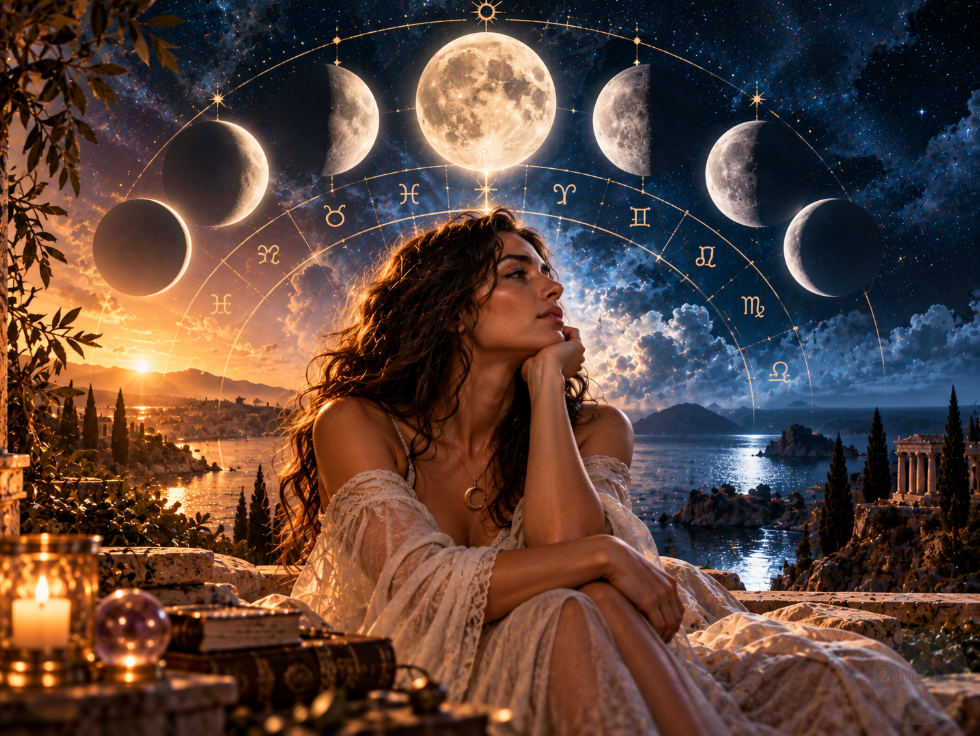
Some days you wake up ready to start something completely new. On others, you would rather shut the door, ignore everyone, and spend the evening doing absolutely nothing. Could the Moon have anything to do with these changing moods?
People have watched the Moon’s constantly changing appearance for thousands of years. Its regular cycle became a natural way to measure time and influenced countless folk traditions, agricultural practices, and spiritual beliefs. Over time, different lunar phases also became associated with different states of mind and energy.
A complete lunar cycle lasts approximately 29.5 days, moving from the New Moon through the waxing phases to the Full Moon and then gradually waning again. Rather than assuming the Moon controls how you feel, one interesting approach is to use these phases as recurring moments to observe your own energy, emotions, and habits.
New Moon: Slow Down and Start Again
During a New Moon, the Moon is positioned roughly between Earth and the Sun, meaning that the illuminated side is mostly turned away from us.
Symbolically, this darker phase has long been associated with silence, rest, planning, and new beginnings. You may feel more inclined to withdraw, think about what’s happening in your life, or decide what you want to change during the weeks ahead.
That doesn’t mean every New Moon needs an elaborate ritual or a list of ten new goals. Instead, ask yourself one simple question: What do I want to give more of my time to during the next month?
If you’re tired, that could mean allowing yourself a quieter evening. If you’re ready for change, write down one practical first step. A new beginning doesn’t have to mean quitting your job or moving to another country. Sometimes it can be as simple as deciding to go to bed earlier.
Waxing Moon: It’s Time to Build Momentum
After the New Moon, the illuminated portion visible from Earth gradually grows.
This is the waxing Moon, traditionally associated with growth, activity, building, and increasing momentum. Symbolically, it’s the part of the lunar cycle when intentions begin turning into action.
Instead of continuing to think about what you might do, start doing it. Sign up for the course you’ve been considering. Send the application. Begin the project sitting untouched on your computer. Make the first move toward a conversation you’ve been postponing.
You don’t have to accomplish everything immediately. The idea behind the waxing phase is progression—taking something that began as an intention and gradually giving it substance.
Full Moon: Everything Can Feel More Intense
No lunar phase carries more mythology than the Full Moon. For centuries, people have associated it with strange behavior, sleepless nights, emotional intensity, supernatural activity, and impulsive decisions. Even today, many people insist that they sleep differently or feel more restless when the Moon is full.
Symbolically, the Full Moon represents culmination. Something has reached its brightest and most visible point, which is why this phase is often interpreted as a time when emotions or situations that have been building finally come to the surface.
If you do feel unusually irritated, emotional, or restless around a Full Moon, however, don’t immediately blame the sky. Look at what’s happening closer to home. How have you been sleeping? Are you stressed? Have you been working too much? Has there been tension in your relationship? Have caffeine or alcohol affected your sleep?
The Full Moon can become a useful reminder to notice those things rather than an automatic explanation for them. And if emotions are running particularly high, it may be worth waiting before making a major decision.
Waning Moon: What Are You Ready to Leave Behind?
After the Full Moon, the illuminated portion we see gradually begins to shrink. The waning Moon is traditionally associated with completion, clearing out, rest, and letting go. It’s the opposite of the building energy associated with the waxing phase. This doesn’t need to mean anything mystical.
Finish a task you’ve left half-done. Clean out one drawer. Sort through clothes you never wear. Make an unpleasant phone call you’ve been avoiding. Cancel a subscription you haven’t used in six months. The same principle can be applied emotionally.
Perhaps you’re still replaying an argument that ended weeks ago. Maybe you’re waiting for an apology that probably isn’t coming. Or perhaps you’re continuing to spend emotional energy on a situation you can no longer change.
Ask yourself: What is still taking my energy even though I can no longer do anything about it?
You don’t have to instantly forgive, forget, or pretend something never mattered. Sometimes letting go simply means deciding that the same situation doesn’t deserve another thirty minutes of your attention every day.
Does the Moon Really Change Your Mood?
There’s an easy way to explore the question without assuming the answer. Track yourself.
For one or two lunar cycles, make a short note every evening about your mood, energy level, and quality of sleep. Also record obvious factors that could influence them—a stressful workday, exercise, illness, alcohol, menstruation, an argument, caffeine, or going to bed unusually late. The source specifically recommends looking back only after several weeks to see whether anything genuinely repeats.
You might discover a lunar pattern. You might discover that your worst “Full Moon mood” actually happens after three nights of poor sleep. Either result tells you something useful about yourself.
Conclusion
The Moon has been used as a marker of time and change for generations, so it’s hardly surprising that its phases became connected with human moods, habits, and rituals.
The New Moon can become a moment to pause and decide what comes next. The waxing Moon encourages action and growth. The Full Moon marks culmination and can remind us to notice emotions that have been building. And the waning Moon offers an opportunity to finish, clear away, and let go.
Whether you experience those patterns personally is something you can observe for yourself. Sometimes the most interesting lunar calendar isn’t the one hanging on the wall. It’s the one you create by watching your own life.
Cosmic Highlights
FAQ
Can the Moon affect your mood?
Different lunar phases have traditionally been associated with changes in mood and energy, but many everyday factors—including sleep, stress, work, relationships, alcohol, caffeine, and health—can also influence how you feel.
What does the New Moon represent?
The New Moon is traditionally associated with rest, reflection, planning, and new beginnings.
What is the waxing Moon associated with?
The waxing phase symbolizes growth, building momentum, activity, and turning plans into action.
Why are emotions associated with the Full Moon?
The Full Moon has traditionally represented culmination and heightened intensity. It has also accumulated centuries of folklore connecting it with restlessness, sleeplessness, and unusual behavior.
What should you do during a waning Moon?
Traditionally, the waning phase is considered a good time to finish unfinished tasks, declutter, rest, and release things that are no longer useful.
How can I find out whether lunar phases affect me personally?
Keep a simple diary for one or two complete lunar cycles. Record your mood, energy, sleep, and important outside influences each day, then look for recurring patterns afterward.
✨ Explore More from Zodiac Echoes ✨Explore More from ZE
Choose your zodiac sign to explore daily, weekly, monthly, and yearly horoscopes.