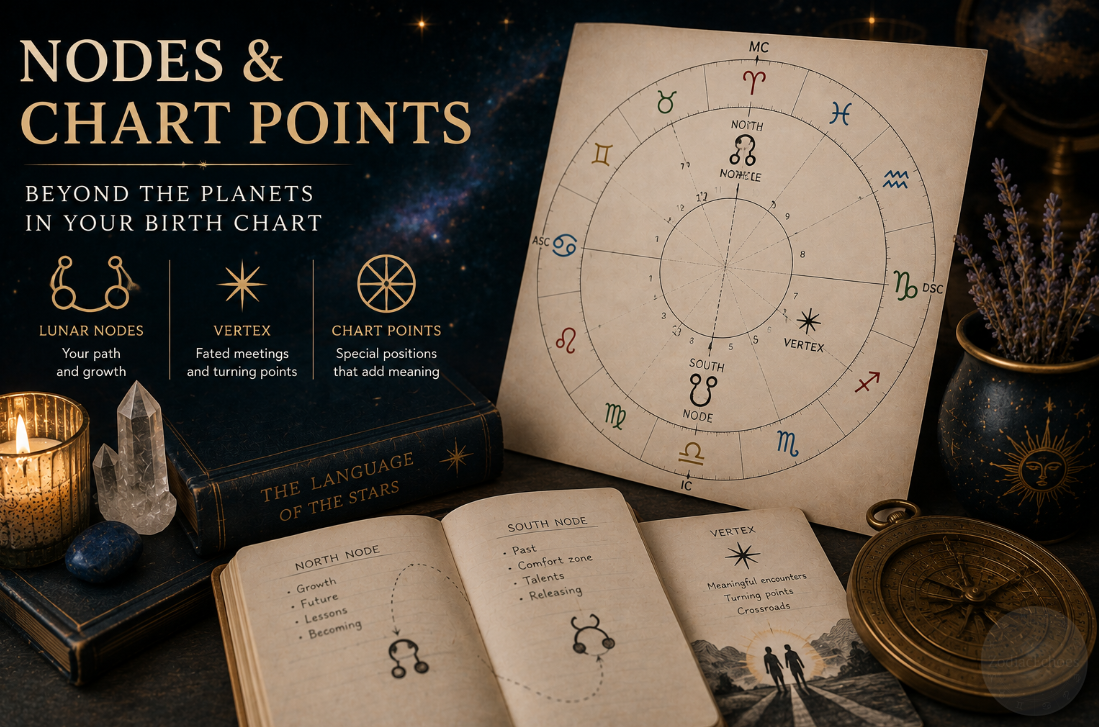
A Natal Chart contains more than planets, houses, and zodiac signs. Look at a more detailed chart and you may encounter symbols for the North Node, South Node, Vertex, and other positions that seem to behave like planetary placements. Yet some of these points are not physical objects in space at all.
They are astronomically calculated positions. Understanding these Nodes and Chart Points can add another layer to a Birth Chart, but they make much more sense once you know what they actually represent and how they differ from planets and asteroids.
Not Every Placement Is a Planet
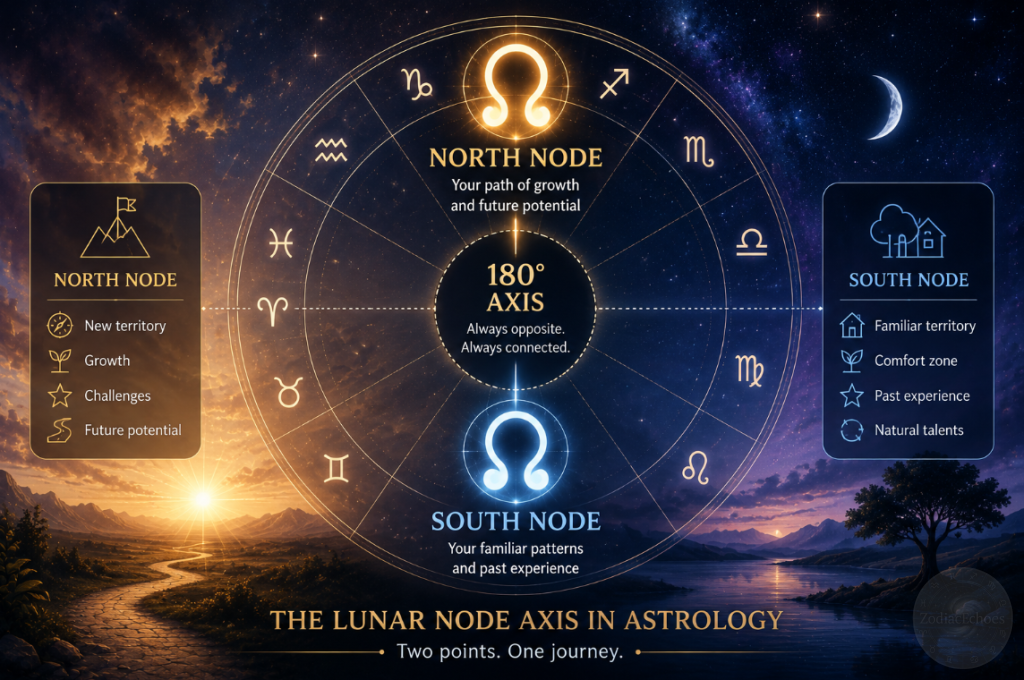
The Sun, Moon, and planets have physical astronomical positions that can be plotted within a Birth Chart. Calculated points work differently. Take the Lunar Nodes. The Moon’s orbit is tilted relative to the apparent path of the Sun through the sky, known as the ecliptic. The two places where these paths intersect create the North Node and South Node.
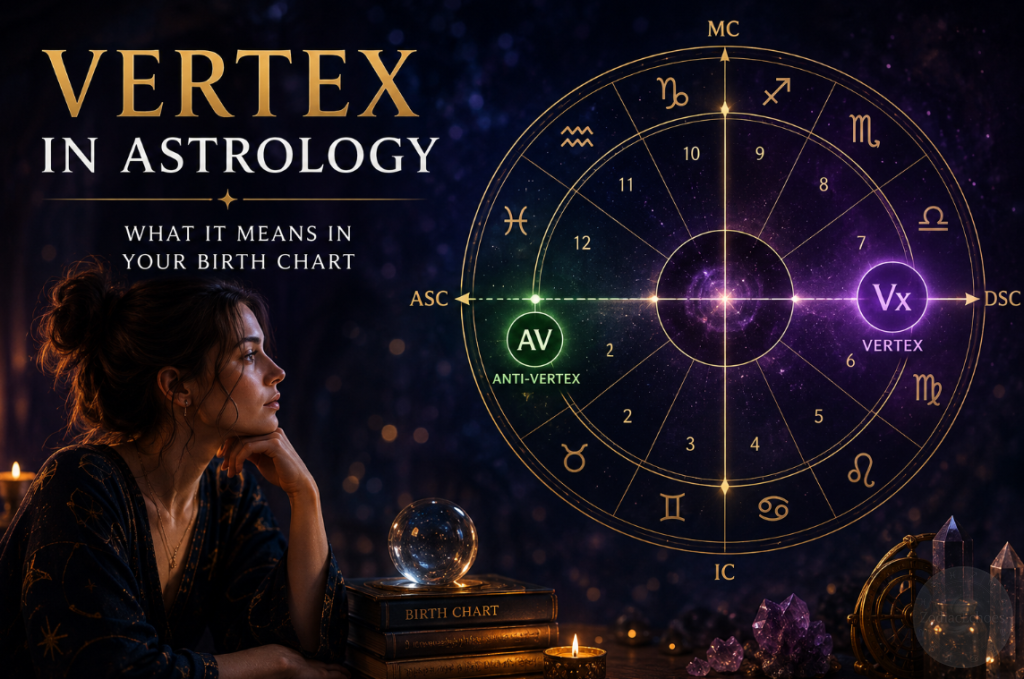
They therefore exist as astronomical points rather than physical objects. The Vertex is also calculated rather than a celestial body. It is determined through the geometry of the chart and is commonly interpreted in modern astrology in connection with meaningful encounters, circumstances involving other people, and experiences that seem to redirect our path.
This distinction matters because a calculated point should not automatically be given the same interpretive weight as a major planet.
Explore Nodes & Chart Points
Carousel order:
Lunar Nodes → North Node → South Node → Vertex in Astrology
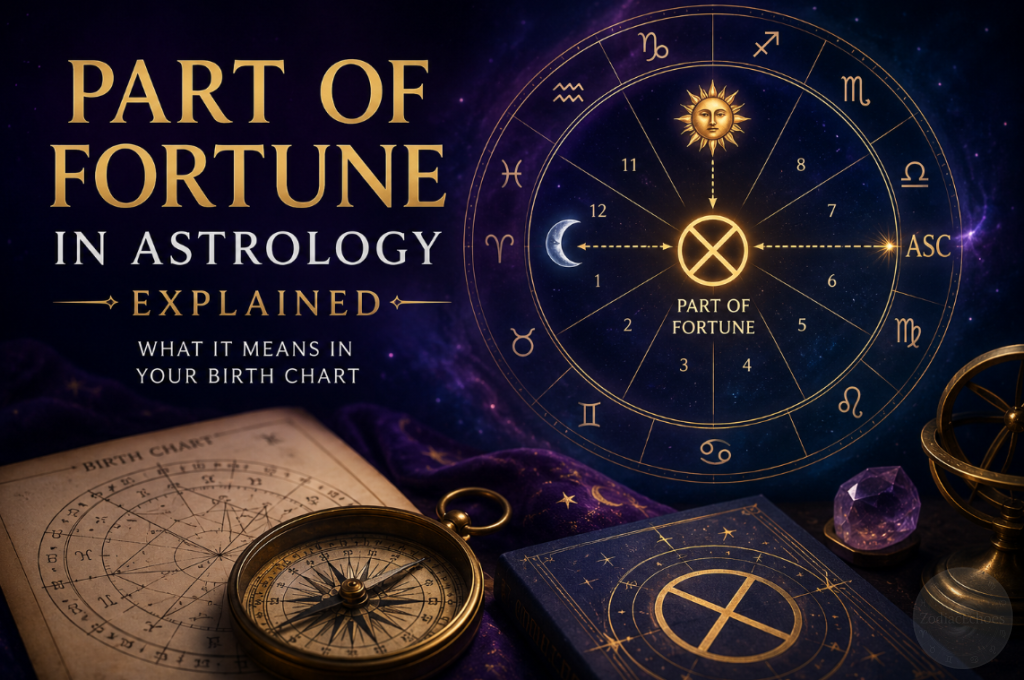
As this collection grows, other calculated placements such as the Part of Fortune can be added here without changing the structure of the Guides section.
How Should You Read Nodes and Chart Points?
The familiar framework still works:
Point → Sign → House → Aspects
- The point tells us what theme we are examining.
- The sign describes how that symbolism may operate.
- The house shows where in life it may become particularly noticeable.
- Aspects can then connect the point with planets or important angles elsewhere in the Birth Chart.
The Lunar Nodes require one additional step: read them as an axis. The North Node cannot be fully understood without the South Node because they always occupy opposite signs and houses. Together, they describe a polarity rather than two unrelated placements.
The same principle of context applies to the Vertex. A Vertex placement can add interesting information, but it should not be treated as proof of destiny, a soulmate, or an unavoidable future event.
Add the Extra Layers Last
Nodes and calculated points can make a Natal Chart considerably richer, but they are most useful when the foundations are already clear. Start with the Sun, Moon, planets, Rising Sign, houses, chart angles, and major aspects. Then explore the Lunar Nodes, Vertex, and other specialized placements.
This keeps the hierarchy of the Birth Chart intact. Instead of treating every symbol on the wheel as equally important, you can gradually move from the chart’s fundamental structure toward its finer details—and understand exactly what each additional point contributes to the larger pattern.