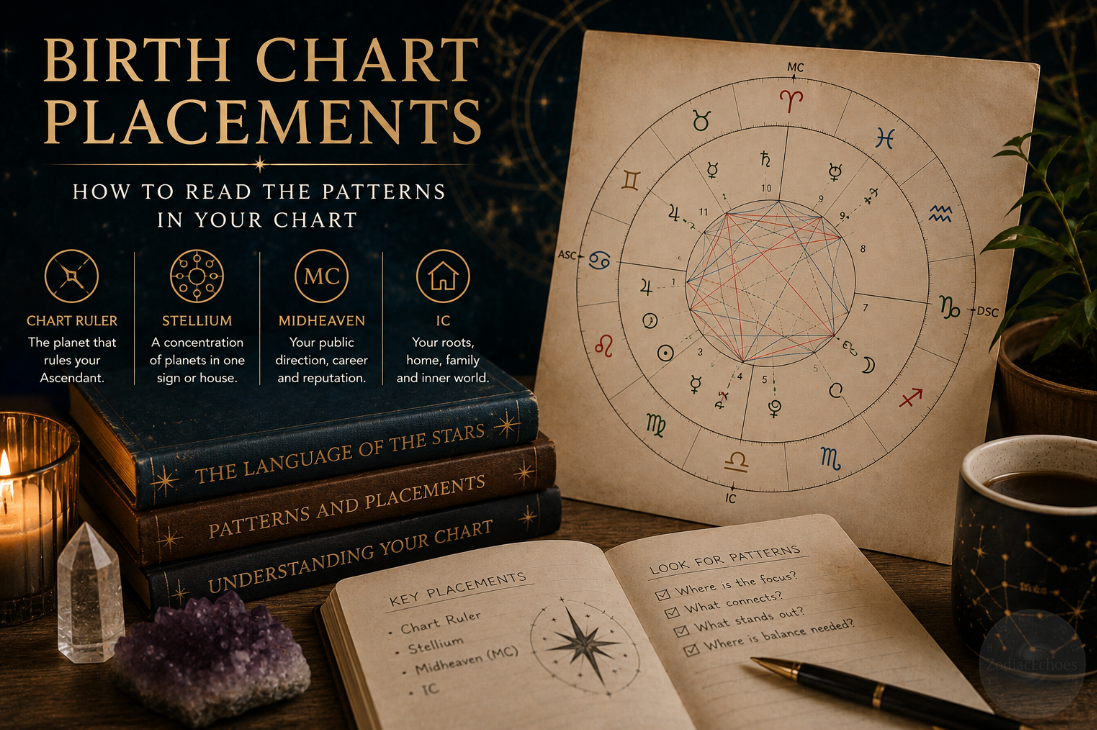
Once you understand planets, zodiac signs, and houses, a Birth Chart starts to reveal something more interesting than individual placements. Patterns begin to appear. Several planets may gather in one area. A particular planet may become especially important because it rules the Ascendant.
The angles of the chart create major axes connecting identity, relationships, private life, and public direction. Understanding these Birth Chart Placements is the next step between learning astrology basics and interpreting a Natal Chart as an interconnected whole.
From Individual Placements to Chart Patterns
A beginner might initially read a Birth Chart one placement at a time:
- Sun in Leo.
- Moon in Taurus.
- Mars in the 10th House.
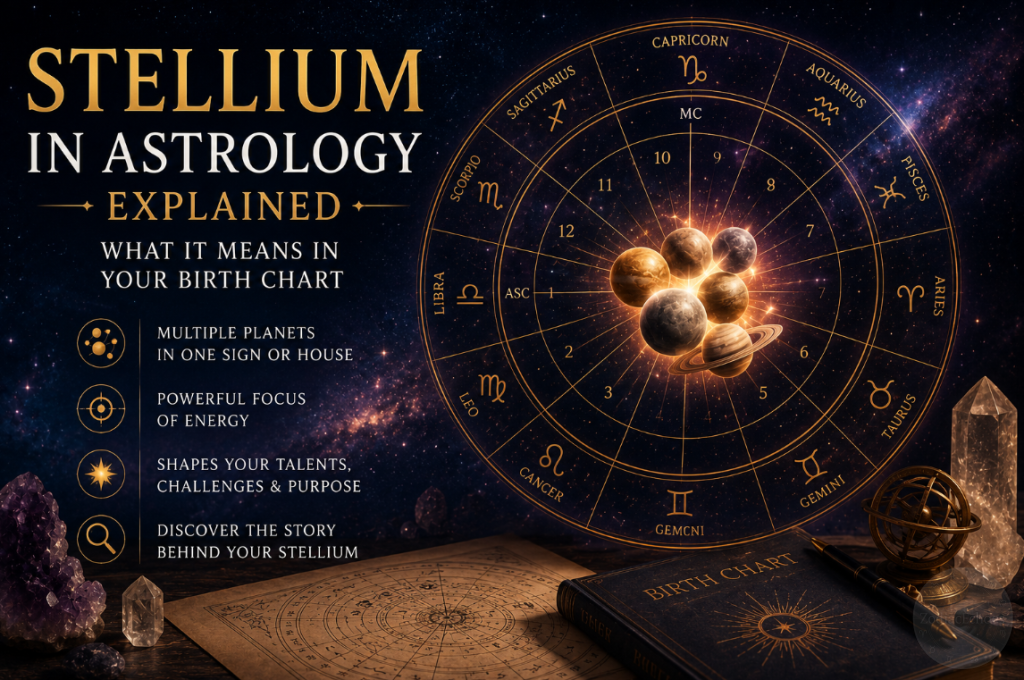
That is useful, but eventually we need to ask how these pieces relate to the overall structure of the chart. For example, several planets concentrated in one sign or house can form a stellium, making that area unusually prominent.
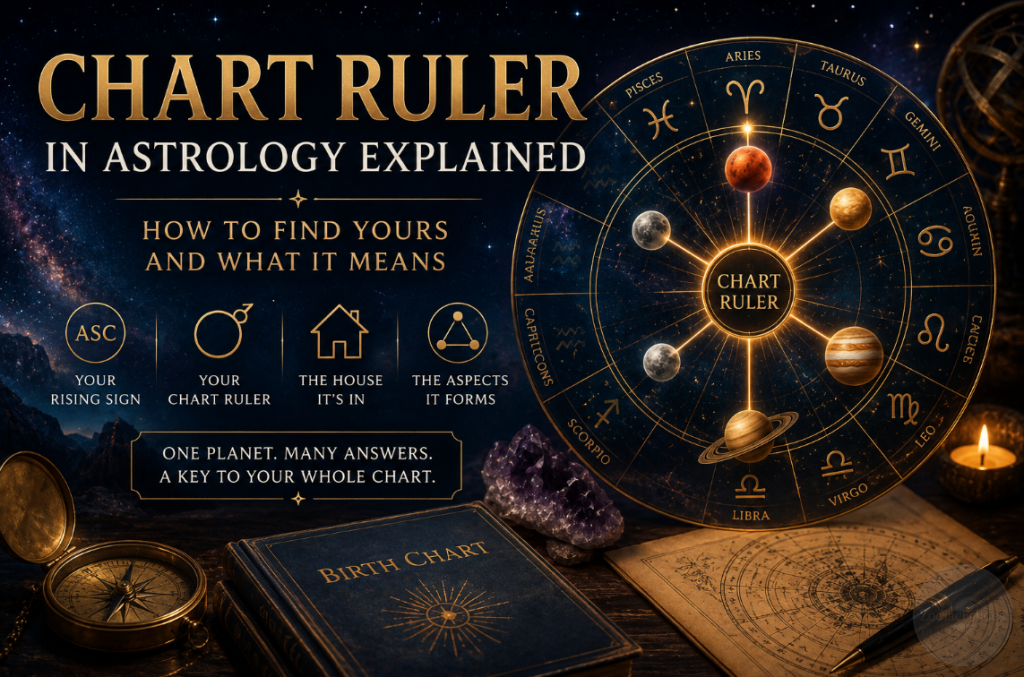
Your Chart Ruler provides another connection. The planet ruling your Rising Sign can reveal an important thread running through the chart, particularly through its sign, house, and aspects. Then there are the major chart angles.
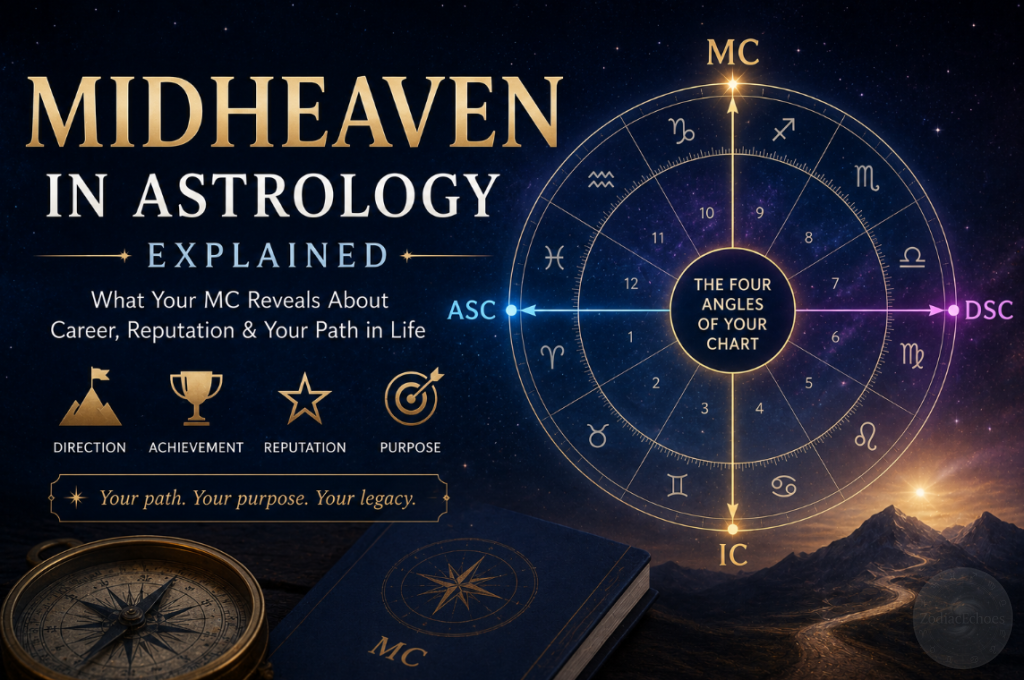
The Midheaven (MC) marks the public end of the MC–IC axis and is commonly associated with career, reputation, achievement, and public direction. Directly opposite it, the IC points toward private life, home, roots, family foundations, and the inner world.
Rather than treating these as isolated symbols, learning to recognize their relationships helps reveal the architecture of the Natal Chart.
Explore Birth Chart Placements
Carousel order:
Chart Ruler → Stellium in Astrology → Midheaven (MC) → IC in Astrology
As this Guides collection grows, additional Birth Chart patterns and placements can be added here without changing the basic learning path.
Which Birth Chart Placements Should You Learn Next?
There is no need to memorize every advanced technique immediately. Start with placements that help connect information you already understand.
Learn how the Chart Ruler links the Ascendant to another planet in your chart. Then explore stelliums to understand what happens when several planets concentrate their energy in one area.
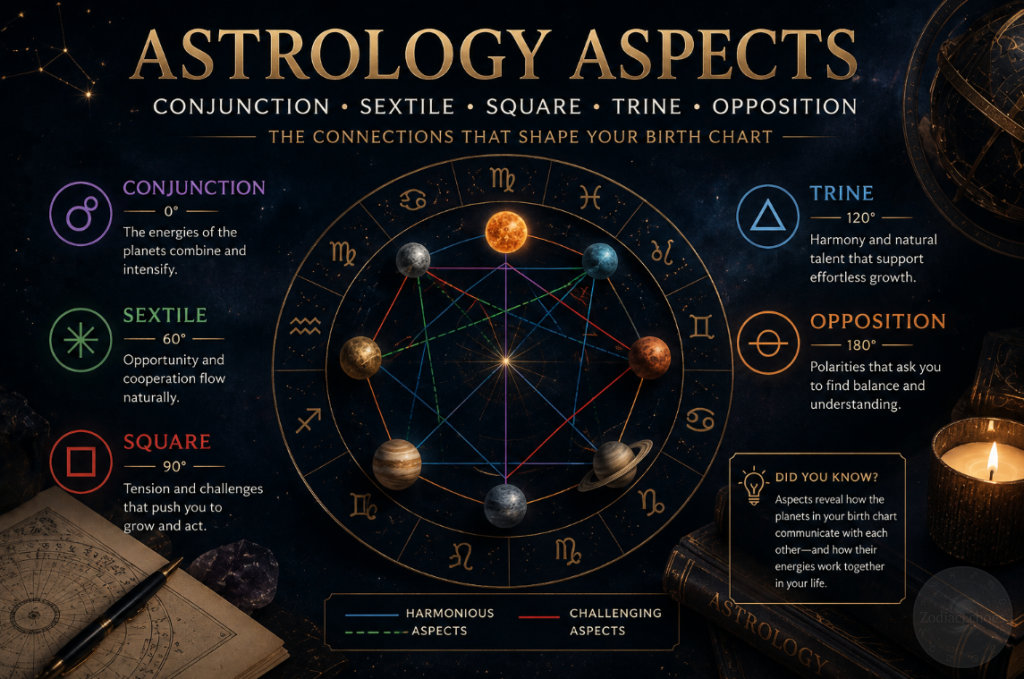
After that, examine the Midheaven and IC together. Because they form opposite ends of the same axis, understanding one often makes the other much clearer. From there, you can gradually move into additional angles, aspects, Nodes, calculated points, asteroids, and more complex chart patterns.
Learn to See the Whole Chart
The goal of studying Birth Chart Placements is not to find one placement that explains everything about you. It is almost the opposite.
A Chart Ruler becomes more useful when you examine where that planet is located. A stellium becomes clearer when you consider its sign, house, and aspects. The Midheaven gains additional meaning when you recognize that the IC exists directly opposite it.
Each new placement creates another connection. Once you begin seeing those connections, a Natal Chart stops looking like dozens of unrelated symbols and starts revealing what astrology is really built around: patterns.