- In July 1518, a mysterious dancing epidemic struck Strasbourg, then part of the Holy Roman Empire.
- Later chronicles claimed that as many as 400 people were affected, dancing for hours or days despite exhaustion.
- City authorities initially encouraged more dancing, providing musicians and designated spaces before reversing their approach.
- Some historical accounts describe dancers dying from exhaustion, although the number of deaths remains uncertain.
- Mass psychogenic illness, religious fears, and environmental factors have all been investigated as possible explanations.
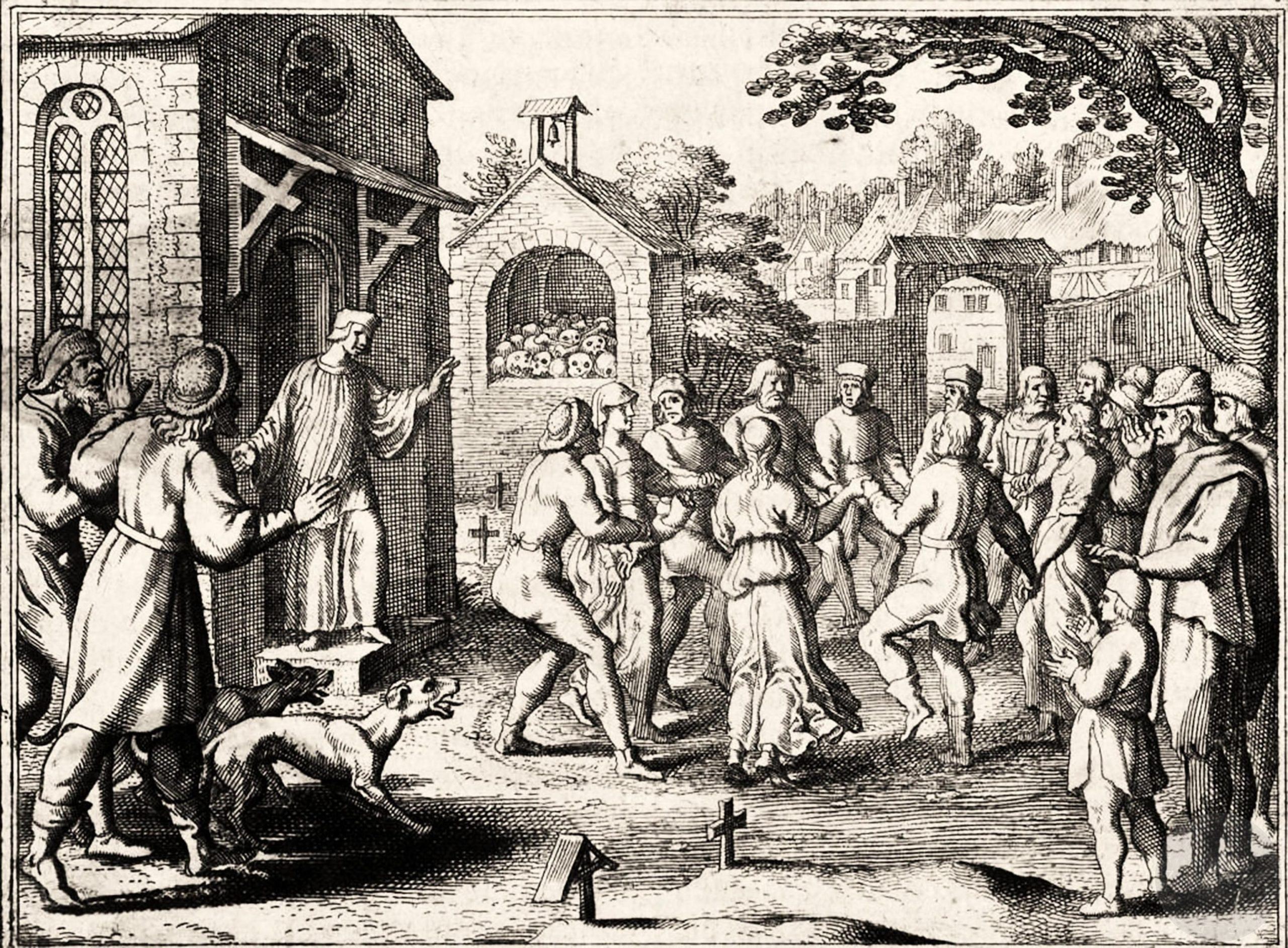
In the summer of 1518, something extraordinary happened in the streets of Strasbourg. People began dancing, apparently unable to control their movements. They danced in public squares, narrow streets, and gathering places, continuing long after ordinary exhaustion should have forced them to stop.
According to later chronicles, the mysterious affliction spread from a single woman to hundreds of residents. Some reportedly collapsed, while others continued moving despite injuries and overwhelming fatigue.
Even more disturbing was the authorities’ response. Instead of immediately stopping the dancing, the city initially attempted to cure the sufferers by encouraging them to dance even more.
The Woman Who Started the Dancing Plague
The outbreak began in July 1518. Several historical narratives describe a woman suddenly dancing in Strasbourg’s streets, attracting attention as her movements continued for an unusually long time. Later retellings identify her as Frau Troffea, although the earliest surviving municipal evidence does not securely establish that name.
According to the familiar account, she danced for days, and others soon began behaving similarly. One chronicle describes 34 additional sufferers within four days, while later narratives claim the number eventually reached approximately 400.
What initially appeared to be an isolated disturbance had become a public crisis. Residents watched people move compulsively, sometimes apparently against their own wishes, with no obvious explanation for their behavior.
Why Did Strasbourg’s Authorities Hire Musicians?
Strasbourg’s physicians initially interpreted the outbreak through the medical theories of their era. Some believed the sufferers were experiencing a natural illness associated with bodily heat or disturbed humors. The proposed treatment was astonishing: allow the afflicted to continue dancing until the condition exhausted itself.
Historical accounts describe designated dancing areas, the involvement of musicians, and even paid dancers intended to accompany the sufferers. Instead of calming the situation, the measures appeared ineffective. The authorities eventually changed course, restricting public dancing and music.
A surviving account of a municipal order dated August 3, 1518, describes a prohibition on dancing that extended until September 29. The council threatened fines for violations. The episode reveals a city struggling to understand a phenomenon that did not fit neatly into either medicine or religion.
Did People Really Dance Themselves to Death?
Some of the most frightening accounts claim that sufferers continued dancing until they collapsed from exhaustion. Later chronicles even describe deaths during the outbreak. One frequently repeated claim suggests that as many as 15 people died in a single day. However, this figure cannot be confirmed from the surviving contemporary municipal records.
The earliest evidence establishes that Strasbourg experienced an unusual dancing crisis, but the exact number of participants and fatalities remains uncertain. Nevertheless, the accounts of prolonged movement, physical distress, and desperate attempts at treatment explain why the event became one of Europe’s most notorious historical mysteries.
Saint Vitus and the Fear of a Divine Curse
As medical explanations failed to provide an effective remedy, religious beliefs became increasingly important. In parts of medieval Europe, uncontrollable dancing was associated with Saint Vitus, a Christian martyr believed to possess the power to punish or heal those suffering from certain movement disorders.
Strasbourg’s authorities arranged for afflicted residents to visit a shrine dedicated to the saint near Saverne. Historical descriptions mention religious ceremonies, specially prepared footwear, and prayers intended to obtain relief.
For people who believed they had fallen under a supernatural punishment, visiting the saint’s shrine offered a possible escape from their suffering. The outbreak eventually subsided, leaving behind an extraordinary collection of medical, religious, and historical interpretations.
What Caused the Dancing Plague of 1518?
One prominent modern explanation is mass psychogenic illness, in which intense psychological distress spreads through a community and produces genuine physical symptoms.
Historian John Waller has connected the Strasbourg outbreak to the severe hardships experienced by the region’s population, including hunger, disease, and widespread fear. Belief in Saint Vitus’s ability to inflict a dancing curse may have shaped how that distress manifested.
Another theory involves ergot poisoning, caused by a fungus that can contaminate rye. Ergot contains compounds capable of producing serious neurological and physical effects. However, poisoning does not readily explain the prolonged, socially patterned dancing described in the chronicles, and the theory remains disputed.
Other interpretations have examined religious ritual, collective behavior, and the influence of cultural expectations. No single explanation has conclusively accounted for every aspect of the Strasbourg outbreak.
Strasbourg Was Not the Only Dancing Epidemic
The events of 1518 were not entirely without precedent. Medieval European records describe earlier episodes of collective dancing, including a major outbreak in 1374 along the Rhine and surrounding regions.
Such incidents were sometimes described as dancing mania or choreomania. They often occurred within societies where illness, religious fear, and supernatural explanations were closely intertwined.
The Strasbourg episode became particularly famous because the authorities’ unusual response and the surviving chronicles provide a remarkable glimpse into how people attempted to confront the inexplicable.
Conclusion
The Dancing Plague of 1518 remains one of the strangest episodes in European history. Strasbourg’s residents witnessed an extraordinary outbreak of compulsive movement, while city officials struggled between medical treatment, public restrictions, and religious intervention.
More than five centuries later, the central mystery remains: what could cause an entire community to experience such terrifying, seemingly uncontrollable behavior? The surviving records offer fascinating clues, but the full explanation has never been established.
Cosmic Highlights

FAQ
What was the Dancing Plague of 1518?
The Dancing Plague of 1518 was a documented outbreak of unusual, apparently compulsive dancing in Strasbourg, then part of the Holy Roman Empire. Historical chronicles describe numerous residents dancing for prolonged periods.
How many people were affected by the Dancing Plague?
Some later chronicles claim that approximately 400 people were affected. Contemporary municipal records confirm an outbreak but do not establish a definitive total.
Did anyone die during the Dancing Plague of 1518?
Later historical accounts describe deaths associated with prolonged dancing and exhaustion. However, the precise death toll remains unknown, and contemporary city records do not confirm the frequently repeated figure of 15 deaths per day.
What caused the Dancing Plague of 1518?
Historians and researchers have proposed several explanations, including mass psychogenic illness, extreme social stress, religious beliefs, and ergot poisoning. No theory has been conclusively proven.