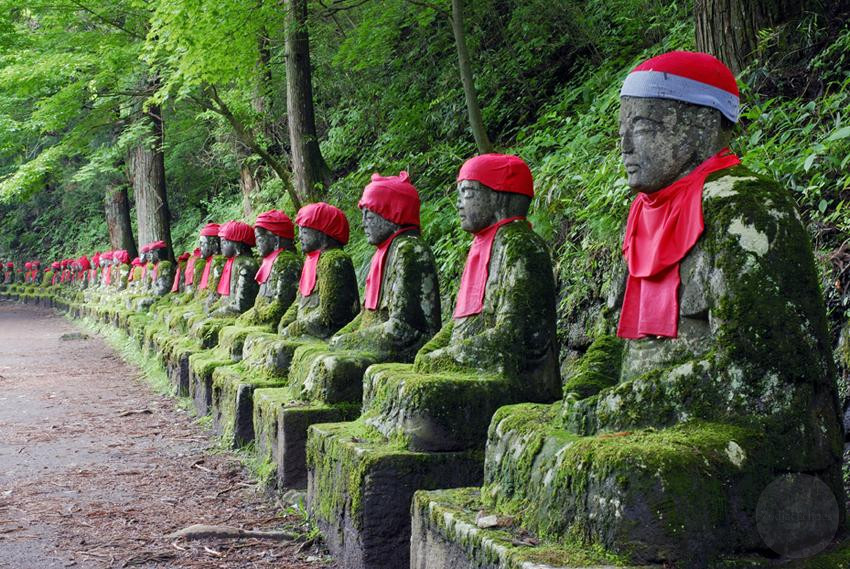
- Japanese Jizo statues are often dressed in red bibs and hats as symbols of protection and compassion.
- The legend of Sai no Kawara describes deceased children trapped beside a river in the afterlife.
- According to the tradition, demons repeatedly destroy the stone towers built by these children.
- Families still leave clothing, toys, and small stones beside Jizo statues to honor children and seek their protection.
Walk through an old Japanese cemetery or along a quiet mountain path, and you may encounter an unsettling sight: rows of small stone figures wearing bright red bibs and knitted caps. Some are surrounded by tiny shoes, children’s toys, flowers, and carefully stacked stones.
At first, the statues might resemble ordinary religious decorations. But behind them lies one of Japan’s most haunting traditions concerning children who die before their parents. These figures represent Jizo, a Buddhist bodhisattva believed to protect children, travelers, and souls facing suffering in the afterlife.
The River Where Dead Children Must Build Stone Towers
According to Japanese Buddhist folklore, children who die prematurely may find themselves in a desolate place called Sai no Kawara, a stony riverbank in the realm of the dead.
The river is associated with the boundary separating the living world from the afterlife. In this tradition, children cannot immediately cross because they have not accumulated sufficient religious merit during their short lives. Instead, they must remain beside the water and build small towers from stones.
Each stone represents a prayer or an act of devotion to their parents. The children continue stacking them, hoping that their efforts will eventually allow them to move forward. But the legend contains a terrifying detail: demons arrive and destroy the towers before the children can finish.
The Demons Who Torment the Children
In traditional descriptions of Sai no Kawara, frightening supernatural beings interrupt the children’s work, scattering their stones and forcing them to begin again. The children are left crying, frightened, and unable to complete their task. Their suffering becomes an endless cycle of hope and destruction.
Some versions of the story describe the children calling for their parents, who can no longer reach them. The tragedy is not simply that the children have died, but that they remain separated from their families and unable to find peace. Yet the story does not end with the demons.
Jizo: The Guardian Who Rescues Lost Children
According to the legend, the bodhisattva Jizo enters this desolate realm to comfort and protect the children. He shelters them within the folds of his robes, shielding them from the demons and helping them continue toward salvation.
Unlike the frightening beings associated with the underworld, Jizo represents mercy, patience, and protection for those who cannot defend themselves.
This protective role explains why his statues are so closely associated with children, including those who died in infancy or before birth. For grieving families, Jizo offers a compassionate figure who watches over children beyond the reach of their parents.
Why Are Jizo Statues Dressed in Red?
One of the most recognizable features of Jizo statues is their red clothing. Visitors frequently encounter stone figures wearing small red bibs, knitted hats, or pieces of children’s garments. In Japanese protective traditions, red is associated with warding off harmful influences and illness. Dressing a Jizo statue in red can therefore express a wish for protection.
The clothing also has a more personal meaning. According to some traditions, these garments symbolically provide warmth and comfort to children in the afterlife. Parents and relatives may place bibs, hats, or other offerings on the statues as acts of remembrance and devotion. A small red bib can represent a family’s continuing love for a child who is no longer alive.
Why Do People Leave Toys and Stones Beside the Statues?
At some Japanese temples and cemeteries, visitors leave toys, sweets, flowers, and small piles of stones beside Jizo statues. These offerings connect directly with the legend of Sai no Kawara.
Because the children in the story are forced to build stone towers, relatives may stack stones on their behalf, symbolically helping them complete their difficult task. Toys and other personal objects express affection and remembrance. They may also be offered in gratitude when a child has recovered from an illness or escaped danger.
The offerings are not simply decorations; they represent prayers, protection, and the enduring connection between parents and children.
The Tradition That Still Survives in Japan
Jizo statues remain common throughout Japan, appearing at Buddhist temples, cemeteries, roadsides, and mountain paths. One particularly moving example can be found at Sai no Kawara in the Nasu region, where numerous Jizo statues and stone piles reflect the traditional story of children in the afterlife.
Similar scenes appear at other religious sites, where visitors continue to leave offerings and maintain the statues. The tradition is also associated with mizuko kuyo, Buddhist memorial practices dedicated to children who died before birth or shortly afterward.
Although the customs vary between temples and families, their central meaning remains recognizable: remembrance, compassion, and the hope that children will be protected beyond death.
Conclusion
The red-clothed Jizo statues of Japan preserve one of the country’s most moving and mysterious spiritual traditions. Behind their gentle stone faces lies a frightening legend of lost children, demons, and an endless struggle beside the river of the dead.
Yet the statues also represent something profoundly compassionate. Jizo is believed to protect the vulnerable, comfort grieving families, and guide suffering souls toward peace.
For visitors unfamiliar with the tradition, the rows of red bibs and tiny offerings may appear mysterious or even unsettling. But for those who understand their meaning, they are enduring symbols of love that continues beyond death.
Cosmic Highlights

FAQ
Why do Japanese Jizo statues wear red bibs?
Red is associated with protection in Japanese tradition. The bibs may also symbolize warmth, compassion, and care for children believed to be under Jizo’s protection.
What is Sai no Kawara?
Sai no Kawara is a place in Japanese Buddhist folklore where deceased children are said to build stone towers beside a river in the afterlife.
Why are stones stacked near Jizo statues?
According to tradition, stacking stones symbolically helps children who must build towers in the afterlife while facing interference from demons.
What does Jizo protect people from?
Jizo is revered as a compassionate protector of children, travelers, and vulnerable souls, particularly those believed to face suffering after death.
Are Jizo statues still used in Japan today?
Yes. Jizo statues remain part of Buddhist religious life, memorial practices, and local traditions throughout Japan.