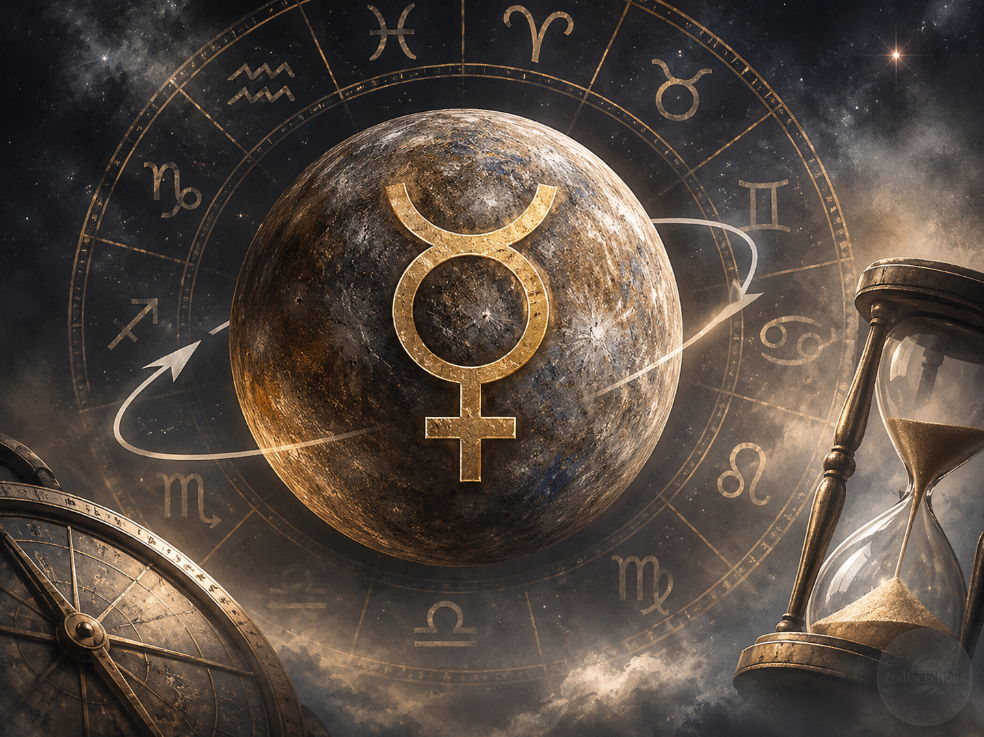
- Ancient origins: Babylonian astronomers observed the unusual movements of Mercury thousands of years ago.
- A changing reputation: Mercury retrograde was not always blamed for everyday misfortune.
- Modern problems: Broken technology, missed messages, travel delays, and relationship misunderstandings have become associated with the phenomenon.
- A modern superstition: The internet helped transform an old astrological concept into a worldwide cultural phenomenon.
Your phone suddenly stops working. An important email disappears. A simple conversation turns into an argument, and your travel plans fall apart. For millions of astrology enthusiasts, these frustrating experiences have one familiar explanation: Mercury must be retrograde.
Today, Mercury retrograde is one of astrology’s most recognizable phenomena. People postpone major purchases, double-check messages, reconsider relationships, and sometimes avoid signing important contracts until the planet appears to move forward again.
Yet there is a fascinating historical mystery behind this belief. Ancient civilizations observed Mercury’s unusual movements thousands of years ago, but the idea that it causes technological disasters and everyday bad luck is surprisingly modern.
Ancient Babylonians Were Already Watching Mercury
Long before telescopes existed, Babylonian astronomers carefully recorded the movements of planets against the background of fixed stars. Their observations, preserved on clay tablets, formed an important foundation for later astronomical calculations and astrological traditions.
Mercury was particularly interesting because of its unusual behavior. The planet normally appears to move in one direction through the zodiac, but several times each year, it seems to slow down, stop, and reverse course before resuming its usual movement.
For ancient observers, the changing movements of the planets carried religious and astrological significance. In Mesopotamia, Mercury was associated with Nabu, the god of writing, wisdom, and scribes.
However, the Babylonians did not associate Mercury retrograde with malfunctioning electronic devices or the everyday inconveniences familiar to modern astrology followers. Those interpretations developed much later.
How Mercury Became Associated With Communication
The planet’s modern astrological reputation is closely connected to mythology. In ancient Greece, Mercury’s planetary counterpart was associated with Hermes, the messenger of the gods. The Romans identified Hermes with Mercury, their own divine messenger.
Mercury became associated with communication, messages, trade, travel, negotiation, and the exchange of information. These symbolic connections remain central to Western astrology. When Mercury appears to move backward, astrologers traditionally interpret its usual functions as delayed, complicated, redirected, or requiring reconsideration.
In earlier astrological practices, retrograde planets could symbolize obstacles, reversals, or unexpected changes. Medieval and early modern astrologers sometimes considered retrograde motion when judging whether a particular undertaking would succeed.
But the belief that everyone should expect widespread communication failures during Mercury retrograde was not a universal ancient rule.
When Did Mercury Retrograde Become a Symbol of Bad Luck?
The transformation became particularly noticeable during the twentieth century. Researchers examining the cultural history of Mercury retrograde have traced its growing popularity through astrology publications, personal discussions, and the revival of traditional astrological techniques.
In the United States, references to Mercury retrograde as a source of personal difficulties appeared in astrological circles during the 1960s and became increasingly visible in later decades.
During the 1980s, computers were becoming more common in workplaces and homes. Mercury’s traditional association with messages and information was gradually extended to electronic communication and emerging technologies.
By the 1990s, newspaper articles were already discussing people who blamed technological failures on Mercury retrograde. The belief had begun moving beyond specialist astrology circles into everyday popular culture.
Why Do People Still Blame Broken Phones and Relationships on Mercury?
The internet gave Mercury retrograde an entirely new audience. Astrology websites, smartphone applications, and social media made retrograde dates easily accessible, while humorous posts turned ordinary frustrations into recognizable astrological experiences.
Today, a failed video call, an embarrassing message sent to the wrong person, a delayed flight, or an unexpected conversation with an ex-partner can all become part of the same narrative.
Mercury retrograde has effectively become a modern explanation for situations involving confusion, delays, and misunderstandings. Its popularity also reflects how easily an ancient symbol can adapt to changing technology and everyday life.
Interestingly, some astrologers interpret these periods less as a warning of disaster and more as an opportunity to revisit unfinished matters, reconsider decisions, repair communication problems, and reflect before moving forward.
Does Mercury Actually Move Backward?
Despite its mysterious reputation, Mercury does not physically reverse direction around the Sun. Its retrograde motion is an apparent movement caused by the changing positions of Mercury and Earth as they travel along their orbits.
Mercury completes one orbit around the Sun in approximately 88 Earth days. Because it moves faster than Earth, the changing viewing angle makes it appear to reverse direction against the distant stars several times each year.
These retrograde periods usually last around three weeks. The astronomical phenomenon is entirely predictable, even though its symbolic interpretation has changed considerably throughout history.
Conclusion
Mercury retrograde combines an ancient astronomical observation with a surprisingly modern superstition. Babylonian skywatchers recorded planetary movements, classical mythology connected Mercury with communication, and later astrologers developed interpretations involving delays and reversals.
Modern technology and social media transformed those traditions into the familiar belief that Mercury retrograde explains everything from broken phones to romantic misunderstandings. What began as an unusual movement in the night sky has become one of the most enduring and recognizable symbols of contemporary astrology.
Cosmic Highlights

FAQ
How often does Mercury go retrograde?
Mercury appears retrograde approximately three or four times per year, with each period usually lasting around three weeks.
Did ancient Babylonians believe Mercury retrograde caused bad luck?
Babylonian astronomers observed planetary movements and interpreted celestial phenomena through religious and astrological traditions. However, the modern belief that Mercury retrograde causes widespread everyday misfortune developed much later.
Why is Mercury retrograde associated with communication problems?
Mercury is traditionally associated with messages, language, commerce, and travel, partly through its connection with the Roman god Mercury and the Greek god Hermes.
When did Mercury retrograde become popular?
Its modern reputation expanded during the twentieth century, particularly from the 1980s onward, before becoming widely recognizable through astrology websites and social media.