- A medieval manuscript preserves an authentic magic circle intended for summoning spirits of the air.
- The ritual required 32 days of purification before a three-day ceremony.
- The instructions describe seven directional divisions, sacred names, incense, ceremonial swords, and repeated invocations.
- The original diagram survives in British Library Sloane MS 3854, folio 133v.
Imagine spending more than a month preparing for a ceremony that could only begin after sunset. At its center was a strange diagram scratched into the ground, divided into seven directions and surrounded by sacred names. According to the medieval grimoire that preserved its instructions, the purpose was to summon invisible spirits believed to inhabit the air surrounding humanity.
This was not a simple spell involving a candle and a few mysterious words. The ritual belonged to the Liber Iuratus Honorii, or Sworn Book of Honorius, a medieval text describing elaborate ceremonies intended to communicate with different classes of spirits.
Most remarkably, an authentic diagram survives in British Library Sloane MS 3854, folio 133v. Its connection to the ritual is documented in Andrea Franchetto’s academic study of medieval necromantic spaces.
The Original Medieval Magic Circle
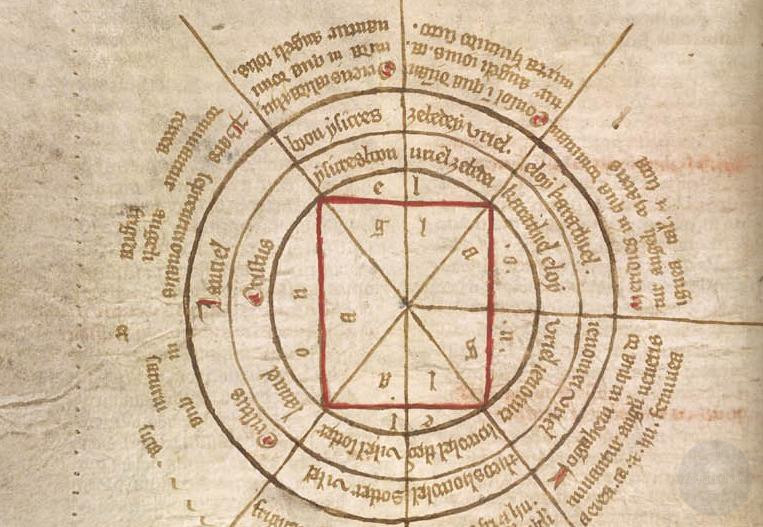
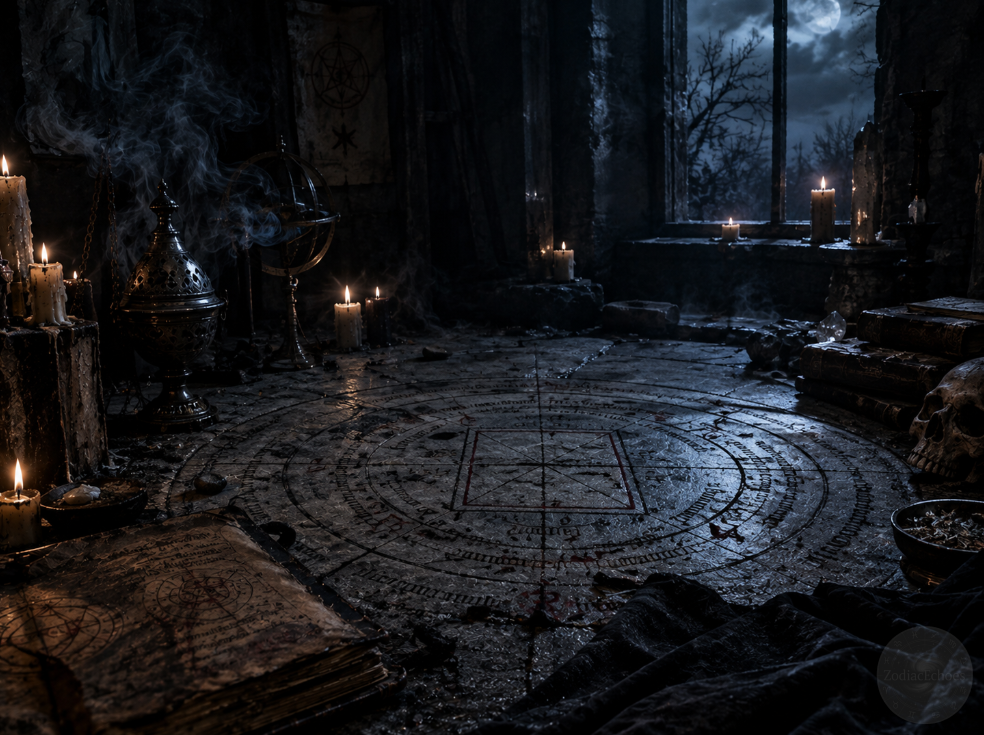
The drawing contains three concentric circles intersected by seven directional lines. A red rectangular structure appears inside the innermost circle, where the divisions create seven triangular sections containing the letters AGLAGLA.
The surrounding spaces contain additional sacred inscriptions, including ELON and angelic names. Outside the circles, further words identify the directions associated with different classes of airy spirits. These details were not random decoration. The diagram was intended to create a temporary ritual environment in which the practitioner could establish boundaries and invoke supernatural authority.
What Were the Airy Spirits?
Medieval ritual magic distinguished several categories of spirits. Some were associated with the planets, others with the earth, and another group with the atmosphere itself. Airy spirits were believed to occupy the invisible space around human beings. The grimoire described them according to seven geographical directions, assigning different temperaments to different regions.
Some were considered comparatively gentle, while others were regarded as hostile or dangerous. The ceremony was intended to bring these beings under the authority of the conjurer through a combination of religious prayers, divine names, and precisely arranged ritual objects.
The following procedure describes the historical instructions as recorded in the grimoire tradition. It documents medieval beliefs rather than a demonstrated method of contacting supernatural beings.
The Historical Ritual Procedure
Step 1: Thirty-Two Days of Purification
The operation began with a preparation period known as the Prima Mundacio, or first purification. It started the day after a New Moon and lasted 32 days. During this period, the practitioner was expected to follow a strict religious schedule involving prayers, attendance at Mass, and prescribed devotional observances.
The instructions referred to canonical prayer hours, including Matins, Terce, None, and Vespers. A priest also played a role in the preparations, demonstrating the unusual combination of Christian religious practices and ceremonial spirit conjuration.
The magician was not permitted to begin the actual summoning immediately. The lengthy purification was considered an essential part of preparing the individual for contact with the invisible world.
Step 2: Preparing the Ritual Ground
On the first ceremonial night, after Compline, the practitioner traveled from the church to the selected location while reciting prayers. Once there, the ritual space was consecrated. The operator constructed the system of concentric circles on the ground and added the sacred names and directional divisions represented in the surviving manuscript diagram.
The outer circle was described as measuring nine feet across, with two additional circles arranged inside it at prescribed intervals. The magician also imagined the Seal of Solomon suspended above the ground, extending the symbolic protection of the ritual space beyond its visible boundaries.
Step 3: Inscribing the Seven Divine Names
The instructions required seven divine names to be written outside the perimeter of the circles. Their function was connected to the protection and consecration of the ritual environment. The sacred inscriptions within the diagram and the names outside its boundary formed separate but related elements of the ceremony.
Frankincense, burning coals, and a censer were used during the initial operations. The practitioner performed invocations associated with the winds and the directions marked around the circle. According to the medieval text, the proper arrangement of the names and boundaries was necessary for the spirits to appear without violating the ritual space.
Step 4: The Second Night and the Calling of the Winds
The second night began after Compline. The magician returned to the circle and moved along its directional divisions. One of the strangest parts of the instructions involved temporarily removing the seven divine names before restoring them. The operator also performed fumigations and recited further invocations.
The ceremonial equipment associated with the wider operation included a censer, incense, a laurel or hazel wand, seven swords, a whistle, and seals connected with divine and spiritual authority. The seven directional divisions were especially important. They corresponded to the different regions in which the grimoire imagined airy spirits to dwell.
Step 5: The Third Day and the Final Conjuration
The third day involved further preparations before the final invocation. The historical account describes a meal taken at a distance from the circle, followed by additional ceremonial actions. The practitioner approached the circle from the direction called Frigicap, associated with the northwest, before entering the ritual space.
Inside, the operator recited prayers and arranged the assistants and ceremonial implements. The circle was then ritually closed. The final sequence involved repeated fumigations, invocations, directional movements, and nine circuits around the circle.
The purpose was to compel the airy spirits to manifest outside the magician’s enclosed position and respond to commands. The surviving text records what practitioners were instructed to do. It does not provide independently verifiable evidence that spirits appeared.
Why the Ritual Required Seven Swords
The inclusion of seven swords makes the ceremony particularly striking. These were not ordinary weapons intended for fighting a physical opponent. Instead, they formed part of the elaborate ceremonial equipment used to establish spiritual authority and organize the ritual environment.
The repeated appearance of the number seven connects the swords with the sevenfold directional structure of the diagram, although the surviving evidence does not establish an individual supernatural power for each weapon.
The swords, seals, incense, and sacred names collectively transformed the circle into a carefully controlled ceremonial space.
Why Medieval Magicians Feared Leaving the Circle
Medieval necromantic literature frequently portrayed supernatural encounters as dangerous, especially when the practitioner failed to maintain the correct boundaries. The circle represented a division between the human operator and the spirits being summoned. Its inscriptions invoked divine protection, while its geometric structure established a symbolic order around the magician.
The Liber Iuratus tradition describes spirits as capable of frightening or deceiving practitioners. Such warnings reinforced the importance of following the prescribed sequence without abandoning the ritual enclosure. These descriptions reveal the fears and expectations surrounding medieval spirit conjuration, not evidence that invisible entities could physically threaten someone.
The Manuscript Behind the Ritual
The surviving illustration comes from British Library Sloane MS 3854, folio 133v, a Latin manuscript containing texts on ceremonial magic. Its connection to the conjuration of airy spirits has been examined by historian Andrea Franchetto in Imaginal Architectural Devices and the Ritual Space of Medieval Necromancy.
The study reproduces the historical diagram as Figure 1 and summarizes the ceremony in Table 2: Ritual Phases for the Conjuration of Airy Spirits.
Readers can examine the full academic PDF containing the illustration and ritual sequence. The PDF is a modern scholarly analysis, not a complete facsimile of the medieval manuscript.
Conclusion
The medieval circle for summoning airy spirits was part of an elaborate ritual involving 32 days of purification, three ceremonial days, seven directional divisions, sacred inscriptions, incense, swords, and repeated invocations.
Its surviving diagram in British Library Sloane MS 3854 provides a rare opportunity to examine the actual geometric structure that medieval practitioners associated with encounters with invisible beings.
Centuries later, the drawing remains a disturbing reminder of how seriously some people once approached the possibility of communicating with spirits believed to exist just beyond the visible world.
Cosmic Highlights

Frequently Asked Questions
Is the medieval magic circle authentic?
Yes. The diagram survives in British Library Sloane MS 3854, folio 133v, and is associated with the conjuration of airy spirits.
How long did the summoning ritual take?
The ceremony required 32 days of preliminary purification followed by three days of ritual operations.
What does AGLA mean in the diagram?
AGLA is a sacred abbreviation traditionally derived from a Hebrew phrase praising divine power. The letters appear within the central structure of the historical diagram.
Why did the magician use seven directions?
The grimoire classified airy spirits according to seven geographical directions, and the circle reflected this system through its divisions and inscriptions.
Where can I download the original diagram?
The historical image is available through PICRYL, which identifies the reproduction as Public Domain. The diagram also appears in Andrea Franchetto’s academic PDF.
Did the ritual actually summon spirits?
There is no independently verified evidence that the ceremony produced supernatural apparitions. Its historical significance lies in the surviving instructions and authentic manuscript diagram.