-
ZodiacEchoes Original Analysis examines all 45 American presidents, from George Washington to Donald Trump.
-
The research covers 270 planetary placements, 72 planet-sign combinations and 75 types of planetary aspects across six celestial bodies.
-
Mars in Leo appears in 11 presidential charts, representing 24.4% of all American presidents.
-
Mercury in Scorpio produces the strongest statistical signal in the reference model incorporating both birth year and Sun sign.
-
Saturn repeatedly appears among the leading planetary aspects, highlighting the astrological symbolism of authority, discipline and institutional power.
-
Two historical reference models and a combined 60,000 simulations reveal how planetary patterns change when historical astronomical conditions are considered.
The presidency of the United States represents one of the most extraordinary concentrations of political authority in the modern world. From revolutionary commanders to contemporary businessmen, its occupants have followed remarkably different paths towards the same position of constitutional power and national leadership.
Astrology offers a distinctive perspective on these individuals. Mars represents ambition and confrontation, Mercury governs communication and strategic thinking, while Saturn embodies authority and responsibility. Together, these planetary archetypes provide a fascinating framework for examining the personalities associated with the American presidency.
For this ZodiacEchoes Original Analysis, we constructed a dedicated research dataset covering every individual who has occupied the American presidency. Our investigation explores planetary placements, recurring aspects and the relationship between presidential birth charts and the astronomical conditions of their respective generations.
A Complete Astrological Portrait of the American Presidency
The United States has reached its 47th numbered presidency, but only 45 individuals have held the office. Grover Cleveland and Donald Trump both served non-consecutive presidential terms, meaning each appears twice in the official presidential numbering but only once in our research dataset.
Our analysis begins with George Washington, born in 1732, and extends to Donald Trump, born in 1946. This extraordinary historical range encompasses the American Revolution, the Civil War, industrialisation, two world wars, the Cold War and the emergence of the digital age.
Throughout these centuries, the nature of presidential leadership has evolved considerably. Nevertheless, the office continues to demand qualities traditionally associated with several planetary archetypes: personal ambition, strategic judgement, persuasive communication, political endurance and the ability to exercise authority under pressure.
The Six Planets Behind Presidential Leadership
Our research concentrates on six celestial bodies, each representing a different dimension of personality and leadership within traditional Western astrology.
| Planet | Astrological symbolism | Leadership dimension |
|---|---|---|
| Sun | Identity, individuality, purpose | Personal authority |
| Mercury | Intelligence, language, reasoning | Communication and strategy |
| Venus | Values, attraction, relationships | Diplomacy and alliances |
| Mars | Ambition, courage, confrontation | Executive action |
| Jupiter | Expansion, philosophy, opportunity | Vision and political ideology |
| Saturn | Discipline, responsibility, hierarchy | Institutional authority |
Together, these six bodies form an interconnected system of personal identity, intellectual ability, social influence, ambition and responsibility. Their zodiac placements describe different expressions of planetary energy, while their mutual aspects introduce another dimension through the relationships between these archetypes.
The Zodiac Signs of American Presidents
The distribution of presidential Sun signs provides the natural starting point for our investigation. Scorpio leads the ranking with six presidents, followed by Aquarius with five. Seven other zodiac signs are represented by either three or four presidents, creating a relatively broad distribution across the zodiac.
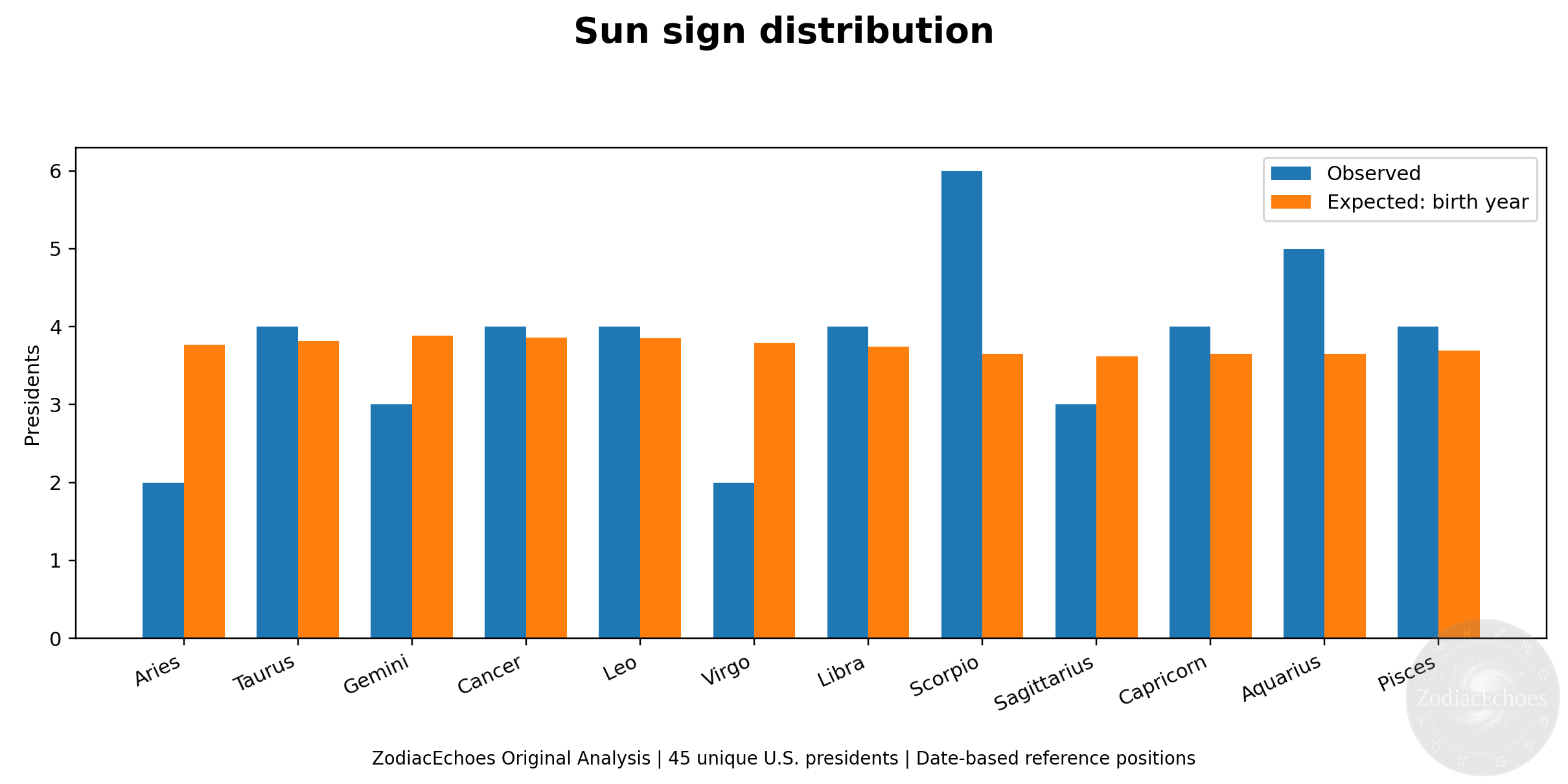
The following breakdown provides a more detailed perspective on the representation of each zodiac sign within the American presidency, combining the absolute number of presidents with their percentage share of the complete historical dataset.
| Zodiac sign | Presidents | Percentage |
|---|---|---|
| Aries | 2 | 4.4% |
| Taurus | 4 | 8.9% |
| Gemini | 3 | 6.7% |
| Cancer | 4 | 8.9% |
| Leo | 4 | 8.9% |
| Virgo | 2 | 4.4% |
| Libra | 4 | 8.9% |
| Scorpio | 6 | 13.3% |
| Sagittarius | 3 | 6.7% |
| Capricorn | 4 | 8.9% |
| Aquarius | 5 | 11.1% |
| Pisces | 4 | 8.9% |
Scorpio and the Psychology of Political Power
In Western astrology, Scorpio is associated with strategic patience, psychological insight, resilience and the management of power. Its traditional planetary ruler, Mars, introduces determination and competitive instinct, while its modern association with Pluto adds themes of transformation, influence and control.
The presence of six Scorpio presidents makes this sign particularly interesting within the context of political leadership. Its archetype reflects the capacity to navigate complex relationships, concealed motivations and situations in which influence depends as much on timing as on visible authority.
Aquarius and the Transformation of Society
Aquarius occupies second place with five presidents. Traditionally associated with Saturn and, in modern astrology, Uranus, Aquarius combines institutional awareness with intellectual independence, collective ideals and the desire to challenge established systems.
The symbolism of Aquarius introduces another dimension of presidential leadership: the relationship between individual authority and collective progress. Political leadership frequently involves balancing established constitutional structures with the changing expectations of society, technological development and emerging political ideas.
Beyond the Sun: The Planetary Architecture of Presidential Charts
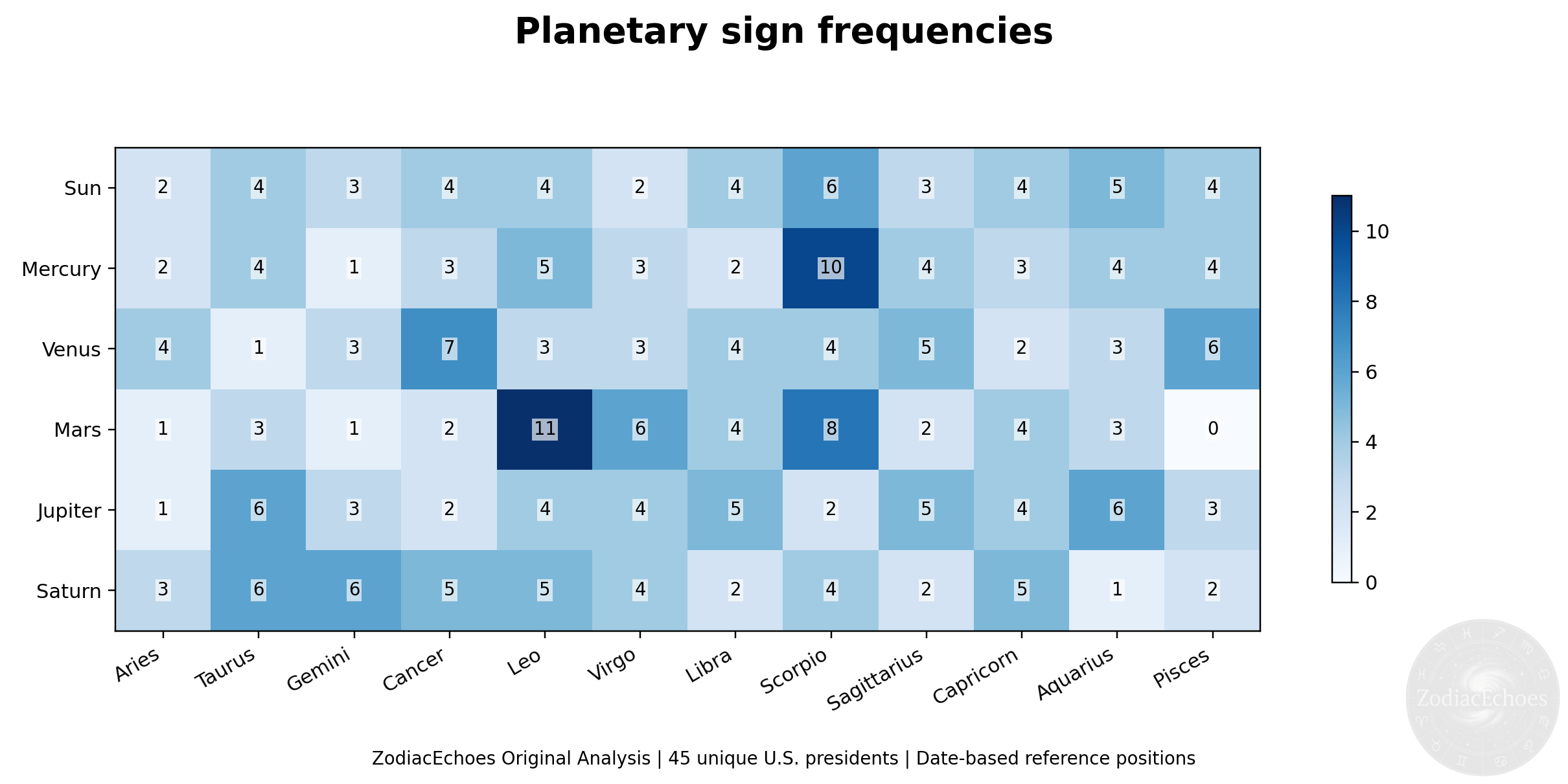
Sun signs represent only one layer of the presidential astrological profile. When Mercury, Venus, Mars, Jupiter and Saturn are incorporated into the analysis, a more detailed picture emerges, revealing different concentrations of planetary energy across the twelve zodiac signs.
The strongest descriptive concentrations include Mars in Leo, Mercury in Scorpio, Mars in Scorpio and Venus in Cancer. These placements introduce distinct astrological themes involving executive ambition, strategic communication, determination, emotional loyalty and the relationship between personal influence and collective identity.
Mars in Leo: The Astrology of Executive Authority
One of the most striking descriptive findings is the presence of Mars in Leo in 11 presidential charts, representing 24.4% of all individuals who have occupied the White House. This placement also remains stable throughout our hourly birth-time sensitivity analysis.
Mars represents action, ambition, competition and the willingness to confront opposition. Leo, ruled by the Sun, introduces visibility, personal dignity and creative self-expression. Together, they form an archetype associated with commanding attention, defending personal authority and expressing ambition through visible leadership.
The eleven presidents with Mars in Leo are Thomas Jefferson, James Monroe, John Quincy Adams, John Tyler, Franklin Pierce, Ulysses S. Grant, Grover Cleveland, William Howard Taft, Herbert Hoover, Harry S. Truman and Donald Trump.
Their political careers span dramatically different periods of American history, from the formation of the republic to contemporary politics. The common astrological placement provides an opportunity to explore the many expressions of executive determination, from military command and institutional leadership to public persuasion.
The Historical Context Behind Mars in Leo
Our first reference model, which accounts for each president’s birth year, produces an expected frequency of 5.94. Against this expectation, the observed frequency of eleven represents approximately 85% more occurrences than anticipated.
The second model incorporates both birth year and Sun sign. Under these more specific astronomical conditions, the expected frequency rises to 10.40, bringing the observed count much closer to its historical expectation.
This change illustrates one of the most fascinating aspects of the research: planetary placements must be understood within the wider astronomical environment of a birth chart. The relationship between the solar calendar and planetary cycles can substantially influence the frequency of particular configurations.
Mercury in Scorpio: The Strategic Intelligence of Power
While Mars in Leo dominates the descriptive findings, Mercury in Scorpio produces the strongest statistical signal in both historical reference models. At the standardised reference time, this placement appears in ten presidential charts, representing 22.2% of the complete presidential population.
Mercury governs language, reasoning, information and intellectual exchange. Scorpio introduces depth, investigative instinct, psychological awareness and strategic concentration. Their combination is traditionally associated with the ability to examine underlying motivations, communicate deliberately and recognise the significance of information that others may overlook.
Seven presidents retain Mercury in Scorpio throughout the tested hourly birth windows: John Adams, Martin Van Buren, Rutherford B. Hayes, Chester A. Arthur, Theodore Roosevelt, Warren G. Harding and Joe Biden.
Three additional presidents — Zachary Taylor, Franklin Pierce and James A. Garfield — have Mercury in Scorpio at the reference time, with Sagittarius also possible within their tested birth windows. This distinction allows us to separate the seven stable placements from the broader reference-time count.
Mercury in Scorpio Across Both Statistical Models
| Measurement | Model A | Model B |
|---|---|---|
| Observed frequency | 10 | 10 |
| Expected frequency | 4.11 | 5.75 |
| Unadjusted p-value | 0.00560 | 0.00220 |
| Holm-adjusted p-value | 0.82317 | 0.32339 |
Model B produces the strongest unadjusted statistical result of the investigation. Its expected frequency is higher than in Model A, but the distribution of simulated outcomes produces a smaller probability of observing ten or more occurrences.
Mercury in Scorpio therefore stands out as the leading exploratory finding, combining a compelling traditional astrological interpretation with the strongest statistical signal identified by our historical simulations.
How Historical Planetary Cycles Shape Presidential Astrology
Planetary positions are influenced by the astronomical circumstances of each generation. Jupiter takes approximately twelve years to complete its orbit around the Sun, while Saturn requires roughly twenty-nine years. Their zodiac placements therefore reflect both individual birth circumstances and broader generational cycles.
The faster-moving planets introduce another layer of complexity. Mercury and Venus maintain astronomical relationships with the Sun, while the relative positions of Mars and Earth produce changing patterns of planetary motion throughout successive years.
To account for these relationships, ZodiacEchoes developed two historical reference models. Their comparison reveals how the interpretation of presidential planetary concentrations changes when the astronomical context becomes progressively more specific.
| Planetary placement | Observed | Model A expected | Model B expected |
|---|---|---|---|
| Mercury in Scorpio | 10 | 4.11 | 5.75 |
| Mars in Leo | 11 | 5.94 | 10.40 |
| Mars in Scorpio | 8 | 4.53 | 6.54 |
| Venus in Cancer | 7 | 4.23 | 5.54 |
| Jupiter in Taurus | 6 | 3.33 | — |
Model A accounts for birth year. Model B additionally accounts for Sun sign. The final row presents the birth-year comparison only.
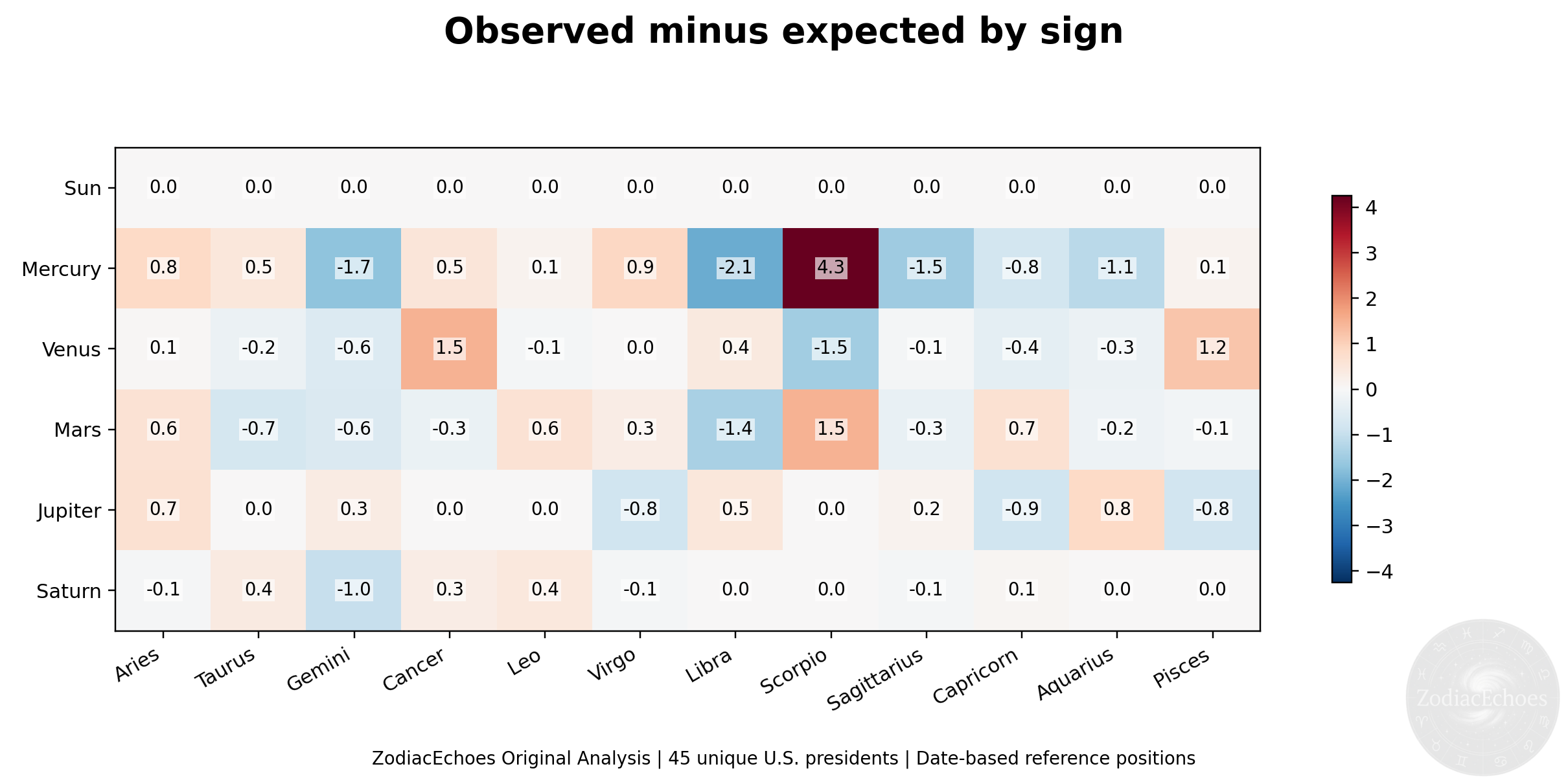
The differences between the two reference models become particularly apparent when visualised side by side, revealing how the inclusion of Sun signs reshapes the expected planetary distribution and provides a more nuanced understanding of the astrological concentrations observed across presidential birth charts.
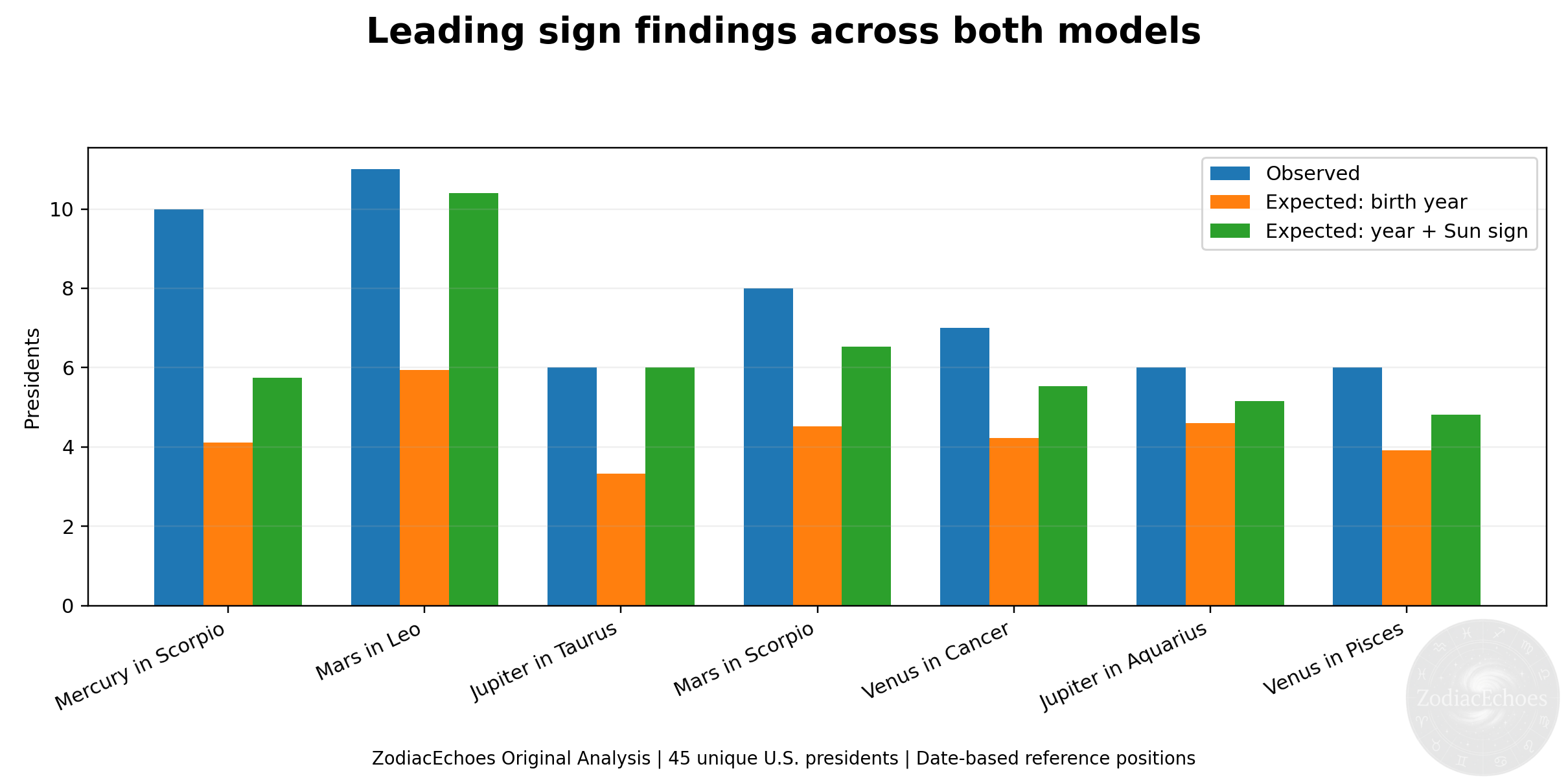
The comparison demonstrates that Mercury in Scorpio and Mars in Leo occupy different positions within the presidential astrological landscape. Mercury in Scorpio retains the strongest statistical signal, while the frequency of Mars in Leo closely reflects the astronomical conditions represented by Model B.
Both findings contribute to our understanding of presidential birth charts, revealing the importance of examining individual planetary symbolism alongside the historical relationships between celestial bodies.
Planetary Aspects: The Hidden Structure of Presidential Birth Charts
Individual planetary placements describe the expression of particular astrological energies. Planetary aspects introduce a more dynamic perspective, revealing how these energies interact through angular relationships associated with cooperation, tension, concentration and the integration of contrasting personality traits.
Our investigation examines all fifteen possible planetary pairs across five major aspects: conjunction, sextile, square, trine and opposition. This produces 75 distinct aspect configurations, each evaluated across the complete presidential dataset using a consistent eight-degree orb.
Saturn and the Architecture of Political Authority
Saturn occupies a particularly interesting position within the initial aspect findings. Three of the leading configurations under Model A involve this planet, introducing a recurring astrological theme centred on responsibility, restraint, institutional structures and the long-term management of authority.
In traditional astrology, Saturn represents the relationship between ambition and accountability. Its symbolism extends beyond personal discipline into the wider structures through which societies organise power, establish rules and maintain continuity across successive generations.
| Planetary aspect | Observed | Model A expected | Model B expected |
|---|---|---|---|
| Mercury opposition Saturn | 5 | 1.78 | 2.50 |
| Venus conjunction Saturn | 5 | 2.01 | 3.45 |
| Mars sextile Saturn | 7 | 3.90 | 6.16 |
Among these configurations, the recurring presence of Saturn deserves particular attention, as its connections with Mercury, Venus and Mars introduce distinct astrological themes of strategic restraint, diplomatic commitment and disciplined ambition.
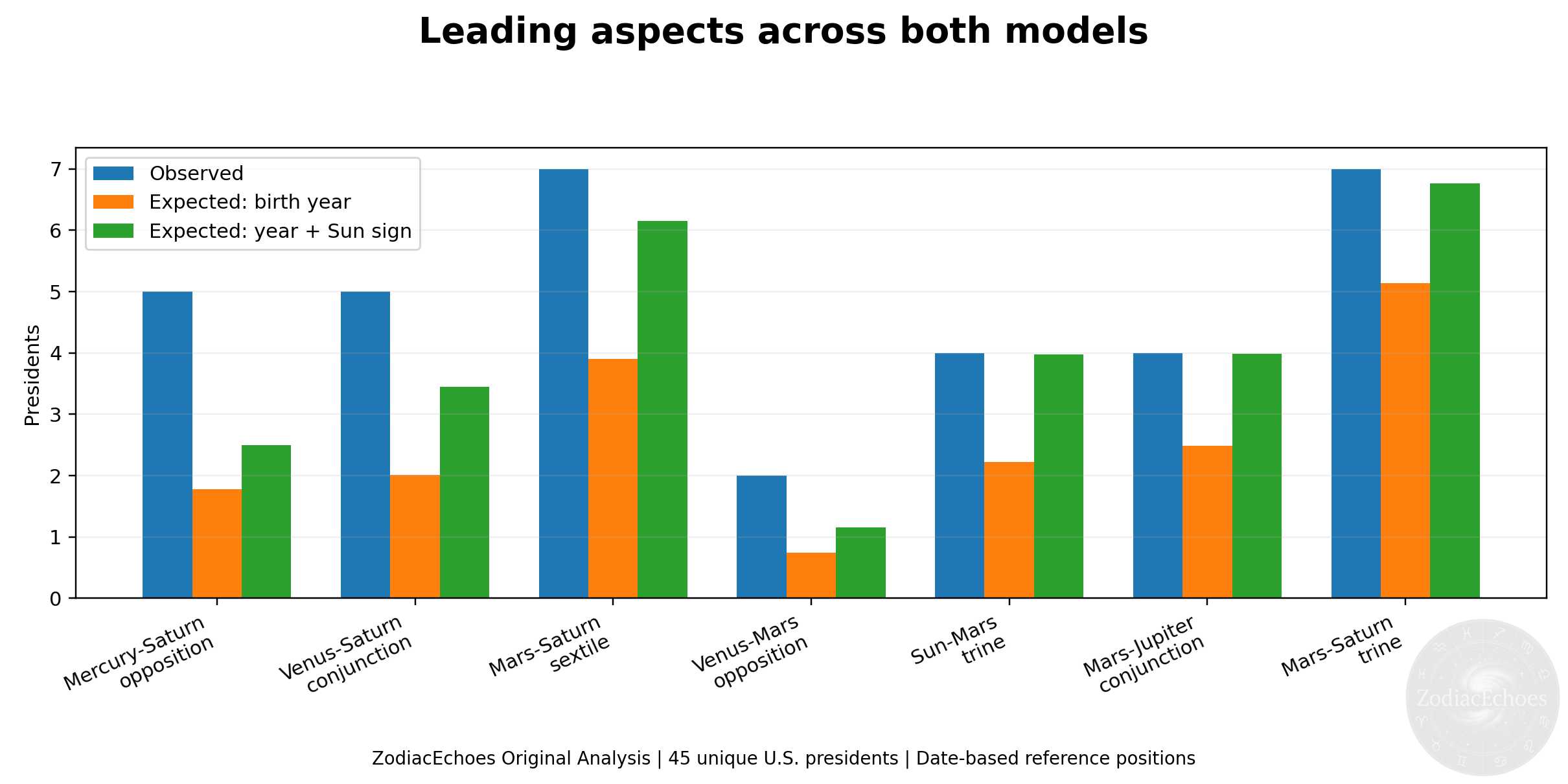
Mercury Opposition Saturn: Intelligence Under Pressure
Mercury opposition Saturn appears in five presidential charts at the reference time. In traditional astrological interpretation, this configuration represents a dynamic relationship between intellectual expression and institutional restraint, independent judgement and the demands of responsibility.
Political communication frequently involves precisely this kind of tension. A president must articulate ideas while considering constitutional obligations, diplomatic consequences, public expectations and the long-term implications of individual statements.
The Mercury–Saturn opposition offers an astrological framework for exploring the relationship between freedom of thought and the weight of public responsibility.
Venus Conjunction Saturn: Loyalty, Diplomacy and Obligation
Venus conjunction Saturn appears in five presidential charts and remains stable throughout the hourly sensitivity analysis. Astrologically, this configuration brings together the planetary principles of relationships, values, commitment, discipline and enduring responsibility.
Within the symbolism of political leadership, Venus and Saturn introduce themes extending beyond personal relationships. Diplomatic agreements, political alliances, institutional loyalty and the maintenance of long-term partnerships all reflect the intersection between social cooperation and structural obligation.
Mars Sextile Saturn: The Discipline of Ambition
Mars sextile Saturn appears in seven presidential charts. Traditionally regarded as a constructive relationship between action and discipline, this aspect combines the executive drive of Mars with Saturn’s capacity for organisation, patience and sustained effort.
Its symbolism is particularly relevant to the distinction between acquiring power and exercising it effectively. Political ambition requires initiative, but the responsibilities of government introduce demands for strategic planning, persistence and the management of complex institutional processes.
Jupiter and the Expansion of Presidential Influence
Under Model B, the Sun–Jupiter conjunction produces the strongest unadjusted result among the 75 planetary aspects. Three presidents possess this configuration, compared with an expected frequency of approximately 1.39.
Jupiter traditionally governs expansion, political philosophy, optimism, opportunity and the development of broader visions. Its conjunction with the Sun symbolically connects personal identity with the desire to extend influence beyond immediate circumstances.
Within presidential astrology, this relationship introduces questions about national vision, ideological conviction and the capacity to inspire collective aspirations. Jupiter’s symbolism also encompasses the responsibilities that accompany expanding political influence and the consequences of ambitious decisions.
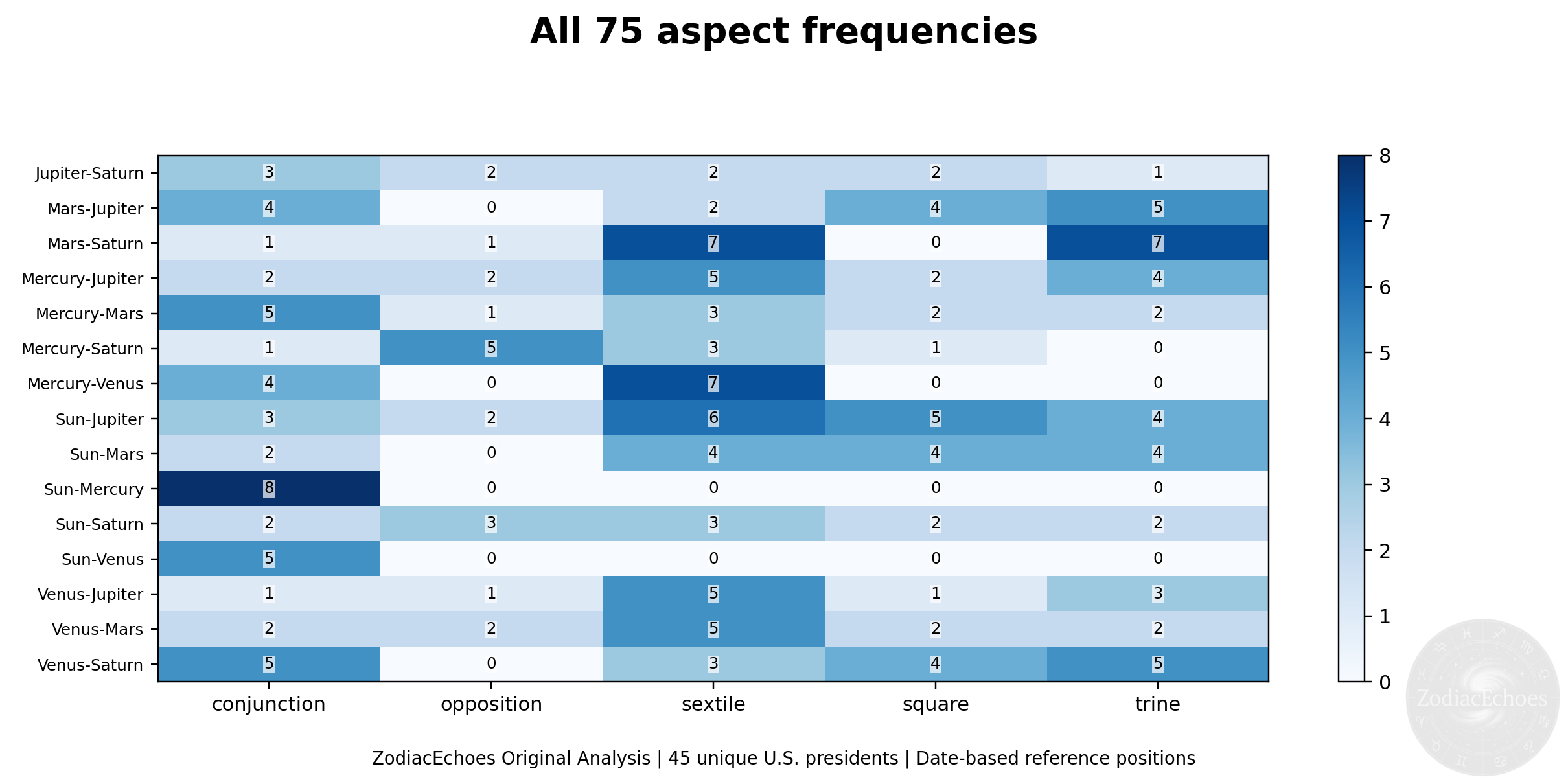
Understanding the Statistical Findings
The research evaluates 147 configurations across planetary signs and aspects. To distinguish individual exploratory findings from broader statistical patterns, we applied the Holm multiple-testing correction separately within each historical reference model.
Mercury in Scorpio produces the lowest adjusted probability in Model B, with a value of 0.32339. No configuration reaches the conventional statistical significance threshold of 0.05 following correction.
This establishes a clear distinction between descriptive planetary concentrations, exploratory statistical findings and confirmed statistical associations. The distinction allows us to examine the astrological symbolism of presidential configurations while maintaining a consistent research framework.
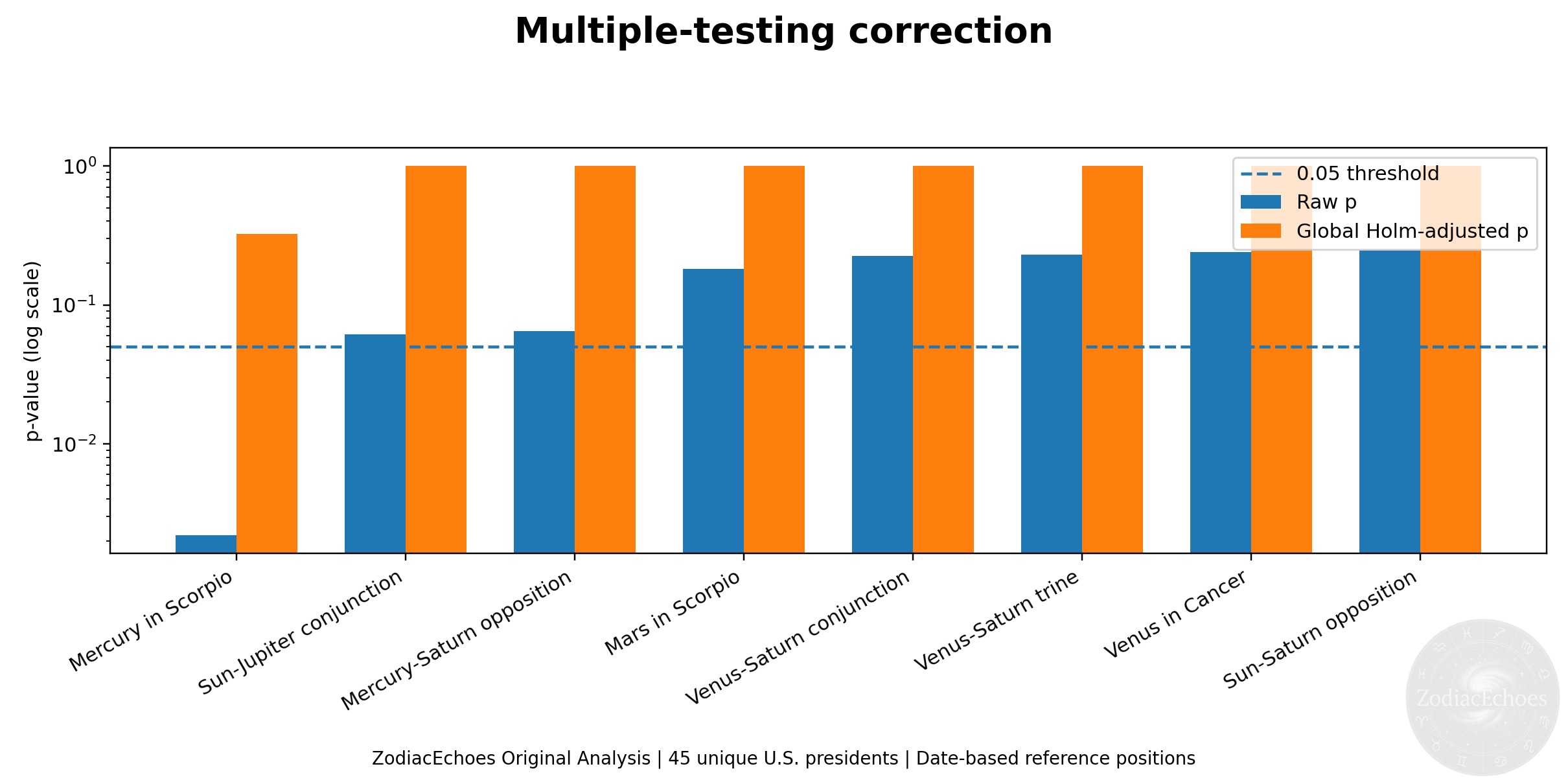
Research Methodology
The ZodiacEchoes presidential dataset was constructed specifically for this Original Analysis. Birth dates were cross-checked against historical compilations, with particular attention given to early American presidents, historical calendar conventions and conflicting biographical records.
The planetary calculations use tropical, geocentric ecliptic positions, generated through Swiss Ephemeris using its Moshier calculation method. All 45 individuals were evaluated at the same reference time of 12:00 UTC on their recorded Gregorian birth dates.
Two Historical Reference Models
Model A generates random calendar dates within each president’s actual birth year. This preserves the historical distribution of presidential birth years while examining the planetary configurations available throughout those respective years.
Model B additionally restricts the reference dates to those sharing each president’s reference Sun sign. This incorporates the relationship between solar zodiac position and the planetary configurations available during that particular astronomical period.
Each model contains 30,000 simulated presidential datasets. Expected frequencies are calculated from the simulated results, while empirical upper-tail probabilities measure how frequently the simulations produce counts equal to or greater than the observed presidential frequencies The models represent historical astronomical reference conditions rather than independently sampled population control groups.
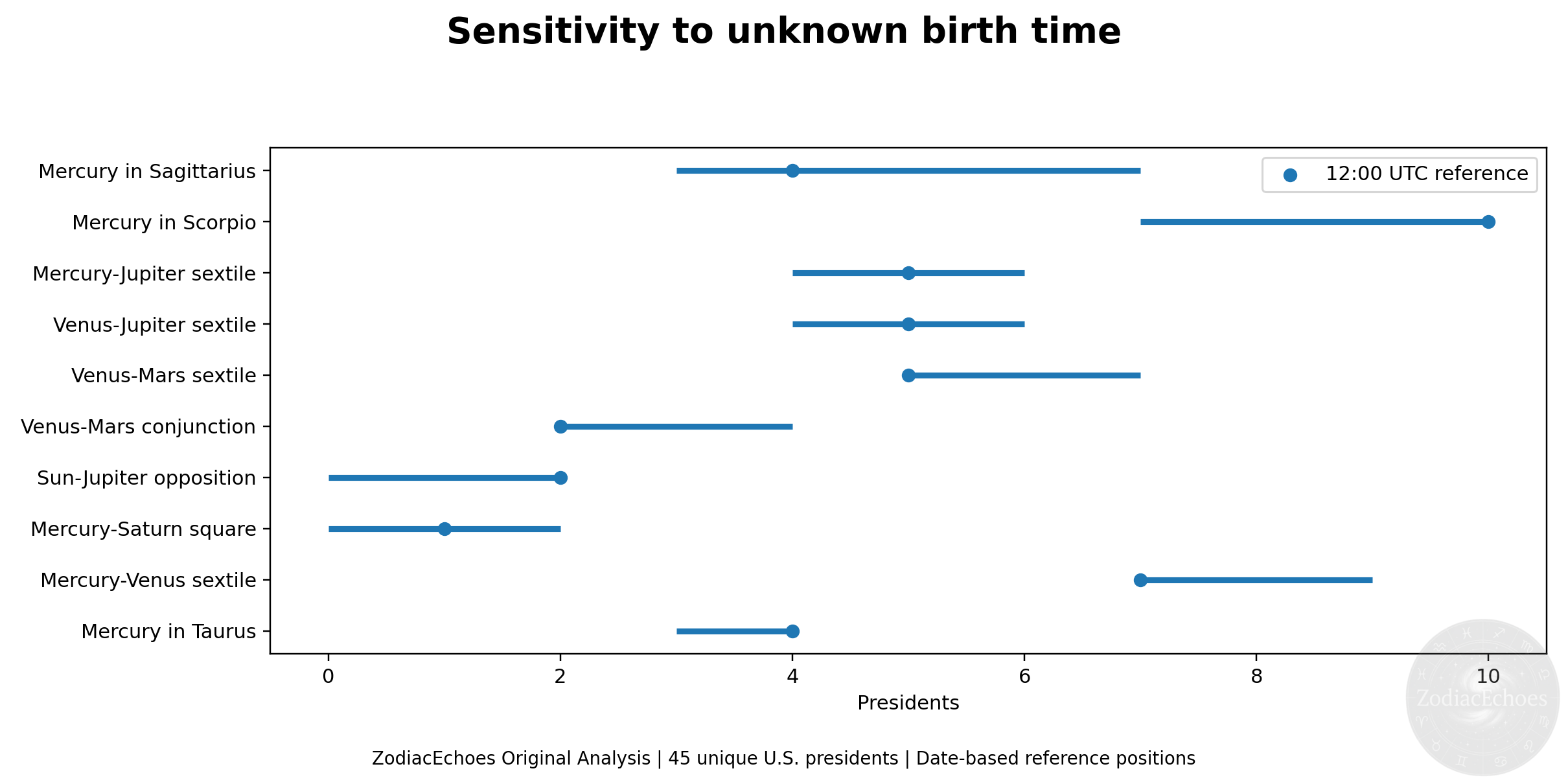
Birth-Time Sensitivity
Historical birth records vary in their precision. Our calculations therefore employ a consistent reference time, supplemented by hourly planetary calculations covering an extended window around each recorded birth date.
This procedure identifies stable planetary placements and configurations near zodiac or aspect boundaries. Mars in Leo, for example, retains all eleven occurrences across the sampled hours, while Mercury in Scorpio ranges between seven and ten.
The study focuses on six celestial bodies and excludes the Moon, Ascendant and astrological houses. Reported birth times are preserved in the research dataset, with their source-verification status documented separately.
Research Dataset and Sources
The complete ZodiacEchoes research dataset includes presidential birth information, individual planetary positions, aspect frequencies, statistical comparisons, hourly sensitivity calculations and all eight analytical graphs.
The following resources were used in constructing and documenting the research:
- Presidential Birth Dates and Birthplaces – PresidentsUSA
- Birth Times of U.S. Presidents – AstroLibrary
- Astro-Databank – Rodden Rating System
- Swiss Ephemeris – Astrodienst
DOWNLOAD ZODIACECHOES U.S. PRESIDENTS RESEARCH DATASET PDF
Conclusion
The astrology of all 45 American presidents presents a fascinating portrait of ambition, strategic intelligence, institutional authority and political responsibility. Across nearly three centuries of birth records, several planetary configurations emerge as particularly interesting subjects of astrological interpretation.
Mars in Leo represents the most prominent individual planetary concentration, while Mercury in Scorpio produces the strongest exploratory statistical finding. Saturn’s recurring presence among the leading aspects introduces another important dimension: the relationship between personal ambition and the enduring structures of political power.
Perhaps the most compelling discovery lies in the comparison between the two historical reference models. By incorporating the wider astronomical circumstances of presidential birth charts, we gain a more detailed understanding of how planetary concentrations emerge.
The American presidency brings together individuals whose ambitions, convictions and responsibilities have shaped the course of history. Through their planetary configurations, ZodiacEchoes explores the astrological symbolism behind one of the world’s most influential political institutions.
Cosmic Highlights
FAQ
What is the most common zodiac sign among U.S. presidents?
Scorpio is the most common Sun sign, with six presidents, followed by Aquarius with five. Both signs possess distinctive astrological associations with power, institutional structures and social transformation.
What is the most common planetary placement among American presidents?
Mars in Leo appears in eleven presidential charts, representing 24.4% of the complete dataset. This placement traditionally symbolises ambition, courage, visibility and executive determination.
Which planetary placement produced the strongest statistical result?
Mercury in Scorpio produced the strongest exploratory result, with an unadjusted p-value of 0.00220 under the birth-year and Sun-sign-conditioned model. Its globally adjusted p-value was 0.32339.
Why is Saturn important in presidential astrology?
Saturn traditionally represents discipline, authority, responsibility and institutional structures. Several Saturn-related configurations appear among the leading aspects in the initial presidential analysis, including Mercury opposition Saturn and Venus conjunction Saturn.
How many American presidents were included in the research?
The study includes all 45 unique individuals who have served as President of the United States. Grover Cleveland and Donald Trump are each counted once despite serving non-consecutive terms.
How were presidential planetary positions calculated?
Planetary positions were calculated using Swiss Ephemeris at a standardised reference time of 12:00 UTC. Two historical reference models, each containing 30,000 simulations, were used to evaluate the observed configurations.