- Ma’nene is a traditional ceremony practiced by some Toraja communities in South Sulawesi, Indonesia, during which families care for the remains of deceased relatives.
- During certain ceremonies, relatives open ancestral tombs, clean preserved bodies, replace old clothing, and return the deceased to their resting places.
- The ritual can bring several generations together, allowing younger family members to learn about ancestors they never met.
- Far from being a forgotten custom, Ma’nene remains a living tradition, although its practices and frequency vary between communities.
Imagine visiting a remote village in the mountains of Indonesia and witnessing something that seems almost impossible. A family gathers around an ancestral tomb, carefully opens it, and brings out the preserved body of a relative who died years or even decades earlier.
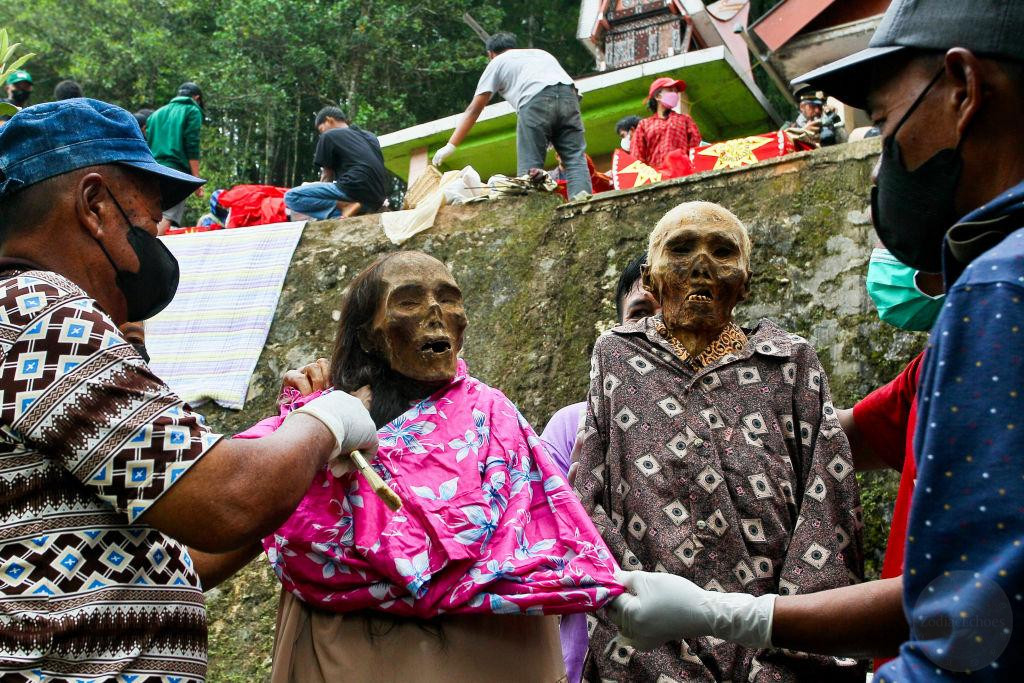
Instead of preparing another funeral, the family begins cleaning the remains, replacing old clothing, and speaking about the deceased as someone who still belongs among them. In some ceremonies, relatives pose for photographs beside their ancestors. Children may stand close to the remains of grandparents they never knew in life.
To an outsider, the scene might resemble something from a supernatural film. But in the highlands of South Sulawesi, this extraordinary ceremony is part of a genuine tradition known as Ma’nene.
And perhaps its most surprising feature is that the ritual is not simply a relic of the distant past. Some families continue practicing it today.
What Is the Ma’nene Ritual?
Ma’nene is a traditional ceremony associated with the Toraja people of Indonesia, particularly communities in the northern highlands of South Sulawesi. It is often described as a ritual of caring for ancestors, reflecting the belief that relationships between living and deceased family members do not necessarily end with burial.
In communities where the ceremony involves exhumation, relatives return to family tombs, carefully remove preserved remains, clean them, and replace their old clothing or burial wrappings. The deceased are then returned to their resting places.
However, the ceremony is not identical throughout Toraja. In some areas, families concentrate on cleaning graves, making offerings, praying, or maintaining wooden effigies representing deceased relatives. The central purpose is remembrance, respect, and the continuation of family relationships across generations.
Why Do Families Remove Their Dead From Their Graves?
One of the most unusual features of Ma’nene is the physical involvement of the deceased in family remembrance. In many cultures, opening a grave is associated with disturbing the dead. Within certain Toraja traditions, however, carefully tending ancestral remains can be understood as an expression of affection and responsibility.
Family members may gather around a burial chamber, remove a coffin, and inspect the condition of the remains. Old fabric is replaced, and the body may be cleaned or exposed briefly to sunlight before being rewrapped.
The process can also involve maintaining the tomb itself, removing dirt, and preparing offerings. Some families regard this work as a duty to their ancestors, while others emphasize its importance as an occasion for family reunion. What appears to outsiders as an encounter with death is, for participating families, often an act of continuing care.
The Dead Who Remain Part of the Family
Toraja funeral traditions reflect a relationship with death that differs significantly from the practices familiar in many Western countries. In some Toraja households, a deceased person may remain at home for an extended period before the formal funeral takes place.
The body is preserved, and relatives may continue speaking to the deceased or making symbolic offerings of food and drink. Traditionally, the person may be described as to makula, often translated as someone who is sick, until the appropriate funeral rites have been completed.
These customs are connected with the importance of elaborate funerals, which can require extensive preparation and considerable expense. Families may spend months or years arranging ceremonies and gathering relatives who live far away.
After burial, Ma’nene can provide another opportunity to honor those who have died. In this cultural setting, death does not necessarily bring an immediate end to a person’s place within family life.
Why Are the Bodies Sometimes So Well Preserved?
Photographs of Ma’nene ceremonies occasionally show bodies that remain surprisingly recognizable long after death. Some retain facial features, hair, clothing, and portions of their original appearance, while others consist largely of skeletal remains.
The condition of a body depends on several factors, including the methods used to preserve it, the burial environment, and the amount of time that has passed. Toraja communities have historically used different preservation practices, and modern embalming techniques have also influenced some funerary customs.
Burial chambers may be located within rock faces, caves, or specially constructed family tombs known as patane. These conditions can affect how remains change over time. The preserved appearance of the deceased is therefore not evidence of anything supernatural. Yet it contributes to the extraordinary visual impression created by the ceremony.
The Family Photographs That Shocked the Internet
Images of Ma’nene have attracted international attention because they show scenes rarely encountered outside Toraja. In some photographs, families stand beside preserved ancestors dressed in fresh clothing. Other images show relatives carefully holding or supporting remains while preparing them for reburial.
These photographs can appear disturbing when separated from their cultural context. However, within the ceremony, posing beside a deceased relative may represent the same desire that motivates ordinary family photography: preserving a memory of people who remain important to the household.
For younger generations, the occasion can also provide an opportunity to learn family history. A child may hear stories about a grandparent, great-grandparent, or another ancestor whose remains are being honored. The ritual therefore connects people who are alive today with relatives whose lives ended long before they were born.
When Does the Ma’nene Ceremony Take Place?
Ma’nene is often associated with the period following the rice harvest, when agricultural work has eased and relatives may have time to gather. Some communities traditionally hold the ceremony in August or during another locally agreed period. However, there is no single schedule followed by every Toraja family.
Depending on the village and its customs, ceremonies may take place annually, every few years, or at less regular intervals. The timing can be determined through discussions involving relatives and traditional community leaders.
Because many Torajans now live and work elsewhere in Indonesia or overseas, these gatherings can also serve as important family reunions. Relatives travel back to ancestral villages to participate in ceremonies, maintain family tombs, and reconnect with their heritage.
The Ancient Beliefs Behind Ma’nene
Toraja funeral traditions are historically connected with Aluk To Dolo, an ancestral religious system whose name is commonly understood as referring to the ways or teachings of the ancestors. Within this tradition, relationships between the living and ancestral spirits form an important part of religious and social life.
Honoring deceased relatives can be associated with maintaining harmony, expressing gratitude, and seeking ancestral blessings. Yet Toraja religious life has changed over time. Many Torajans are now Christian, and some Ma’nene ceremonies have incorporated Christian prayers, hymns, and memorial practices. Consequently, the spiritual meaning of the ceremony varies.
For some participants, it remains connected with ancestral blessings and traditional beliefs. For others, it is primarily an expression of remembrance, gratitude, and family affection. The ritual has survived partly because its central message can continue across changing religious traditions: the dead should not be forgotten.
Why Do Some Families Believe Ancestors Can Protect the Living?
In traditional Toraja beliefs, deceased ancestors may continue to influence the well-being of their descendants. Maintaining respectful relationships with them can therefore carry both spiritual and social importance. Some interpretations of Ma’nene connect ancestral care with hopes for good harvests, family prosperity, and protection from misfortune.
Offerings and prayers may express gratitude for the ancestors’ role in establishing the family and preserving its traditions. However, these beliefs are not universal among all Torajans, and modern interpretations differ between communities.
The ceremony can also be understood without assuming any supernatural intervention. By gathering relatives and teaching younger generations about their ancestors, Ma’nene helps preserve family identity and cultural continuity.
Is Ma’nene Still Practiced Today?
Yes. Ma’nene remains part of the cultural life of certain Toraja communities, particularly in parts of North Toraja. Researchers have documented the ceremony in recent decades, and families continue to observe different forms of ancestral remembrance.
Not every Toraja household participates, and the practice should not be presented as something performed identically throughout the region. Some ceremonies involve removing preserved bodies from their tombs, while others focus on maintaining graves, replacing burial wrappings, or honoring ancestors through prayer.
The tradition has also attracted photographers, documentary filmmakers, and international visitors. Nevertheless, Ma’nene is fundamentally a family and community ceremony rather than a spectacle created for tourists.
Its survival demonstrates how ancient customs can remain meaningful even as the surrounding society changes.
Conclusion
Ma’nene is one of the world’s most extraordinary surviving traditions of ancestral remembrance. In parts of Indonesia’s Toraja highlands, families continue to open tombs, care for deceased relatives, and sometimes dress their remains in fresh clothing.
To those unfamiliar with the ceremony, the photographs may seem haunting or even frightening. Yet behind the unusual images lies a deeply rooted understanding of family responsibility, respect, and remembrance. The ritual reveals a striking difference between cultures that regard burial as a final farewell and those that preserve an ongoing relationship with the dead.
Perhaps the most remarkable aspect of Ma’nene is not that families bring their ancestors out of their graves, but that they continue to regard them as members of the family long after death.
Cosmic Highlights

FAQ
What is the Ma’nene ritual in Indonesia?
Ma’nene is a traditional Toraja ceremony in which families honor deceased ancestors by tending graves and, in some communities, removing preserved remains to clean them and replace old clothing or burial wrappings.
Why do Toraja families dress their dead?
The practice expresses respect, affection, and continuing responsibility toward deceased relatives. In some traditions, it is also associated with honoring ancestral spirits.
How often is Ma’nene performed?
The frequency varies between communities. Some ceremonies occur after harvests or every few years, while others take place according to family and village agreements.
Are the bodies used in Ma’nene real?
Yes. Ceremonies involving exhumation use the actual preserved remains of deceased family members, which may range from relatively intact bodies to skeletal remains.
Is Ma’nene still practiced in 2026?
Ma’nene has been documented as a continuing tradition in recent years, particularly in parts of North Toraja. Its form and frequency vary, and not all Toraja communities practice it.
Can tourists attend a Ma’nene ceremony?
Some ceremonies have been documented by visitors and photographers, but they are primarily family and community events. Anyone wishing to observe should obtain permission and respect local customs.
Sources
- ABC News – Funeral Rituals of Tana Toraja and Trunyan – https://www.abc.net.au/news/2022-05-14/funeral-rituals-of-tana-toraja-and-trunyan-in-indonesia/101059672
- National Geographic – When Death Doesn’t Mean Goodbye – https://www.nationalgeographic.com/magazine/article/death-dying-grief-funeral-ceremony