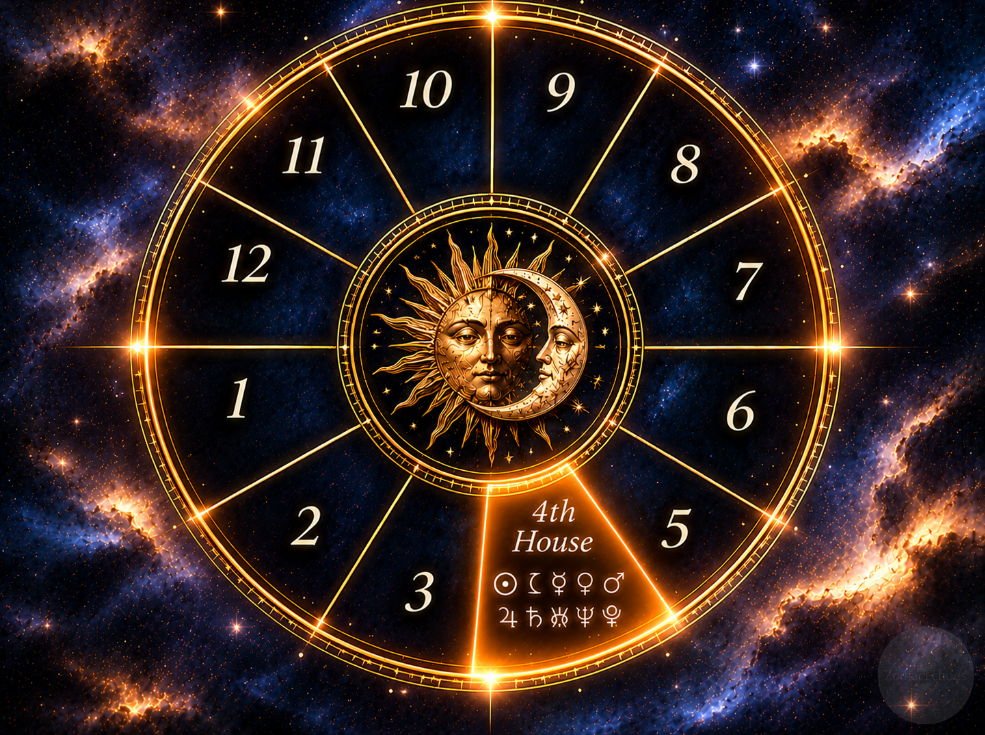
- Planets in the 4th House reveal how childhood experiences, family relationships, and ancestral influences shape your emotional foundations.
- The Sun and Moon emphasize personal roots and emotional security, while Mercury and Venus influence domestic communication and harmony.
- Mars, Saturn, Uranus, Neptune, and Pluto may reveal complex family dynamics, inherited emotional patterns, and opportunities for personal transformation.
- Your Imum Coeli (IC), 4th House ruler, and planetary aspects provide additional insight into your upbringing and deepest emotional needs.
Why do some people spend their entire lives searching for a place they can truly call home? Why do others remain deeply attached to their childhood memories, while some feel an overwhelming need to escape the environment in which they were raised?
In Western astrology, planets in the 4th House reveal the emotional foundations upon which your personality develops. They describe your relationship with family, childhood experiences, ancestry, and the private world that exists behind your public identity.
While the 10th House explores ambition, reputation, and professional achievement, the 4th House reveals who you are when nobody is watching. It represents the emotional experiences, memories, and inherited patterns that influence your understanding of safety and belonging.
Understanding your 4th House can offer valuable insight into the kind of home you need, the family patterns you carry, and the emotional environment you wish to create for yourself.
What Does the 4th House Represent in Astrology?
The 4th House is traditionally known as the House of Home, Family, and Roots. It occupies the foundational area of the natal chart and represents the deeply personal experiences that shape an individual’s inner world.
Its symbolism extends beyond the physical house in which someone lives. It encompasses the emotional atmosphere of childhood, relationships with parental figures, ancestral traditions, and the psychological meaning of belonging.
The main areas associated with the 4th House include:
- Home and domestic life
- Childhood and upbringing
- Parents and family relationships
- Ancestry and cultural heritage
- Emotional security and belonging
- Inherited psychological patterns
- Private life and personal boundaries
- Property and living environments
- Memories and attachment to the past
- The emotional foundations of personality
Each planet occupying the 4th House introduces a distinctive emotional relationship with these experiences. Some emphasize stability and family traditions, while others encourage independence, psychological transformation, or the creation of an entirely different domestic environment.
Planets in the 4th House and Their Meanings
Sun in the 4th House – The Guardian of Family Roots
People with the Sun in the 4th House often develop a strong sense of identity through their family, heritage, and personal roots. Their upbringing may become an important reference point when determining who they are and what they wish to accomplish.
Creating a secure home can become one of their most meaningful personal ambitions. Even when they achieve considerable professional success, their private life may remain the foundation of their confidence.
- Childhood and upbringing: Family expectations, parental influence, and the desire to receive recognition within the household may play significant roles in childhood development. They may feel proud of their heritage or experience pressure to continue established family traditions.
- Home and family life: These individuals often enjoy creating a home that reflects their personality. They may naturally assume a leadership role within the household and take considerable pride in protecting their family’s well-being.
- Emotional security: They need a private environment where their individuality is recognized and respected. Feeling appreciated by loved ones can contribute significantly to their emotional confidence.
- Strengths: Family loyalty, emotional resilience, strong personal identity, protective instincts, and pride in personal heritage.
- Challenges: Excessive identification with family expectations, seeking parental approval, domestic pride, and difficulty establishing an independent identity.
The Sun in the 4th House encourages individuals to recognize that honoring their roots does not require sacrificing their individuality.
Moon in the 4th House – The Keeper of Childhood Memories
The Moon in the 4th House emphasizes emotional sensitivity, nostalgia, family attachment, and the desire for a secure domestic environment. Its planetary symbolism is particularly compatible with the traditional themes of this house.
Childhood memories may continue to influence emotional reactions well into adulthood. Familiar smells, music, family recipes, and meaningful possessions can awaken remarkably powerful feelings.
- Childhood and upbringing: Early emotional experiences may leave lasting impressions. These individuals frequently remember the atmosphere of their childhood home more vividly than specific events.
- Home and family life: They often enjoy nurturing loved ones, maintaining family traditions, and creating comfortable surroundings. Their home may become a sanctuary where they recover from demanding external experiences.
- Emotional security: Familiarity, affection, reassurance, and a sense of belonging are particularly important. Changes involving home or family may require considerable emotional adjustment.
- Strengths: Empathy, nurturing instincts, emotional intelligence, family loyalty, and sensitivity to the needs of loved ones.
- Challenges: Excessive nostalgia, emotional dependency, difficulty releasing childhood experiences, and resistance to changes that threaten familiar routines.
The Moon in the 4th House teaches that the past can provide emotional nourishment without becoming a place in which you permanently live.
Mercury in the 4th House – The Family Historian
Mercury in the 4th House creates a mentally active private world. These individuals may possess a natural curiosity about their ancestry, family stories, childhood experiences, and the psychological origins of their personality.
Home can become an important environment for intellectual activity. Reading, writing, research, remote work, and meaningful conversations may form central parts of their domestic routines.
- Childhood and upbringing: Family conversations, educational experiences, and the intellectual atmosphere of the household may significantly influence their thinking patterns. They may develop an early interest in understanding why family members behave as they do.
- Home and family life: They frequently appreciate intellectually stimulating surroundings. Working from home, maintaining a private study, or researching family history may provide considerable satisfaction.
- Emotional security: Understanding their feelings through conversation, reflection, or writing can help them establish emotional clarity. They often need to make sense of an experience before feeling comfortable with it.
- Strengths: Intellectual curiosity, family communication, psychological reflection, adaptability, and an ability to preserve family stories.
- Challenges: Overthinking childhood experiences, repeatedly analyzing family conversations, intellectualizing emotions, and difficulty mentally disconnecting from domestic concerns.
Mercury in the 4th House encourages individuals to understand that not every emotion needs an intellectual explanation before it can be accepted.
Venus in the 4th House – The Creator of Domestic Harmony
Venus in the 4th House emphasizes beauty, affection, comfort, and harmonious family relationships. These individuals frequently regard their home as an extension of their emotional and aesthetic personality.
Creating a peaceful and attractive living environment can become a deeply personal expression of love. Interior design, comfortable furnishings, music, cooking, and family celebrations may hold particular significance.
- Childhood and upbringing: Memories involving affection, family traditions, artistic experiences, and domestic pleasures may strongly influence their adult preferences. They may also become accustomed to maintaining peace between family members.
- Home and family life: These individuals often enjoy welcoming guests, decorating their surroundings, and creating an atmosphere in which loved ones feel appreciated. Domestic comfort may become one of their greatest pleasures.
- Emotional security: Affection, cooperation, physical comfort, and harmonious relationships contribute to their sense of belonging. Persistent conflict within the household can feel particularly exhausting.
- Strengths: Diplomacy, aesthetic sensitivity, generosity, affection, hospitality, and the ability to create welcoming domestic environments.
- Challenges: Avoiding necessary confrontations, idealizing family relationships, excessive attachment to material comforts, and sacrificing personal needs to preserve domestic harmony.
Venus in the 4th House teaches that genuine harmony requires honest communication rather than the permanent avoidance of disagreement.

Mars in the 4th House – The Fierce Family Protector
Mars in the 4th House introduces emotional intensity, assertiveness, protective instincts, and a powerful desire to defend personal territory. These individuals may experience their private lives with considerably more intensity than their public personalities suggest.
Family relationships can awaken both their strongest protective instincts and their deepest frustrations. They may fiercely defend loved ones while struggling to remain patient during domestic disagreements.
- Childhood and upbringing: Early experiences may involve competition, arguments, demanding expectations, or struggles for independence. Some individuals may develop a strong determination to establish personal boundaries from an early age.
- Home and family life: They often take an active approach to domestic responsibilities. Renovation projects, practical improvements, and protecting the household may become important outlets for their energy.
- Emotional security: Personal autonomy and control over their immediate surroundings are particularly important. Feeling powerless within the home may provoke strong emotional reactions.
- Strengths: Courage, protective instincts, emotional determination, independence, initiative, and the willingness to confront difficult family issues.
- Challenges: Domestic arguments, unresolved childhood anger, impatience, defensiveness, and difficulty separating present disagreements from earlier emotional experiences.
The central lesson of Mars in the 4th House is recognizing that protecting your home does not require treating every disagreement as a threat.
Jupiter in the 4th House – The Generous Host
Jupiter in the 4th House encourages generosity, optimism, hospitality, and emotional growth through family experiences. These individuals often associate home with opportunities to share knowledge, comfort, and meaningful experiences.
Their ideal home may be a place where people feel welcome and personal development is encouraged. They may enjoy large family gatherings, spacious surroundings, and traditions that bring different generations together.
- Childhood and upbringing: Family beliefs, cultural traditions, education, or philosophical perspectives may play significant roles in shaping their worldview. They may remember their upbringing through an optimistic or idealized perspective.
- Home and family life: These individuals frequently enjoy entertaining guests, sharing resources, and creating an expansive domestic environment. They may dream of owning a larger property or living somewhere that offers greater personal freedom.
- Emotional security: They often need an environment that supports optimism, exploration, and personal growth. Excessively restrictive domestic arrangements may feel emotionally limiting.
- Strengths: Hospitality, generosity, optimism, emotional resilience, cultural curiosity, and enthusiasm for shared family experiences.
- Challenges: Idealizing family relationships, overlooking domestic problems, excessive spending on the home, and assuming that generosity can resolve every emotional difficulty.
Jupiter in the 4th House encourages individuals to combine their expansive vision of family happiness with realistic emotional expectations.
Saturn in the 4th House – The Builder of Emotional Stability
Saturn in the 4th House emphasizes responsibility, emotional discipline, structure, and the gradual development of personal security. These individuals may approach family life with a seriousness that reflects experiences established during childhood.
Early responsibilities or demanding family expectations may encourage emotional self-reliance. Learning to depend on others can sometimes feel more challenging than managing difficulties independently.
- Childhood and upbringing: Saturn may symbolize strict rules, limited emotional expression, demanding parental figures, or responsibilities assumed at an early age. Such experiences can influence attitudes toward vulnerability and security.
- Home and family life: These individuals often value stability, practical organization, and long-term domestic security. They may invest considerable effort in creating a reliable home environment for themselves and their loved ones.
- Emotional security: Predictability, trust, consistency, and independence are particularly important. Emotional openness may develop gradually as relationships demonstrate their reliability.
- Strengths: Responsibility, resilience, patience, loyalty, practical wisdom, and the ability to establish lasting emotional foundations.
- Challenges: Emotional reserve, fear of vulnerability, excessive domestic responsibilities, rigid family expectations, and difficulty accepting support.
Saturn in the 4th House offers the opportunity to build the stable and supportive home that an individual may once have needed themselves.
Uranus in the 4th House – The Domestic Individualist
Uranus in the 4th House introduces independence, unconventional family dynamics, unexpected changes, and a desire to redefine traditional ideas of home and belonging.
These individuals may feel uncomfortable with the assumption that everyone must follow the same domestic or family model. Personal freedom frequently becomes an essential component of emotional security.
- Childhood and upbringing: Uranus may symbolize unconventional parenting, frequent relocations, unusual household arrangements, or unpredictable changes during childhood. These experiences may encourage adaptability and independence.
- Home and family life: They often prefer creating domestic arrangements that reflect their individual needs rather than inherited expectations. Alternative lifestyles, modern technology, flexible living arrangements, and unconventional family structures may appeal to them.
- Emotional security: Freedom, authenticity, and sufficient personal space are essential. They may feel more secure when they have the ability to change their circumstances rather than being permanently tied to one arrangement.
- Strengths: Adaptability, independence, originality, emotional flexibility, and the courage to challenge restrictive family traditions.
- Challenges: Domestic instability, emotional detachment, sudden decisions, resistance to commitment, and difficulty maintaining consistent family routines.
Uranus in the 4th House encourages individuals to recognize that home can provide both emotional stability and personal freedom.

Neptune in the 4th House – The Seeker of an Emotional Sanctuary
Neptune in the 4th House creates a sensitive, imaginative, intuitive, and deeply receptive private personality. These individuals may absorb the emotional atmosphere of their surroundings with remarkable intensity.
The distinction between personal emotions and the feelings of other family members may sometimes become difficult to establish. Their private environment can therefore have a particularly strong influence on their well-being.
- Childhood and upbringing: Early memories may be idealized, emotionally complex, or surrounded by unspoken family issues. These individuals may remember impressions and feelings more clearly than specific explanations.
- Home and family life: They often seek a peaceful sanctuary where imagination, creativity, spirituality, or quiet reflection can flourish. Music, art, soft lighting, and emotionally comforting surroundings may hold special significance.
- Emotional security: Compassion, solitude, emotional understanding, and freedom from overwhelming external demands are particularly important. They may need private time to distinguish their own feelings from those of others.
- Strengths: Empathy, imagination, compassion, emotional intuition, creativity, and sensitivity to the atmosphere of the home.
- Challenges: Idealizing childhood, unclear family boundaries, emotional escapism, avoiding difficult realities, and absorbing responsibilities that belong to others.
Neptune in the 4th House teaches that a sanctuary becomes most meaningful when it offers genuine peace rather than merely an escape from reality.
Pluto in the 4th House – The Transformer of Family Patterns
Pluto in the 4th House emphasizes psychological depth, emotional intensity, inherited family patterns, and the possibility of profound personal transformation.
Childhood experiences may become a central subject of psychological exploration throughout adulthood. These individuals often feel compelled to understand the hidden motivations, loyalties, fears, and expectations operating within their family.
- Childhood and upbringing: Pluto may symbolize intense family dynamics, secrecy, struggles involving control, or powerful emotional attachments. Unspoken family expectations may influence how individuals understand trust and personal boundaries.
- Home and family life: These individuals frequently need a private environment where they feel emotionally protected. They may become deeply interested in ancestry, family history, and understanding behavioral patterns that appear across generations.
- Emotional security: Trust, authenticity, privacy, and personal autonomy are particularly important. Superficial explanations may provide little reassurance when deeper emotional questions remain unresolved.
- Strengths: Psychological insight, emotional resilience, loyalty, transformative potential, and the ability to recognize destructive inherited patterns.
- Challenges: Control issues, emotional secrecy, difficulty trusting others, obsessive reflection on childhood, and repeating unresolved family conflicts.
The greatest potential of Pluto in the 4th House lies in recognizing inherited emotional patterns and consciously choosing which ones will continue into the next generation.
What Happens When Multiple Planets Occupy the 4th House?
When several planets occupy the 4th House, childhood, family relationships, domestic life, and emotional development may become particularly prominent themes throughout an individual’s life.
Different planetary energies can create complementary emotional needs or complicated internal contradictions. Someone may simultaneously desire family stability and complete independence from traditional expectations.
Sun and Moon in the 4th House
This combination emphasizes personal identity, emotional attachment, family traditions, and the desire to establish a secure home. Childhood experiences may strongly influence both conscious ambitions and instinctive emotional reactions. Developing an independent identity while preserving meaningful family connections can become an important personal theme.
Venus and Jupiter in the 4th House
Venus contributes affection, beauty, and domestic harmony, while Jupiter encourages generosity, growth, and hospitality. Together, they may symbolize a strong appreciation of comfortable surroundings and enjoyable family experiences. The home may become a place of celebration, creativity, and shared abundance. Maintaining realistic expectations about family relationships and domestic expenses remains important.
Mars and Pluto in the 4th House
Mars contributes assertiveness and protective instincts, while Pluto introduces psychological intensity and transformative potential. This combination may emphasize powerful emotional reactions and a determination to confront difficult family patterns. Breaking cycles of control, anger, or destructive communication may become a particularly meaningful part of personal development.
Saturn and Uranus in the 4th House
Saturn seeks stability and structure, while Uranus emphasizes independence and change. Their combination can symbolize an ongoing tension between traditional family responsibilities and the desire to establish a different way of living. These individuals may gradually discover that lasting emotional security can be built around flexible structures rather than rigid expectations.
Which Planets in the 4th House Are Associated With a Happy Home?
The Moon is particularly compatible with the traditional symbolism of the 4th House because it governs emotional needs, nurturing, memories, and instinctive responses.
Venus and Jupiter are also traditionally associated with favorable domestic qualities. Venus emphasizes affection and harmony, while Jupiter encourages generosity, optimism, and shared experiences.
However, every planet contributes distinctive strengths to family life.
- Sun: Family pride and a strong sense of belonging.
- Moon: Emotional understanding and nurturing.
- Mercury: Communication and intellectual connection.
- Venus: Affection, beauty, and domestic harmony.
- Mars: Protection, courage, and initiative.
- Jupiter: Hospitality, generosity, and growth.
- Saturn: Responsibility and long-term stability.
- Uranus: Freedom, adaptability, and individuality.
- Neptune: Compassion, imagination, and emotional sensitivity.
- Pluto: Psychological understanding and transformation.
The complete natal chart determines how these planetary qualities interact. A single placement cannot establish whether someone experienced a happy childhood or will create a harmonious family environment.

The 4th House and Your Childhood Experiences
Childhood represents one of the most significant traditional themes of the 4th House. The emotional atmosphere in which someone grows up can influence their understanding of relationships, security, responsibility, and belonging.
Planetary placements offer different symbolic perspectives on how early experiences may be interpreted and carried into adulthood.
The Moon may emphasize emotional memories, Saturn responsibility and structure, Uranus independence and change, and Pluto psychological intensity. Mercury may encourage an intellectual examination of childhood, while Neptune introduces imagination and sensitivity.
These placements describe possible patterns of personal experience rather than providing a factual reconstruction of childhood events. Two siblings raised within the same household may have completely different 4th House placements and remember their upbringing in remarkably different ways.
The 4th House, Ancestry, and Inherited Family Patterns
The 4th House extends beyond immediate family relationships into the traditions, cultural influences, expectations, and behavioral patterns passed between generations.
Family inheritance is not limited to property or financial resources. Attitudes toward love, authority, emotional expression, responsibility, and personal independence can also be transmitted through upbringing and learned behavior.
Saturn may emphasize inherited responsibilities and traditions. Pluto may encourage an examination of deeply established psychological patterns, while Uranus symbolizes the desire to challenge expectations that no longer reflect an individual’s values.
Venus and Jupiter may emphasize the preservation of meaningful celebrations, cultural traditions, and shared family experiences. Understanding these symbolic patterns can encourage individuals to distinguish between traditions they genuinely value and expectations they continue to follow simply because previous generations did the same.
The 4th House and Your Relationship With Parents
Astrologers have traditionally associated the 4th House with parental figures, although different astrological schools disagree about whether it primarily represents the mother, father, or a particular parental role.
A broader interpretation focuses on the parent or caregiver associated with emotional foundations, domestic life, and the private family environment.
The Sun may emphasize recognition and identity within the family, the Moon nurturing and emotional attachment, and Saturn responsibility or authority. These placements describe symbolic dimensions of an individual’s relationship with parental figures. They cannot independently establish a parent’s personality, intentions, or behavior.
The Imum Coeli (IC) and the 4th House
The Imum Coeli, commonly abbreviated as the IC, is one of the four principal angles of the natal chart. Its name means the bottom of the sky, and it lies opposite the Midheaven (MC). The IC represents the private foundations of personality, emotional roots, family background, and the need for belonging.
In many quadrant-based house systems, the IC forms the cusp of the 4th House. In other systems, including Whole Sign Houses, it may fall within a different house.
Planets closely connected to the IC may become particularly significant in interpretations involving childhood, family identity, and private emotional experiences. While the Midheaven describes public direction and achievement, the IC explores the deeply personal foundations from which that public identity develops.
Why Your 4th House Ruler and Moon Placement Matter
Understanding the planets occupying the 4th House represents only one part of interpreting your emotional foundations. The zodiac sign associated with the 4th House, its planetary ruler, and your natal Moon placement provide additional information about domestic preferences and emotional needs.
For example, Taurus on the 4th House cusp may emphasize stability and physical comfort, Cancer emotional attachment, Sagittarius freedom and exploration, and Capricorn responsibility and structure. The planetary ruler of the 4th House can also connect domestic life with other areas of personal experience.
A ruler placed in the 9th House may connect home with foreign cultures or relocation. A ruler in the 10th House may emphasize the relationship between family background and professional ambitions, while placement in the 7th House may connect emotional security with committed partnerships.
The Moon remains an important consideration regardless of whether it occupies the 4th House itself. Its zodiac sign, house placement, and planetary aspects provide further insight into instinctive emotional responses and personal needs.
What Does an Empty 4th House Mean?
An empty 4th House is a completely normal feature of natal charts. It does not indicate an absence of family relationships, emotional depth, or meaningful childhood experiences.
When no planets occupy this house, astrologers examine its zodiac sign, planetary ruler, the IC, and relevant aspects. The natal Moon also provides valuable information about emotional security. Someone with an empty 4th House may still possess strong family attachments, a rich private life, and a profound appreciation of their ancestry.
Use the ZodiacEchoes Natal Chart Calculator to discover your planetary placements and explore the individual characteristics of your 4th House.
Conclusion
Planets in the 4th House reveal the fascinating relationship between childhood, family, emotional security, and the private foundations of personality. Each planet introduces a distinctive approach to belonging and domestic life.
The Sun emphasizes family identity, the Moon emotional attachment, Mercury intellectual reflection, Venus domestic harmony, and Mars protective instincts. Jupiter encourages growth and generosity, Saturn stability, Uranus independence, Neptune emotional sensitivity, and Pluto psychological transformation.
Understanding these placements can offer a deeper astrological perspective on the experiences that shaped your inner world and the emotional environment you wish to create.
Which planet occupies your 4th House? Are you the guardian of family traditions, the creator of a peaceful sanctuary, or the person determined to break patterns that have continued for generations?
Cosmic Highlights
FAQ
What does the 4th House represent in astrology?
The 4th House governs home, family, childhood, ancestry, emotional security, domestic life, and the private foundations of personality.
Which planet is best in the 4th House?
The Moon is particularly compatible with the traditional symbolism of the 4th House. Venus and Jupiter are also associated with favorable domestic qualities, although every planet offers different strengths and challenges.
Does Saturn in the 4th House indicate a difficult childhood?
Saturn may symbolize early responsibilities, strict expectations, or limited emotional expression. However, this placement alone cannot establish whether someone experienced a difficult childhood. It also represents resilience, responsibility, and the gradual development of emotional stability.
What does Pluto in the 4th House mean for family relationships?
Pluto is associated with psychological intensity, family secrets, inherited emotional patterns, and transformation. It may symbolize a strong desire to understand and change destructive family dynamics.
Does Uranus in the 4th House indicate frequent relocation?
Uranus may symbolize changing domestic circumstances, unconventional living arrangements, or a strong need for personal freedom. Frequent relocation is one possible expression rather than a guaranteed outcome.
Which planet in the 4th House is associated with a beautiful home?
Venus is traditionally associated with beauty, comfort, interior design, and harmonious surroundings. Jupiter may contribute spaciousness, hospitality, and an appreciation of domestic abundance.
Does the 4th House represent the mother or father?
Different astrological traditions associate the 4th House with different parental figures. Modern interpretations frequently emphasize the caregiver connected with childhood, emotional foundations, and the private family environment.
What is the difference between the 4th and 10th Houses?
The 4th House governs private life, family, childhood, and emotional roots, while the 10th House represents public identity, professional ambitions, reputation, and social achievement.
Is the Imum Coeli the same as the 4th House?
The IC is an astrological angle associated with emotional roots and private life. It forms the 4th House cusp in many quadrant-based house systems, but the two are not identical in every house system.
What does an empty 4th House mean?
An empty 4th House is completely normal. Its zodiac sign, planetary ruler, the IC, and the Moon provide additional insight into family relationships, emotional security, and domestic life.
How can I discover which planets occupy my 4th House?
Generate your natal chart using your birth date, exact birth time, and birthplace. The ZodiacEchoes Natal Chart Calculator can help you identify your planetary house placements and explore their astrological meanings.